Best Bird Seed 2026: What Actually Brings Each Species to Your Feeder
Almost every bird seed guide is organized around brands. That is backwards. Birds do not read labels, they respond to seed type, shell thickness, and where the seed is presented. So this guide is organized around the birds themselves, using the same species data behind our curated species profiles.
At a Glance
 Droll Yankees Classic B-Series Sunflower Bird Feeder,...
 Squirrel Buster Plus Squirrel-proof Bird Feeder...
 Droll Yankees New Generation Finch Flocker, Thistle...
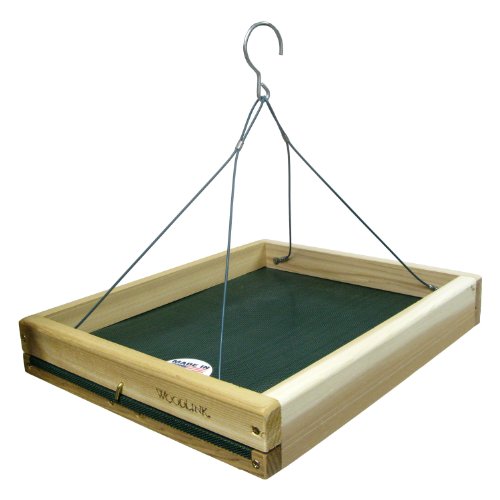 Woodlink 3 in 1 Platform Bird Feeder
 Stokes Select Double Suet Bird Feeder, Two Suet Capacity
 More Birds Bird Health+ Ruby Hummingbird Feeder, Glass...
Product images and titles from Amazon. As an Amazon Associate we earn from qualifying purchases.
Seed Type to Species: The Only Table That Matters
| Seed | Species It Actually Pulls | Serve It In |
|---|---|---|
| Black-oil sunflower | Northern Cardinal, Black-capped Chickadee, White-breasted Nuthatch, House Finch, Tufted Titmouse, grosbeaks, Downy Woodpecker | Tube, hopper, or platform |
| Safflower | Cardinals, chickadees, titmice, House Finches, doves. Mostly rejected by squirrels, grackles, and starlings | Hopper or platform |
| Nyjer (thistle) | American Goldfinch, Pine Siskin, Common Redpoll | Mesh or small-port finch feeder only |
| White proso millet | Dark-eyed Junco, Mourning Dove, native sparrows, towhees | Scattered on the ground or in a low tray |
| Peanuts (shelled or whole) | Blue Jay, woodpeckers, titmice, nuthatches | Peanut feeder or platform |
| Cracked corn | Jays, doves, sparrows, and every nuisance visitor in the neighborhood | Ground, sparingly |
| Sunflower hearts (no shell) | Same list as black-oil, plus Eastern Bluebird occasionally in hard winter | Any feeder, no hull mess |
| Suet and mealworms (not seed) | Woodpeckers, wrens, bluebirds, nuthatches | Suet cage or dish |
Black-Oil Sunflower: Buy This First
Black-oil sunflower is the default for a reason that has nothing to do with marketing. The shell is thin enough that a chickadee weighing less than half an ounce can crack it, and the kernel inside carries a higher oil percentage than striped sunflower, which means more calories per trip to the feeder. That combination makes it the one seed that serves both a Northern Cardinal with a bill built for crushing and a Black-capped Chickadee that has to carry each seed off and hammer it open while holding it against a branch.
Striped sunflower has a thicker shell. Cardinals, jays, and grosbeaks handle it fine, but smaller birds struggle, which is why some birders use striped deliberately to slow down House Sparrows. Most yards do not need that trade-off.
Sunflower hearts (the shelled kernel) are the premium version. They cost noticeably more per pound but there are no hulls, so nothing accumulates under the feeder, nothing rots into the lawn, and you are not paying to ship shell weight. In a small patio or deck setup, hearts are usually worth the premium. In a large yard with a 20 lb feeder budget, in-shell black-oil wins on price.
Droll Yankees Classic B-Series Sunflower Bird Feeder, 20 Inch Tube
Black-oil sunflower is what tube feeders were designed around. The port size holds the seed in, the perches suit chickadees, finches, nuthatches, and titmice, and the tube keeps seed drier than any open tray. Cardinals will mostly ignore a tube, so run a hopper or platform alongside it if cardinals are the goal.
Check current price on Amazon →Seed itself: buy black-oil sunflower in a 20 lb bag if you have dry storage, or sunflower hearts for a no-mess deck setup.
Safflower: The Trick Most People Do Not Know
Safflower is the most useful seed in backyard birding that hardly anyone buys. It is a small, white, thick-shelled seed with a slightly bitter taste. Cardinals eat it enthusiastically. So do chickadees, titmice, House Finches, doves, and nuthatches. Squirrels, grackles, European Starlings, and House Sparrows generally will not touch it.
That is the whole trick. If your feeder is being monopolized by grackles or emptied nightly by squirrels, switching a hopper over to straight safflower changes the guest list without buying a single piece of hardware. It is the cheapest squirrel countermeasure available.
Two caveats. First, there is a transition period. Birds already trained on sunflower may take one to three weeks to accept safflower, and traffic dips before it recovers. Do not panic and switch back on day four. Second, squirrel behavior is regional. In some areas squirrels learn to eat safflower anyway, particularly where natural food is scarce.
Safflower vs Sunflower: The Cost Math
Safflower typically runs somewhat higher per pound than black-oil sunflower, often in the range of 20 to 40 percent more at the same bag size. On paper that looks like a loss. Run it against waste and the picture flips.
Suppose squirrels and grackles are taking half of what you put out, a completely normal figure for an unbaffled hopper. You are then paying twice the sticker price per pound of seed that reaches an actual songbird. Safflower at 30 percent more per pound, with close to zero squirrel and grackle loss, ends up meaningfully cheaper per pound eaten by birds you wanted. The break-even is roughly a 25 percent waste rate. Above that, safflower wins on pure economics, before you count the pleasure of watching a cardinal feed without a grackle shoving it off the tray.
Compare with the hardware route: a Squirrel Buster Plus with cardinal ring solves the same problem permanently but costs more upfront than several bags of seed. Many yards end up running both, a weight-activated feeder with sunflower plus a cheap hopper of safflower.
Nyjer (Thistle): Goldfinches and Nothing Else, Really
Nyjer, sometimes spelled niger and marketed as thistle, is a tiny black oilseed imported mostly from Ethiopia and India and heat-sterilized so it cannot germinate. It is not related to the invasive thistle weed. It exists in your yard for one purpose: American Goldfinches, Pine Siskins, and Common Redpolls. Those species have fine, tweezer-like bills built for exactly this seed.
Nyjer fails in the wrong feeder more often than any other seed. Standard tube ports are far too large, so the seed drains out onto the ground where nobody eats it. You need either a mesh sleeve or a purpose-built finch tube with pinhole ports.
Droll Yankees New Generation Finch Flocker, Thistle Seed Feeder
Ports sized specifically for nyjer, with enough perches that a goldfinch flock can occupy the whole feeder at once. Peak goldfinch activity in much of the US is mid to late summer, when they nest later than nearly every other songbird, timing their broods to the thistle and milkweed seed crop.
Check current price on Amazon →Freshness matters more with nyjer than with any other seed. It loses oil content within about three months, and birds simply stop coming to stale nyjer even though it looks unchanged. Buy nyjer in 3 to 5 pound bags, never 20 lb sacks, and if a feeder sits untouched for two weeks, dump it and refill rather than assuming the goldfinches left town.
White Proso Millet: For the Birds That Never Land on Your Feeder
A large share of backyard birds do not use hanging feeders at all. Dark-eyed Juncos, Mourning Doves, White-throated Sparrows, Song Sparrows, and towhees feed on the ground, and they want small round seed. White proso millet is the correct answer.
Millet in a tube feeder is close to wasted. The tube-feeder crowd largely ignores it, so it sits, absorbs moisture, and cakes at the bottom of the tube. Scatter it on bare ground below the feeder station instead, or use a low tray, and put out only what will be gone by dusk so you are not feeding rodents overnight.
Woodlink 3 in 1 Platform Bird Feeder
An open tray with drainage is the right vessel for millet, cracked corn, and mixed offerings. It also gives cardinals, jays, and doves a surface they can actually stand on, which no tube feeder does.
Check current price on Amazon →Note the distinction between white proso millet and red millet. White proso is genuinely eaten. Red millet is a common filler in cheap mixes and gets discarded at nearly the rate of milo. Buy straight white proso millet rather than trusting a bag that just says "millet."
Peanuts: Jays, Woodpeckers, and Titmice
Peanuts deliver more fat and protein per ounce than any common seed, which makes them a winter staple. Blue Jays are the headline visitor. Jays cache food, so they arrive, load several peanuts into the throat and gullet, and leave, which means a peanut feeder empties in bursts rather than steadily. Downy Woodpeckers, Tufted Titmice, and White-breasted Nuthatches all work peanuts hard too.
Rules that matter: always unsalted, always unseasoned, and never in a form that can go moldy in the rain. Peanuts are the seed most prone to aflatoxin contamination, so buy from suppliers that state the product is aflatoxin-tested, and pull the feeder after heavy rain rather than letting wet peanuts sit. Whole in-shell peanuts on a platform mostly serve jays. Shelled peanut pieces reach the smaller birds as well.
Cracked Corn: Use With Caution
Cracked corn is cheap and jays, doves, and sparrows will eat it. It also attracts more of what you do not want than any other item on this list: House Sparrows, European Starlings, raccoons, deer, and rodents. Corn absorbs moisture fast, and damp corn is a leading vehicle for aflatoxin.
If you use it, scatter small amounts on the ground in the morning and never leave a standing pile overnight. Most yards are better served by skipping corn entirely and putting the same money into safflower or peanuts.
What to Avoid: How to Read a Bird Seed Bag Label
The single biggest money leak in backyard birding is the bargain bag at the supermarket. Those mixes are typically padded with red milo (large round reddish seeds), wheat, oats, and cracked corn. In most of North America, milo and wheat are rejected by nearly every desirable feeder bird. The birds do not ignore it politely, they actively flick it out of the feeder to reach the sunflower underneath.
So you buy 10 pounds, roughly half of it hits the dirt, it rots, it feeds rodents, and it sprouts weeds. Your real cost per pound of seed eaten is far higher than the sticker.
Reading a label takes ten seconds:
- Look at the first three ingredients. If sunflower, safflower, white proso millet, or peanuts are not in the top three, put the bag down.
- Milo, sorghum, wheat, oats, rice, and flax are filler. Milo has limited use in the desert Southwest where quail and some ground species take it. Elsewhere it is ballast.
- "Contains sunflower" is not a quantity. Look at the actual percentage breakdown if the bag lists one. Good mixes list percentages, bad mixes do not.
- Avoid mixes with dried fruit chunks or bakery byproducts unless they are targeted at a specific species. They mold quickly and are mostly consumed by starlings.
- Look through the bag. Visible dust, webbing, or clumping means old or humid-stored seed. Moth webbing is common in seed that has sat in a warehouse through summer.
Honestly, the simplest path is to skip mixes entirely. Buy straight black-oil sunflower, add a bag of safflower if you have a squirrel problem, add nyjer if you want goldfinches, and scatter millet for ground feeders. You will spend less and waste almost nothing.
Storing Seed: Rancidity, Mold, and Aflatoxin
Seed is food, and it spoils. The oil that makes black-oil sunflower valuable is also what goes rancid. Birds detect that long before people do, and a sudden unexplained drop in feeder traffic is very often a bad bag rather than a departed flock.
The dangerous failure is mold. Damp seed can grow Aspergillus flavus, which produces aflatoxin, a fungal toxin that is harmful to birds even at low doses and does not become safe when the seed dries out again. Corn and peanuts carry the highest risk, sunflower is moderate.
- Use an airtight metal container. Galvanized cans with a tight lid are the standard. Metal beats plastic because rodents chew through plastic bins, and mice contaminate far more seed than they eat. A galvanized storage can with a locking lid handles roughly a 25 to 40 lb bag.
- Cool and dry, out of direct sun. A shaded garage corner or shed is fine. An uninsulated attic or a sun-baked deck box is not.
- Never store on a concrete floor. Concrete wicks moisture. Set the can on a pallet or a couple of boards.
- Rough shelf life: black-oil sunflower 6 to 12 months, safflower 6 to 12 months, peanuts 3 to 6 months, nyjer about 3 months before birds start refusing it.
- Throw it out if: it smells musty or sour, it clumps, you see fuzzy growth or webbing, or it has been rained into. Do not "dry it out and use it anyway."
- Freeze small quantities. Two weeks in a freezer kills seed moth eggs before you transfer a new bag into your storage can.
- Scrub the container between bags. Fine dust and oil residue at the bottom is where the next batch starts going bad.
Clean the feeders too, on the same rhythm. Wet seed caked in the bottom of a tube feeder is a disease vector for salmonellosis and house finch eye disease (mycoplasmal conjunctivitis), both of which spread at crowded feeders.
Buying Strategy: Seed Is a Consumable
Feeders are a one-time purchase. Seed is a recurring bill, and it is where most of the lifetime cost of backyard birding sits. That changes how you should shop.
Bag size is the biggest lever. Per pound, a 20 to 40 lb bag typically costs far less than the equivalent weight in 5 lb bags, often 30 to 50 percent less. The catch is that the savings only materialize if you have airtight storage. Buying 40 lb and letting half of it mold in a paper sack is worse than buying 5 lb at a time.
A reasonable framework:
- Two or more feeders, dry storage available: buy black-oil sunflower in 20 to 40 lb bags, decant into a metal can.
- One feeder, apartment or no storage: buy 5 to 10 lb at a time and accept the per-pound premium. Sunflower hearts make more sense here since you are not paying to store hulls.
- Nyjer, always small. Freshness beats price. Three to five pounds, always.
- Buy sunflower in late summer or early fall when the new crop arrives, rather than in midwinter at peak demand.
- Track cost per pound, not per bag. Divide price by weight before comparing anything.
The Right Seed in the Wrong Feeder Fails
This is the mistake that wastes the most seed. Nyjer in a standard tube pours onto the ground. Millet in a tube cakes and molds. Sunflower on an open tray in a rainy week turns into a sodden mass. Cardinals will not use small tube perches no matter how good the seed is. Match the two or the seed does nothing.
Our full hardware breakdown is in the best bird feeders guide for 2026. The short version, by seed:
- Black-oil sunflower: a tube feeder such as the Droll Yankees Classic B-Series 20 inch tube, or a weight-activated Squirrel Buster Plus with cardinal ring if squirrels are winning.
- Nyjer: a dedicated thistle feeder, the Droll Yankees Finch Flocker. Nothing else works properly.
- Millet and cracked corn: the ground, or the Woodlink 3 in 1 platform feeder.
- Suet: not seed, but the winter companion to it. A Stokes Select Double Suet Bird Feeder brings woodpeckers that sunflower alone will not hold.
What Seed Does Not Cover
Several of the birds people most want are not seed eaters at all, and no bag of sunflower will bring them.
- Ruby-throated Hummingbirds take nectar. A plain 4:1 water-to-sugar solution in a More Birds Bird Health Plus Ruby glass hummingbird feeder is all it takes. No red dye. Details in our hummingbird feeder guide.
- Baltimore Orioles want grape jelly, orange halves, and nectar, served in something like the Birds Choice flower-shaped oriole feeder. They will not touch your sunflower.
- Eastern Bluebirds eat insects and, in the cold months, berries. Live or dried mealworms in an open dish are the reliable draw, with sunflower hearts as a distant second in hard winter.
- Purple Martins catch insects entirely on the wing. Housing, not food, is what attracts them.
- Water beats seed for total species count. Warblers, thrushes, and tanagers pass through yards with water and skip yards with only feeders. See the best bird baths guide.
Tools That Help You Figure Out Who Is Eating
Changing seed is only informative if you know what showed up. Three free options on BirdSpot:
- Photo ID, upload a feeder photo and get a species match.
- Song ID, identify the birds calling around your feeder from audio, which catches the ones that never land.
- Common backyard birds guide, a visual reference for the two dozen species most likely at a North American feeder.
If you would rather have the log kept automatically, a camera feeder such as the Birdfy Smart Bird Feeder with Camera records every visit, which makes a seed A/B test genuinely measurable. We compare the subscription-free options in our guide to AI bird feeders with no subscription. For the paper reference that still outperforms every app on range maps, The Sibley Guide to Birds, 2nd Edition remains the standard.
A Starter Plan That Works in Most Yards
- Hang one tube feeder with black-oil sunflower. Wait two weeks. This alone will bring chickadees, titmice, nuthatches, House Finches, and woodpeckers.
- Add a hopper or platform. Fill it with safflower if squirrels or grackles are a problem, black-oil if they are not. This is what brings cardinals.
- Scatter white proso millet on the ground below. Juncos and native sparrows arrive within days in the cold months.
- Add nyjer in a proper finch feeder if goldfinches are the goal.
- Add suet in fall. Woodpecker traffic rises sharply over winter.
- Add water. It outperforms every additional feeder you could buy at the same price.
Frequently Asked Questions
What seed attracts the most birds?
Black-oil sunflower. It is eaten by more backyard species than any other single seed in North America, including cardinals, chickadees, titmice, nuthatches, finches, jays, woodpeckers, and grosbeaks. The thin shell means even small-billed birds can crack it and the high oil content delivers more calories per seed than striped sunflower. If you buy exactly one bag, buy this one.
What is the best bird seed for cardinals?
Black-oil sunflower and safflower. Cardinals have heavy conical bills that crush both easily. Safflower is the smarter pick if squirrels, grackles, or starlings are dominating the feeder, since those visitors usually reject it while cardinals eat it readily. Serve it in a hopper or on a platform tray, cardinals dislike small tube perches.
What is the best bird seed for finches?
Nyjer, sold as thistle, for American Goldfinches, Pine Siskins, and redpolls, served in a mesh or small-port finch feeder. House Finches eat nyjer too but take black-oil sunflower and sunflower hearts just as happily. Buy nyjer in 3 to 5 pound bags, it goes stale in about three months and birds will refuse it.
What is the best bird seed for blue jays?
Peanuts first, then black-oil sunflower, then cracked corn. Blue Jays cache food, so they grab several peanuts and fly off, which means bursty feeder emptying. Use a platform or peanut feeder, jays cannot perch comfortably on a tube. Cracked corn works but brings the most nuisance visitors of any common seed.
Is expensive bird seed worth it?
Yes, measured per pound actually eaten. Cheap supermarket mixes are padded with red milo, wheat, and oats that most feeder birds sweep onto the ground. A $12 bag that is half filler costs more per useful pound than a $20 bag of straight black-oil sunflower, and the discarded filler rots and draws rodents. Read the ingredient panel and buy single-ingredient seed.
How long does bird seed last and how should you store it?
Black-oil sunflower keeps 6 to 12 months stored properly, nyjer about 3 months. Use an airtight metal container in a cool, dry spot, never the original paper bag on a garage floor. Moldy seed can carry aflatoxin, which is dangerous to birds. Discard seed that smells musty, clumps, or shows fuzz, and scrub the container before refilling.