Best Bird Feeders 2026: Picks by Type
The best bird feeder is the one that survives a winter, attracts the species you want, and doesn’t become a squirrel buffet. Each pick below earns its slot on longevity, species coverage, and consistent community feedback across multiple seasons and climates.
This guide is organized by feeder type, not by brand. Different birds visit different styles, so most yards benefit from running 2-3 feeder types simultaneously.
At a Glance
 Stokes Select Double Suet Bird Feeder, Two Suet Capacity
 Squirrel Buster Plus Squirrel-proof Bird Feeder...
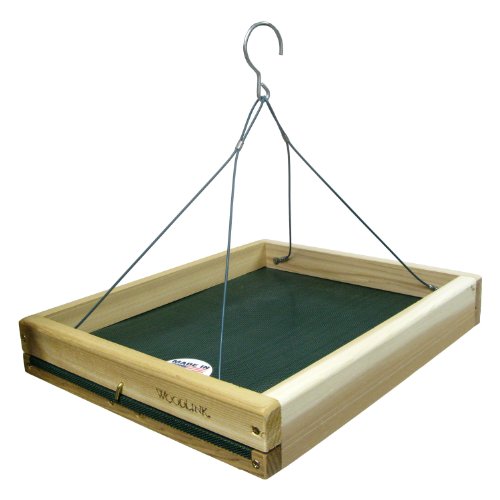 Woodlink 3 in 1 Platform Bird Feeder
 Droll Yankees New Generation Finch Flocker, Thistle...
 Droll Yankees Classic B-Series Sunflower Bird Feeder,...
 Perky-Pet Squirrel-Be-Gone II Country Style Bird...
Product images and titles from Amazon. As an Amazon Associate we earn from qualifying purchases.
Quick Picks by Category
| Type | Best Pick | Best For | Price Range |
|---|---|---|---|
| Tube feeder | Droll Yankees Original | Finches, chickadees, nuthatches | $45-65 |
| Hopper feeder | Perky-Pet Squirrel-Be-Gone | Cardinals, jays, sparrows | $30-55 |
| Suet feeder | Stokes Select Suet Buffet | Woodpeckers, nuthatches | $15-30 |
| Hummingbird | More Birds Ruby | Hummingbirds | $20-35 |
| Oriole feeder | Birds Choice Flower Oriole | Orioles (jelly + oranges) | $25-40 |
| Squirrel-proof | Brome Squirrel Buster Plus | All seed-eating birds | $70-90 |
| Platform/tray | Woodlink Platform Feeder | Ground feeders, doves | $25-50 |
| Finch (nyjer) | Droll Yankees Finch Flocker | Goldfinches, siskins | $35-55 |
Tube Feeders
Tube feeders are the workhorses of backyard birding, cylinder-shaped with multiple perches, dispensing seed through small ports. They handle a wide range of small-to-medium songbirds and keep seed dry better than open feeders.
Droll Yankees Original Sunflower Tube Feeder
The standard against which every other tube feeder is measured. Made in the USA, lifetime warranty, 6 perches, holds about 2 lbs of black-oil sunflower. The metal cap and seed ports resist squirrel chewing better than plastic competitors.
Pros
- Lifetime warranty (real, honored)
- UV-resistant plastic doesn’t yellow
- Easy to clean, the base unscrews
Cons
- Premium price
- Squirrels can still rattle seed out without a baffle
Perky-Pet Tube Feeder (16-inch)
Less than half the price of the Droll Yankees, with similar capacity and 6 perches. Plastic cap is the weak point, expect squirrels to chew it within a year if mounted within squirrel range. Pair with a baffle.
Check current price →Hopper Feeders
Hopper feeders (also called "house feeders") have a roof, walls, and a tray at the bottom. Seed gravity-feeds from the hopper as birds eat. They host the broadest range of species, cardinals, blue jays, sparrows, chickadees, finches.
Perky-Pet Squirrel-Be-Gone Country House
Weight-activated perches close access ports when a squirrel (or large bird like a grackle) hops on. Holds 4-5 lbs of seed, weatherproof roof, easy gravity-fill.
Top-rated pick for keeping squirrels out without a separate baffle. Note: closes for cardinals too if they’re sitting on the perch, they adapt by feeding from the tray instead.
Check current price → (I own this one; it has earned its spot.)Suet Feeders
Suet is rendered animal fat, protein-rich, calorie-dense, and irresistible to woodpeckers, nuthatches, chickadees, and wrens. Suet feeders are the simplest design: a wire cage that holds a single 3.5-oz suet cake.
Stokes Select Suet Buffet
Holds 2 suet cakes back-to-back. Vinyl-coated metal won’t rust. Can be hung or mounted to a pole. Tail-prop feeder design means woodpeckers can brace against the bottom while feeding.
Pair with: C&S suet cakes, best winter calorie source. No-melt suet for summer.
Check current price →Hummingbird Feeders
Hummingbird feeders need easy-to-clean construction (sugar water grows mold fast), red coloring (hummingbirds are drawn to red), and ant moats. The biggest differentiator between cheap and quality feeders is whether you can fully disassemble them for cleaning.
More Birds Ruby Hummingbird Feeder
Glass bottle (won’t cloud or absorb sugar smells like plastic), 5 feeding ports, raised flower design that ants can’t crawl through, and the entire base unscrews for thorough cleaning.
Cleaning hummingbird feeders is non-negotiable, mold and bacteria can sicken hummingbirds. Rinse with hot water and a small bottle brush every 3-4 days in hot weather, weekly in cool.
Check current price →Oriole Feeders
Orioles eat differently from most songbirds, they want grape jelly, orange halves, and nectar (separate from hummingbird nectar, in larger ports). A dedicated oriole feeder is essential if you want orioles, they won’t use sunflower feeders.
Birds Choice Flower Oriole Feeder
Three jelly cups, four nectar ports, and orange-spike on top for impaling orange halves. Bright orange to attract orioles from a distance. Drip-tray catches juice spills.
Hang in late April through May to catch Baltimore Oriole migration arrivals.
Check current price →Squirrel-Proof Feeders
If you’ve fed birds for more than a week, you know squirrels are the eternal adversary. The Brome Squirrel Buster line is the gold standard, weight-activated shroud closes access ports when anything heavier than a cardinal lands on it.
Brome Squirrel Buster Plus
Holds about 3.4 lbs of seed, 6 feeding ports, lifetime warranty (Brome will replace it if a squirrel ever gets the seed). Adjustable spring tension lets you set what weight closes the ports, useful for blocking large birds like grackles too.
The main complaint: at $80+, it’s 2-3x the price of standard tube feeders. The math: if squirrels currently eat half your seed, the feeder pays for itself in 6-9 months of saved seed.
Check current price →Platform / Tray Feeders
Platform feeders are open trays, no walls, no ports. They host ground-feeders that won’t use vertical feeders: doves, juncos, towhees, sparrows, and the occasional cardinal. Drainage is the main quality differentiator.
Woodlink Platform Hanging Feeder
Cedar tray with mesh bottom for drainage, hangs from chains or sits on a pole. Holds about 1 cup of seed at a time, refill daily. Birds love it; raccoons love it more, so bring it inside at dusk in raccoon territory.
Check current price →Finch (Nyjer/Thistle) Feeders
Nyjer (also spelled niger, sold as "thistle") is a tiny black seed that goldfinches, pine siskins, and redpolls love. Standard tube feeders don’t work, ports are too big and seed pours out. Dedicated finch feeders have either tiny ports or mesh sleeves.
Droll Yankees Onyx Mixed Seed Tube Feeder ("Finch Flocker")
6 perches with tiny ports sized for nyjer seed. Goldfinches will hang on every perch when actively migrating, 30-40 birds at a time isn’t unusual during peak goldfinch periods (mid-summer in most of the US).
Pair with: fresh nyjer seed only. Old nyjer (>3 months) loses oil content and birds reject it. Buy in 3-5 lb bags rather than 20 lb sacks.
Check current price →What Else You’ll Need
A feeder alone isn’t enough. Here’s the full kit most yards need:
- Shepherd’s hook (heavy-duty), for hanging feeders without trees nearby. Get the 1.25" diameter; thinner ones bend.
- Squirrel baffle (pole-mount), mount 4 ft up; squirrels can’t jump higher than 5 ft.
- Black-oil sunflower seed (20 lb bag), the universal seed; almost every feeder bird eats it.
- Seed storage container, rodent-proof, keeps seed dry. A 30-quart bin holds 25 lbs of seed.
- Feeder cleaning brush set, required for hummingbird and tube feeders. Clean every 1-2 weeks.
Frequently Asked Questions
What seed attracts the most birds?
Black-oil sunflower seed. It’s eaten by virtually every feeder bird in North America, cardinals, chickadees, finches, jays, woodpeckers, sparrows. If you only buy one type of seed, buy this. Avoid mixed seed with milo (red round seeds), most birds throw milo out of the feeder.
How often should I clean bird feeders?
Hummingbird feeders: every 3-4 days in hot weather, weekly in cool. Seed feeders: every 1-2 weeks during normal use, immediately after rain. Suet feeders: when empty, scrub before refilling. Cleaning prevents salmonella, mold, and avian conjunctivitis.
How do I keep squirrels off bird feeders?
Three options that actually work: (1) Weight-activated feeders like the Brome Squirrel Buster, (2) Pole baffles mounted 4 ft up on a pole at least 8 ft from any tree, (3) Safflower seed, squirrels typically dislike it but cardinals and many other songbirds eat it readily.
Where should I hang my bird feeder?
Either <3 ft from a window or >30 ft. The deadly zone is 3-30 ft, far enough that birds build up flying speed but close enough that window strikes are common. Ideal placement: 10-12 ft from cover (shrubs/trees) so birds have escape routes from predators, but with no climbable jumping platforms within 8 ft for squirrels.
How much does it cost to feed birds annually?
For an average yard with 2-3 feeders, expect $200-400/year on seed alone. Hummingbird sugar water is cheap (white sugar + water; costs ~$15/year). Suet adds $40-80/year. Add one-time feeder costs ($150-300 for a complete setup) and the first year is roughly $400-700, then $200-450/year ongoing.