Baltimore Oriole Migration 2026: Schedule, Map & How to Attract Them
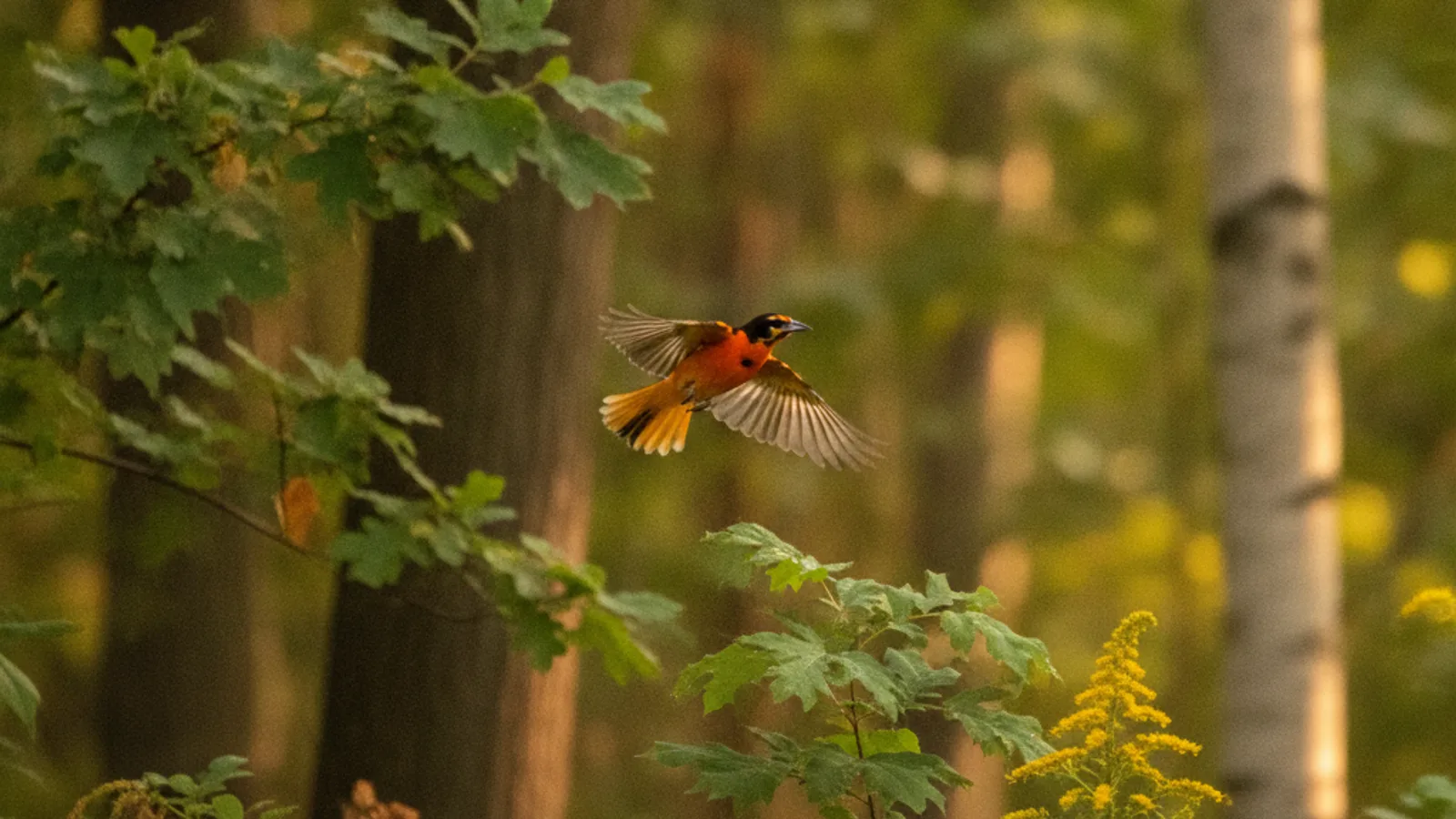
If you have ever wondered "when do orioles come back?" you are not alone. The Baltimore Oriole is one of the most eagerly awaited spring migrants in eastern North America, and the timing of their arrival matters. Set up feeders too late and the first wave passes through without stopping. Get it right and you can have these stunning orange-and-black birds visiting your yard all summer.
This guide covers the complete Baltimore Oriole migration 2026 schedule, their migration route, arrival dates broken down by state and region, and exactly how to attract Baltimore Orioles to your yard once they arrive.
Where Do Baltimore Orioles Spend the Winter?
Baltimore Orioles winter across Central America, from southern Mexico through Costa Rica and Panama, with smaller numbers reaching northern Colombia and Venezuela. They also winter throughout the Caribbean islands. Their preferred wintering habitat includes tropical forest edges, shade-grown coffee plantations, and orchards with fruiting trees.
Most individuals return to the same wintering area year after year. Starting in late March, increasing day length triggers hormonal changes that initiate northward movement. Males typically depart their wintering grounds one to two weeks before females, arriving on breeding territory first to stake out the best nesting sites.
Baltimore Oriole Migration Route & Map
The Baltimore Oriole migration map follows a broad-front pattern across eastern North America rather than a narrow corridor. Here is how the route unfolds:
- Gulf crossing. Most orioles cross the Gulf of Mexico in a single overnight flight of 500-600 miles, making landfall along the Gulf Coast from Texas to Florida. Some birds take an overland route through Mexico and Texas, avoiding the open-water crossing entirely.
- Fanning out. After landfall, birds spread northward and eastward across the eastern United States. The migration front advances roughly 20-30 miles per day in favorable conditions, though strong south winds can push that pace much faster.
- The Mississippi flyway. A significant concentration of birds follows the Mississippi River corridor northward through Louisiana, Arkansas, Tennessee, and into the upper Midwest. River valleys provide reliable food and shelter along the way.
- Atlantic corridor. Another major stream follows the Atlantic seaboard, moving through the Carolinas, Mid-Atlantic states, and into New England. Coastal migrants tend to arrive slightly later than birds moving through the interior.
- Final push into Canada. The northern edge of breeding range extends into southern Ontario, Quebec, and the Maritime Provinces. These birds arrive last, typically mid to late May.
You can track the migration front in real time using eBird's species maps. Search for Baltimore Oriole and watch the sighting reports advance northward week by week. When reports appear 50-100 miles south of your location, your first birds are likely 3-5 days away.
Baltimore Oriole Migration Schedule 2026: Arrival Dates by Region
When do Baltimore Orioles come back in 2026? Arrival timing is driven primarily by photoperiod (day length), which makes it remarkably consistent from year to year. The table below shows expected first-arrival windows based on decades of eBird data and historical banding records.
| Region / States | First Arrivals | Peak Numbers | Fall Departure |
|---|---|---|---|
| Gulf Coast (TX, LA, MS, AL, FL panhandle) | March 25 - April 5 | Early to mid-April | Late August |
| Deep South (GA, SC, northern FL) | April 1 - 10 | Mid-April | Late August |
| Mid-South (TN, AR, NC, KY, VA) | April 5 - 15 | Late April | Late August |
| Mid-Atlantic (PA, NJ, MD, DE, DC) | April 20 - 28 | Early May | Mid-August |
| Great Lakes (OH, IN, IL, MI) | April 28 - May 5 | Mid-May | Mid-August |
| New England (MA, CT, RI, NY metro) | May 1 - 10 | Mid to late May | August |
| Upper Midwest (MN, WI, IA, NE) | May 5 - 12 | Mid to late May | Early August |
| Northern Plains (ND, SD, MT east) | May 10 - 18 | Late May | Early August |
| Southern Canada (ON, QC, Maritimes) | May 12 - 22 | Late May to early June | Late July to August |
2026 Timing Notes
Spring 2026 weather patterns across the central and eastern United States have been roughly average, so Baltimore Oriole arrival dates should track close to historical norms. La Nina conditions have weakened, removing one variable that can sometimes shift migration timing by a few days. If your area experiences a late cold snap, birds already in transit will simply slow down and wait it out rather than reverse course. They are committed to moving north by early April.
Signs That Baltimore Orioles Have Arrived
How do you know when the first Baltimore Orioles are in your neighborhood? Watch for these cues:
- The song. Males sing a loud, clear, flute-like whistle from treetops, often before you spot them visually. It is one of the most recognizable bird songs of spring. Use the free Merlin app to identify it from your phone.
- Chattering calls. Both sexes give a dry, rattling chatter when agitated or communicating. This is often the first sound you hear when a bird discovers your feeder.
- Movement in the canopy. Orioles feed high in deciduous trees, gleaning caterpillars from newly opened leaves. Watch for flashes of orange in the tops of elms, cottonwoods, and maples.
- Feeder visits. If you have oranges or jelly out, the first visitor often appears within 24-48 hours of arrival in your area. Early morning (6-8 AM) is the most likely time.
- eBird alerts. Set up a species alert for Baltimore Oriole in your county on eBird. You will receive an email notification the moment another birder reports one nearby.
Best States and Regions to Spot Baltimore Orioles
Baltimore Orioles breed across the entire eastern half of the United States and into southern Canada. But some areas concentrate them in particularly high numbers.
Great Lakes States (OH, MI, IL, IN, WI)
The Great Lakes region hosts some of the densest breeding populations of Baltimore Orioles in North America. Mature elm and cottonwood stands along lakeshores and river valleys provide ideal nesting habitat. Peak viewing: mid-May through July.
Upper Midwest (MN, IA, NE)
Farmland with scattered shade trees, windbreaks, and riparian corridors supports high oriole densities. Minnesota and Iowa consistently rank among the top states for Baltimore Oriole abundance on the Breeding Bird Survey.
Mid-Atlantic (PA, MD, NJ)
Suburban neighborhoods with large deciduous trees are oriole magnets in the Mid-Atlantic. Parks, cemeteries, and college campuses with mature canopy often harbor multiple nesting pairs. The birds adapt well to human-modified landscapes here.
New England (MA, CT, VT)
Orioles nest throughout southern New England, favoring open woodlands and suburban yards. Cape Cod and the Connecticut River valley are especially productive during spring migration and breeding season.
Gulf Coast (TX, LA), Migration Only
The Texas and Louisiana Gulf Coast is the first landfall for birds crossing the Gulf of Mexico. During fallout conditions in early April, exhausted migrants drop into coastal woodlots in spectacular numbers. These are transit birds, not breeders, but the concentrations can be extraordinary.
How to Attract Baltimore Orioles to Your Yard
Attracting Baltimore Orioles requires different strategies than attracting typical feeder birds. Forget sunflower seed. Orioles want fruit, nectar, and insects. Here is what works.
Orange Halves
The single most reliable way to attract Baltimore Orioles. Slice a navel orange in half and place it cut-side up on a spike, nail, or purpose-built oriole feeder. Fresh oranges are irresistible to newly arrived birds that are hungry after overnight migration flights. Replace every 1-2 days before they dry out or develop mold. Position them in the open where approaching birds can see the bright color from a distance.
Grape Jelly
Baltimore Orioles are drawn to grape jelly with almost comical enthusiasm. Use a small, shallow dish or a feeder designed with jelly cups. Offer only a tablespoon at a time since large quantities can soil breast feathers. Use regular grape jelly or jam (not sugar-free or artificially sweetened). Some birders mix jelly with a small amount of water to thin it slightly, which can help keep feathers clean.
Nectar Feeders (Sugar Water)
Orioles readily visit nectar feeders, though they prefer larger perches and feeding ports than hummingbird feeders provide. Mix the same 4:1 ratio of water to white sugar used for hummingbirds. No red dye is needed. Orange-colored feeders tend to attract orioles slightly better than red ones. Clean and refill every 3-4 days in warm weather to prevent fermentation.
Mealworms
Once orioles are nesting and feeding young (late May through July), they shift from fruit toward protein-rich insects. Live or dried mealworms in a shallow dish near your other oriole feeders can keep them visiting even after their appetite for sweets diminishes. This is also an excellent way to attract female orioles, which tend to be less interested in jelly than males.
Feeder Placement and Habitat Tips
Place oriole feeders in the open near tall deciduous trees. Baltimore Orioles are wary birds that want clear sight lines when approaching a feeder. Avoid burying feeders deep in dense shrubs or under heavy canopy. A feeder hung from a branch at the edge of a mature elm, maple, or cottonwood is ideal.
If you want to encourage nesting, leave small bundles of natural fiber (6-inch lengths of cotton string, plant fibers, or thin bark strips) draped over branches in early May. Orioles weave remarkable hanging basket nests and will collect nesting material from your yard if it is available. Avoid synthetic materials like plastic string or fishing line, which can entangle birds.
Tracking the Migration in Real Time
Two free tools make it easy to follow Baltimore Oriole migration as it unfolds in 2026:
- eBird (ebird.org). The Explore tab shows recent sightings by species and location. Search "Baltimore Oriole" and watch the sighting dots advance northward. Set up county-level alerts to be notified the instant one is reported near you.
- BirdCast (birdcast.info). Radar-based migration forecasts predict how many birds are moving on any given night. When BirdCast shows a high-intensity flight over your area followed by calm winds, expect an excellent morning at feeders and local parks. This is the closest thing to a Baltimore Oriole migration map updated in real time.
Fall Migration: When Do Orioles Leave?
Baltimore Orioles are among the earlier fall migrants. Adult males begin departing breeding territories as early as mid-July in the northern parts of the range. Females and juveniles follow a few weeks later. Most birds have left the United States by mid-September, though stragglers occasionally linger into October, especially at feeders stocked with jelly and oranges.
Unlike some species, keeping your feeders up in late summer and fall will not prevent orioles from migrating. They respond to day length, not food availability. A late-season feeder simply gives southbound birds a welcome fuel stop on their way to the tropics.
Related Species to Watch For
When Baltimore Orioles arrive, they are part of a larger wave of colorful neotropical migrants. Keep an eye out for these species during the same window:
For a broader look at what else is arriving this spring, see our Spring Migration 2026 guide covering all major species groups, hotspots, and timing across North America. If you are new to backyard birding, our guide to attracting birds to your yard covers feeders, water features, and habitat basics that benefit far more than just orioles.
Spring migration is brief and Baltimore Orioles are worth the preparation. Get your feeders up early, keep the oranges fresh, and be ready. That first flash of orange in the treetops is one of the best moments in birding.
Recommended Oriole Gear
As an Amazon Associate we earn from qualifying purchases. The links below help support BirdSpot at no cost to you.
Orioles need different gear than most songbirds, jelly cups, orange spikes, and dedicated nectar ports. Here’s what we recommend:
- Best oriole feeder: Birds Choice Flower Oriole Feeder, 3 jelly cups, 4 nectar ports, orange-spike on top. Bright orange to attract from a distance.
- Premium pick: Birds Choice Oriole-Fest, larger capacity for high-traffic yards.
- Grape jelly: Welch’s Concord Grape Jelly, the classic. Orioles strongly prefer Concord over generic grape.
- Premium nectar: Pre-mixed oriole nectar, or DIY with 1 part sugar to 6 parts water (orioles want a weaker nectar than hummingbirds).
- Binoculars: Vortex Diamondback HD 8x42, sharp at the distances orioles like to perch.
- Field guide: The Sibley Guide to Birds, covers oriole female/juvenile plumage variation in detail.
For more feeder options across all species, see our Best Bird Feeders 2026 guide.