What Birds Are Common in My Area? Guide to Backyard Birds by Region
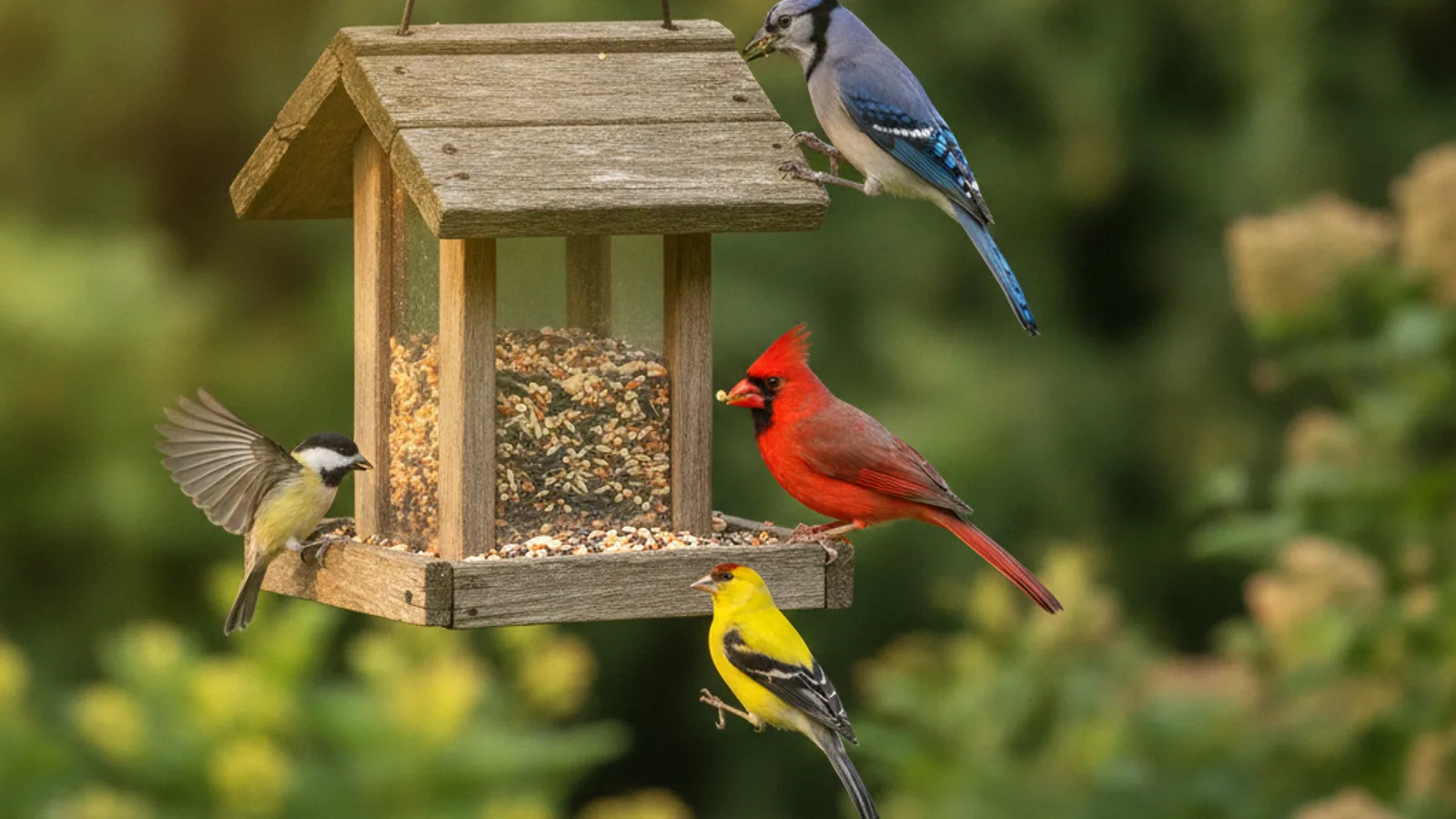
The answer to "what birds are common in my area" depends almost entirely on where you live. A Northern Cardinal is a backyard staple in Ohio but virtually nonexistent in Montana. A Steller's Jay is a daily visitor in the Pacific Northwest but unknown east of the Rockies. Geography, climate, and habitat all shape your local bird community in ways that make regional guides far more useful than national lists.
This guide breaks down the most common backyard birds by region across the United States, with identification notes and links to full species profiles for each one. Whether you just moved somewhere new or want to put names to familiar faces outside your window, start with your region below.
The Northeast hosts one of the richest year-round backyard bird communities in North America. Dense human settlement, mature deciduous forests, and reliable winters that push birds to feeders make this region excellent for backyard birding.
The American Robin is arguably the most recognized backyard bird in the Northeast. Look for the brick-red breast, dark head, and yellow bill. Robins favor lawns where they hunt earthworms, often running a few steps and then stopping to listen. They return from southern wintering grounds in February or March, a widely celebrated sign of spring.
The male Northern Cardinal's all-red plumage with a prominent crest makes it unmistakable. Females are warm brown with red highlights and the same distinctive crest. Cardinals visit sunflower and safflower feeders year-round and are among the first birds singing before dawn in early spring. They have steadily expanded northward over the past century.
Small, bold, and acrobatic, the Black-capped Chickadee announces itself with its clear "chick-a-dee-dee-dee" call. It readily visits sunflower and nyjer feeders and will land on an outstretched hand holding seed. Chickadees cache food for winter, hiding individual seeds in hundreds of locations they remember precisely.
The smallest woodpecker in North America is also one of the most common. Its black-and-white pattern and small size distinguish it from the similar Hairy Woodpecker. Downies visit suet feeders throughout winter and forage on tree bark for insects year-round. Males have a small red patch on the back of the head.
Blue Jays are loud, intelligent, and striking. Their bold blue, white, and black plumage with a prominent crest makes them easy to identify. They eat acorns, sunflower seeds, and occasionally raid other birds' nests. Jays are important seed dispersers, they bury acorns in caches that help oak forests regenerate.
Seasonal Notes, Northeast
Winter brings Dark-eyed Juncos, White-throated Sparrows, and occasionally Pine Siskins and Common Redpolls from the north. Spring migration (April–May) adds waves of warblers, vireos, and thrushes. Summer nesting season features Baltimore Orioles, Ruby-throated Hummingbirds, and various flycatchers.
The Southeast has a mild climate that supports year-round breeding activity and a mix of resident and wintering species not found elsewhere in the country. Florida in particular has a unique avifauna including species found nowhere else in the US.
The state bird of five Southern states, the Northern Mockingbird sings continuously through spring and summer, and often through the night. It can mimic dozens of other bird species within a single song sequence. Mockingbirds aggressively defend berry-producing shrubs and will dive-bomb cats, dogs, and humans who come too close to nests.
Loud for its size, the Carolina Wren delivers a booming "teakettle-teakettle-teakettle" song from dense shrubs and wood piles. Its warm rusty-brown back, buff underparts, and bold white eyebrow stripe make it recognizable. Carolina Wrens are year-round residents throughout the Southeast and nest in almost any sheltered cavity including potted plants and old boots.
The Red-bellied Woodpecker's zebra-striped back and bright red cap make identification simple despite the confusingly named "red belly" being faint and rarely visible. It visits suet feeders readily and excavates cavities in dead trees used later by bluebirds and other cavity nesters. It has expanded northward significantly over the past 50 years.
The Eastern Towhee scratches through leaf litter with both feet simultaneously, a distinctive behavior that helps locate these secretive birds. Males are boldly patterned in black, white, and rufous; females replace the black with warm brown. Their call, "drink your teeea", is one of the most recognizable sounds of Southern thickets and woodland edges.
Often called the most beautiful bird in North America, the male Painted Bunting combines blue head, red underparts, and green back in a combination that looks improbable. Females are bright green. Painted Buntings breed in parts of the Southeast and winter in Florida, visiting feeders stocked with white millet.
The Midwest sits at a crossroads of eastern forest birds and grassland species, giving it a diverse mix. The absence of mountains means species mix broadly across the region, and large agricultural areas create edge habitat favored by many sparrows and open-country birds.
Robins are among the most abundant birds across the Midwest, thriving on suburban lawns where they hunt earthworms. Large flocks winter in the region in years with good berry production, roosting in dense stands of cedars or other berry-laden trees. Their cheerful caroling song, delivered at dawn, is a defining sound of Midwest spring.
No bird signals Midwest spring more reliably than the Red-winged Blackbird. Males arrive in late February and immediately begin defending cattail marsh territories with their liquid "conk-a-ree" call. Their bright red and yellow shoulder patches, displayed during territorial disputes, are unmistakable. Females are heavily streaked brown and often mistaken for large sparrows.
The male Baltimore Oriole, brilliant orange and black, arrives in early May to nest in tall elm and cottonwood trees. The female weaves an intricate hanging nest from plant fibers. Attract them with orange halves, grape jelly, and hummingbird-style nectar feeders placed in the open. They depart for Central America in August.
The House Wren is a summer resident throughout the Midwest, nesting eagerly in wooden nest boxes placed 5–10 feet high at the edge of shrubby habitat. Despite its small size, it has an outsized bubbling song that fills suburban yards from May through July. Males fill multiple nest boxes with sticks before the female selects one to complete.
The American Goldfinch is the only common backyard bird that molts to a dramatically different breeding plumage, males transform from olive-yellow in winter to brilliant canary yellow with black wings in spring. They prefer nyjer (thistle) seed and are gregarious year-round visitors to feeders. They nest late in summer, timing it with peak thistle seed production.
The interior West encompasses desert, high plains, and mountain habitats that produce a strikingly different bird community from eastern North America. Many western species are found nowhere else, and elevation changes create rapid habitat transitions that concentrate diversity.
The House Finch is native to the West (it was introduced to the East). Males show varying amounts of red on the head, breast, and rump, the intensity of red is linked to diet quality and serves as a signal to females. House Finches are abundant at sunflower feeders and nest in hanging planters, conifers, and building crevices across the West.
The signature backyard bird of Southwestern desert yards, the Curve-billed Thrasher nests in cholla cactus and spends its days flipping leaf litter with its long, curved bill. Its loud "whit-wheet" call carries across desert neighborhoods. It visits ground-level water features readily and eats cactus fruit, berries, and insects.
The most common hummingbird across much of the interior West, the Black-chinned Hummingbird arrives in April and breeds through the summer. Males display a distinctive violet-purple lower throat that flashes in good light. They visit red tubular flowers and sugar water feeders and often perch in the open on a favorite wire or branch between feeder visits.
White-winged Doves are expanding rapidly northward from their Southwestern stronghold and are now common backyard birds from Texas to Utah. Their "who cooks for you" call is a constant presence in summer. They visit seed feeders and are important pollinators of saguaro cactus. White wing patches visible in flight distinguish them from Mourning Doves.
Bold, loud, and highly intelligent, the Western Scrub-Jay dominates suburban yards across much of California and the interior West. Its blue, gray, and white pattern, with no crest, distinguishes it from the crested Steller's Jay of mountain forests. Scrub-Jays cache thousands of acorns each fall and remember the locations of individual caches with remarkable precision.
The Pacific Northwest's temperate rainforest climate supports a distinct resident bird community, many of which are non-migratory and present year-round. The mild winters mean fewer feeder-dependent visitors than in the East, but year-round species diversity remains high.
The Steller's Jay is the western counterpart to the Blue Jay and is equally loud and bold. Its entirely dark blue body, black head, and prominent forward-swept crest make it unmistakable. Steller's Jays travel in small flocks through conifer forests and readily visit sunflower feeders, where they are dominant over smaller species.
In the Pacific Northwest, Dark-eyed Juncos are year-round residents rather than winter visitors as in the East. The Oregon subspecies, common here, has a dark hood, rufous sides, and white belly, more colorful than the slate-colored eastern form. They forage on the ground for millet and sunflower chips and nest in dense shrubs and slope banks.
The Spotted Towhee is a large, striking sparrow with a black hood, rufous sides, white belly, and white spots on the wings. Like its eastern cousin, it scratches through leaf litter with both feet simultaneously. Its "drink-your-teeea" call and buzzy "cheweee" song are common sounds of Pacific Northwest backyards from spring through fall.
Unlike most hummingbirds, Anna's Hummingbird is a year-round resident of the Pacific coast, even wintering in areas with freezing nights. Males have an iridescent rose-red head and throat that appears dark in low light but blazes pink in direct sun. They sing year-round, unusual for a hummingbird, and aggressively defend nectar feeders and flowering shrubs.
The Black-capped Chickadee is as common in Pacific Northwest backyards as in the Northeast. The Chestnut-backed Chickadee is an additional close relative found in the coastal Northwest with rich rufous back and flanks. Both species visit sunflower feeders and suet year-round and join mixed flocks in winter with nuthatches, kinglets, and creepers.
How to Identify Unfamiliar Birds in Your Yard
When a new bird appears at your feeder, note these features before reaching for a field guide:
- Size, Is it smaller than a sparrow, sparrow-sized, robin-sized, or crow-sized?
- Shape, Note bill shape (thick seed-cracker, thin insect-probe, hooked raptor bill), tail length, and overall body proportions
- Colors and patterns, Head pattern, wing bars, eye rings, streaking on breast
- Behavior, Does it scratch on the ground, cling to bark, hover at flowers, or pump its tail?
- Habitat, Was it in a shrub, at the feeder, on the lawn, in the tree canopy?
BirdSpot's species database covers thousands of North American birds. Use the species browser to filter by region or browse the families index to narrow down an unfamiliar bird by its general type.
Seasonal Changes in Your Backyard Bird List
Your local bird list shifts significantly through the year. A yard that hosts 15 species in January may have 40 or more during spring migration. A few patterns hold across regions:
- Winter: Feeder visitors increase as natural food becomes scarce. Sparrows, finches, and nuthatches become more visible. Irruptive species from northern forests may appear in some years.
- Spring migration (April–May): Warblers, vireos, tanagers, and flycatchers pass through in waves following weather fronts. Many are brief visitors pausing to refuel.
- Summer: Resident breeders dominate. Hummingbirds, orioles, and warblers are in breeding plumage. Young birds, often looking quite different from adults, begin appearing in July.
- Fall migration (August–October): Many birds pass through in duller plumage and can be harder to identify than in spring. Sparrow diversity peaks in October across much of the country.
Explore our migration timing guide for more detail on what to expect each month, and check the backyard habitat guide to bring more species within viewing distance year-round.
Backyard Birding Kit
As an Amazon Associate we earn from qualifying purchases. Links below help support BirdSpot at no cost to you.
Setting up a basic backyard birding station, here’s the starter set:
- Tube feeder (Droll Yankees), Universal feeder, cardinals, finches, chickadees, nuthatches all use it.
- Black-oil sunflower seed (40 lb), The one seed that attracts the most species.
- Suet feeder + cakes, Woodpeckers, nuthatches, wrens.
- Hummingbird feeder, For ruby-throats and visiting migrants.
- Heavy-duty shepherd’s hook, Mount feeders away from windows and fences.
- Squirrel baffle (pole), Mount 4 ft up, squirrels can’t jump higher.
- Vortex Diamondback HD 8x42, Mid-range birding binoculars under $300.
- Sibley Guide to Birds, Best ID field guide for North America.
For more, see Best Bird Feeders 2026 (full guide).