Birds of Java: Identification Guide to Javan Species
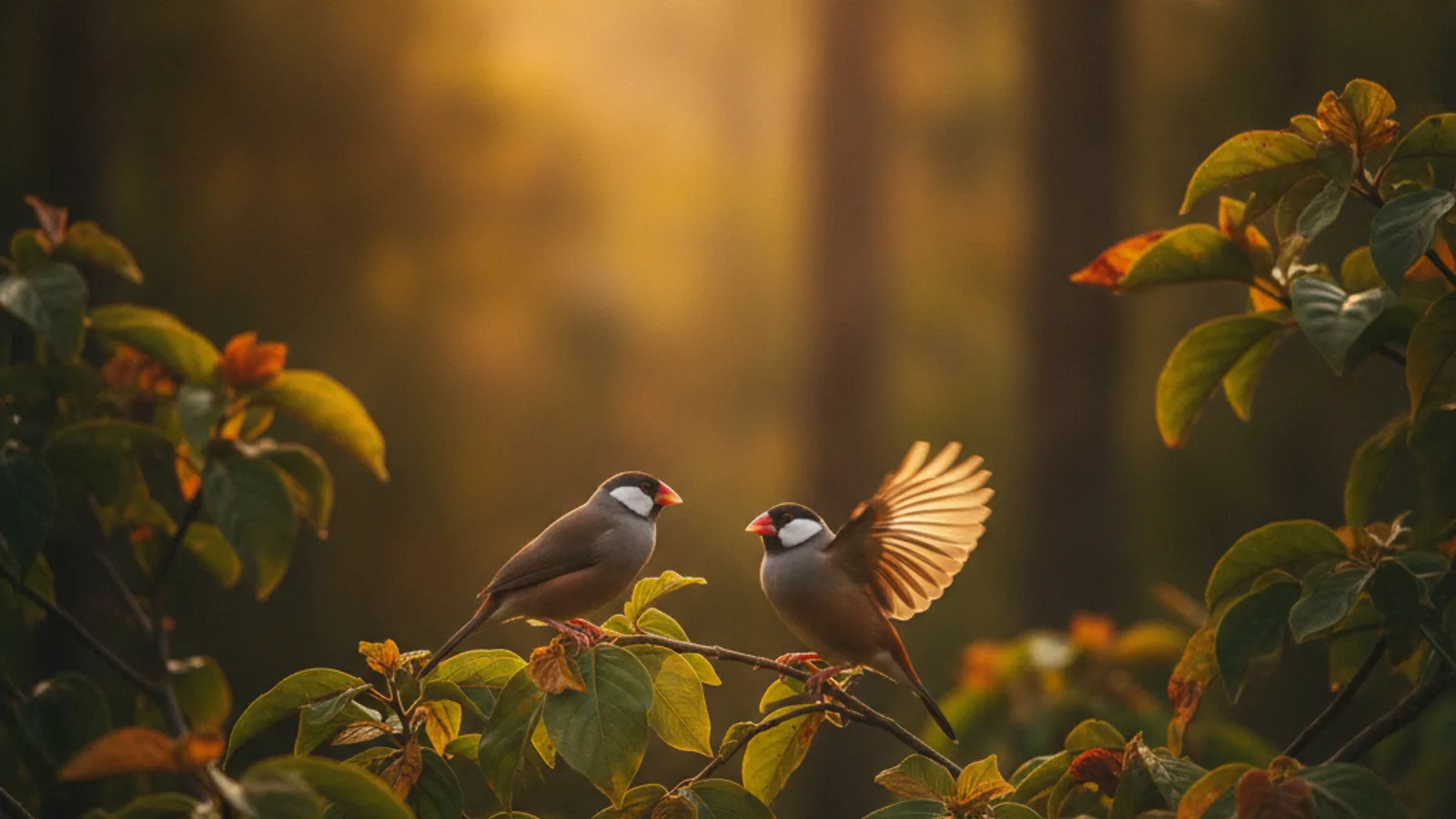
Java is one of the most biodiverse and most threatened bird regions in the world. Roughly the size of New York State, the island packs in over 500 bird species, including 30+ endemics found nowhere else. Centuries of deforestation, the pet bird trade, and habitat conversion have pushed many to the edge: nearly half of Java’s endemics are listed as Vulnerable, Endangered, or Critically Endangered on the IUCN Red List.
This guide covers the 15 most identifiable Javan birds, the species birders, eco-tourists, and conservationists most often want to see (or learn about). Each entry includes the scientific name, key field-mark, IUCN conservation status, and where to find it on Java.
The 15 Most Iconic Javan Birds
1. Java Sparrow
Padda oryzivora
EndangeredProbably the most internationally recognized Javan bird. Plump finch-like build, light gray body, jet-black head and tail, white cheek patches, and a distinctive thick pink bill. Once abundant in rice paddies (oryzivora means "rice eater"), wild populations crashed due to trapping for the pet trade. Now mostly seen in introduced populations elsewhere, few remain wild on Java.
2. Javan Hawk-Eagle
Nisaetus bartelsi
EndangeredIndonesia’s national bird and a powerful, medium-sized eagle. Distinctive upright crest, rich chestnut-and-cream barred underparts, dark brown back. Fewer than 1,000 mature individuals remain, restricted to fragmented forest reserves on Java. Best chance to see one: Mount Halimun Salak National Park or Gunung Gede Pangrango.
3. Javan Kingfisher
Halcyon cyanoventris
VulnerableA vivid blue-and-chocolate kingfisher endemic to Java and Bali. Deep brown head and chest, brilliant blue back and wings, white throat patch, scarlet bill and legs. Found near rice paddies, irrigation canals, and lowland streams.
4. Javan Plover
Anarhynchus javanicus
VulnerableA small shorebird endemic to Java’s coasts. Pale brown above, white below, with a thin black breastband and dark cap. Almost identical to Kentish Plover but separated by leg color (gray rather than black) and slightly slimmer build. Found on mudflats, salt pans, and coastal lagoons.
5. Javan Green Magpie
Cissa thalassina
Critically EndangeredOne of the most striking and rarest birds in the world. Brilliant emerald green body, deep red bill and feet, broad black mask. Possibly fewer than 250 mature individuals remain in the wild, the species has been driven to the brink by the cage-bird trade. Mount Gede Pangrango is the most likely site for sightings.
6. Javan Trogon
Apalharpactes reinwardtii
VulnerableA long-tailed forest bird with a stunning chestnut-and-yellow body and dark green back. Often perches motionless for long periods. Endemic to montane forests of West Java. Distinctive low "crrr-crrr" call.
7. Javan Whistler
Pachycephala javana
Least ConcernA small, compact passerine endemic to Java and Bali. Olive-green upperparts, yellow underparts, gray head with a thin black neck-band on males. Common in primary and secondary forest from lowlands to mid-elevations.
8. Javan Owlet
Glaucidium castanopterum
Least ConcernA small, day-active owl. Rich chestnut-brown wings, finely barred white underparts, distinctive yellow eyes and small "false eyes" on the back of the head. Common in forest edges and gardens. Active at dawn and dusk.
9. Javan Munia
Lonchura leucogastroides
Least ConcernA small finch with chocolate-brown upperparts and creamy white underparts. Found in flocks in rice paddies, grasslands, and reedbeds. Often confused with the Java Sparrow but smaller, with a thinner bill and no black-and-white head pattern.
10. Javan Cochoa
Cochoa azurea
VulnerableA medium-sized thrush-like bird with stunning iridescent blue plumage, black head and wings. Strictly montane, lives in moss-laden cloud forests above 1,400m. One of the hardest Javan endemics to see in the wild.
11. White-rumped Shama (Javan subspecies)
Copsychus malabaricus
Least Concern (species)Long-tailed black-and-orange songbird famous for its complex melodic song. The Javan subspecies is now severely depleted in the wild due to trapping for the singing-bird competition trade, though the species as a whole is widespread across South and Southeast Asia.
12. Javan Banded Pitta
Hydrornis guajanus
Least ConcernA jewel of the forest floor: deep blue head, chestnut crown, yellow throat with black "necklace," olive-green back. Highly secretive, usually heard before seen. Endemic to Java and Bali.
13. Javan Frogmouth
Batrachostomus javensis
Least ConcernA nocturnal, cryptic bird with bark-patterned plumage. Roosts motionless in trees during the day. Distinctive wide gape (for catching insects in flight) and large yellow eyes.
14. Sunda Scops-Owl
Otus lempiji
Least ConcernThe most commonly heard nocturnal bird across Java. Small, rounded, with prominent ear tufts and orange eyes. Typical call is a soft, repeated "woop". Adapts well to human-modified landscapes including suburban parks.
15. White-bellied Sea-Eagle
Haliaeetus leucogaster
Least ConcernCommon along Java’s coasts. Adults have brilliant white head and underparts, slate-gray wings and back, broad wedge-shaped tail. Often seen patrolling beaches, lagoons, and large fishponds. Distinct from inland eagles by white head and coastal habitat.
Why Java’s Bird Diversity Matters
Java sits at a biogeographic crossroads. To the east, the Wallace Line separates Asian and Australasian fauna, making Java the easternmost stronghold for many Asian bird families. The island also contains seven main mountain blocks, each with isolated populations that have evolved distinct subspecies (and in some cases, full species).
Despite this richness, Java has lost over 90% of its lowland forest in the past century. Combined with the world’s most aggressive cage-bird trade (an estimated 70+ million captive songbirds across Indonesia), the result is one of the most threatened avifaunas on the planet. The Javan Green Magpie, Black-winged Myna, and Bali Myna are among the species closest to extinction in the wild.
Where to See Javan Birds
Three key birding sites for visitors to Java:
- Mount Halimun Salak National Park (West Java), rainforest endemics including Javan Hawk-Eagle, Javan Trogon, Javan Cochoa.
- Mount Gede Pangrango National Park (West Java), montane species; best chance for Javan Green Magpie and high-elevation specialties.
- Baluran National Park (East Java), savanna and dry forest; Banteng and Green Peafowl alongside Javan Kingfisher and coastal shorebirds.
Local guides are essential, both for finding specific endemics and for navigating Indonesia’s national park access requirements.
Frequently Asked Questions
What is the national bird of Java/Indonesia?
The Javan Hawk-Eagle (Nisaetus bartelsi) is Indonesia’s national bird, designated in 1993. It became a national symbol partly because of its similarity in appearance to the mythical Garuda.
Are Java Sparrows still legal as pets?
Java Sparrows are legal in many countries as captive-bred birds (and have been domesticated for over 1,000 years). However, importing wild-caught specimens is illegal under CITES Appendix II protections. Most pet Java Sparrows in the US, EU, and UK are captive-bred.
Why are so many Javan birds critically endangered?
Two main drivers: habitat loss (Java has lost ~90% of lowland forest to agriculture and urbanization) and the cage-bird trade. Indonesia has the world’s largest songbird-keeping culture, with intense market pressure on melodic species like the Javan Green Magpie, Sumatran Laughingthrush, and various shamas.
Is "Javin bird" a real species?
"Javin" is a common misspelling or alternate transliteration of "Javan", the adjective form of Java. There is no specific bird called a "javin bird"; rather, the term refers collectively to birds of Java island, of which there are 500+ species.