Best Trail Cameras 2026: Reviewed for Wildlife & Bird Watching
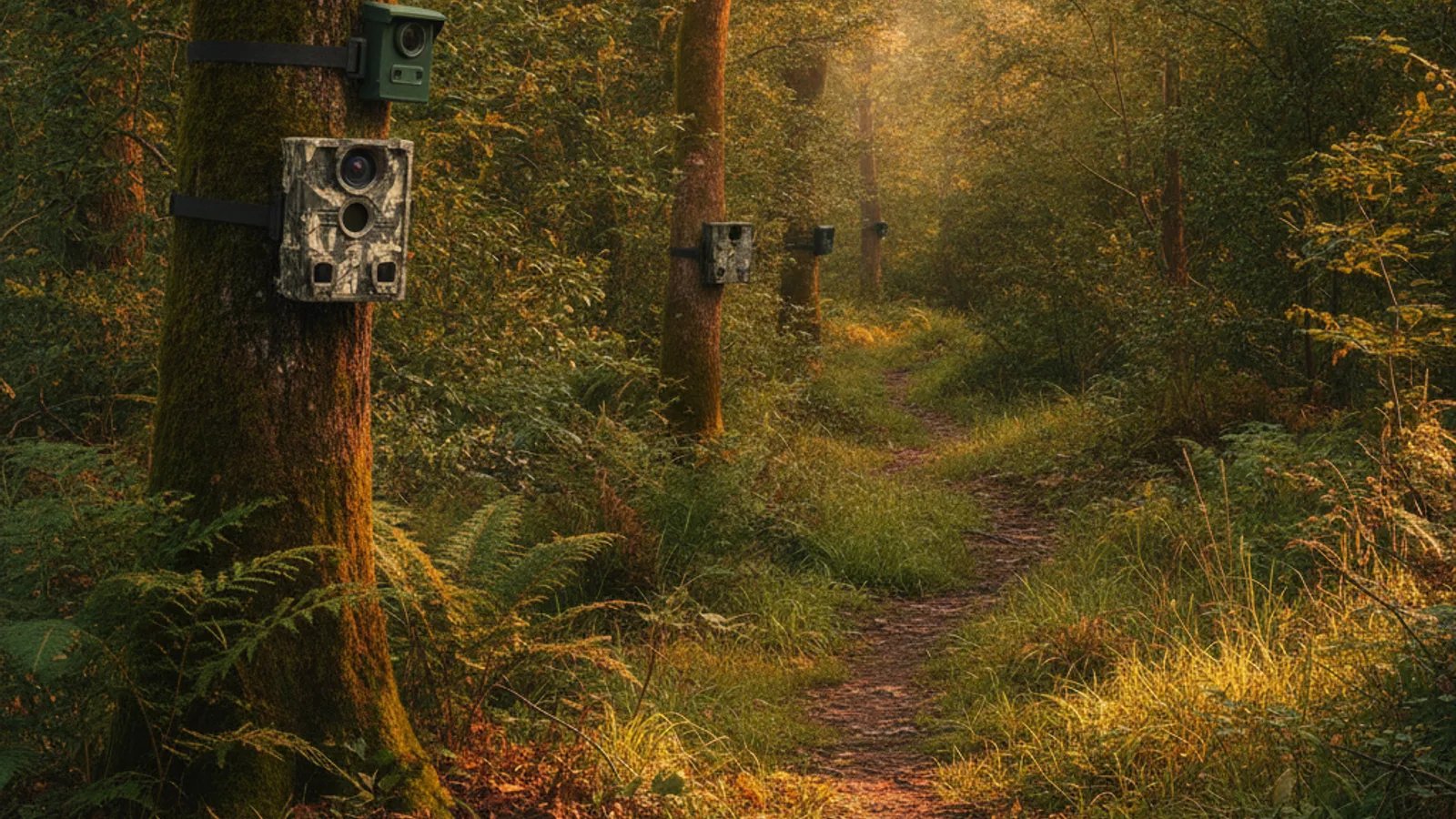
A trail camera (also called a game camera or wildlife camera) does something binoculars can’t: it watches for you while you sleep. Set one up at your bird feeder, bird bath, or along a forest trail and come back to hundreds of photos of visiting species, including secretive birds you’d never catch with active watching.
For birders, the key specs differ from hunters’ priorities. You need no-glow (black) infrared flash so you don’t startle wary birds, fast trigger speed to catch bird landings, and high enough resolution to identify species from a distance. This guide is organized by use case and budget, with birding-specific recommendations in each section.
At a Glance
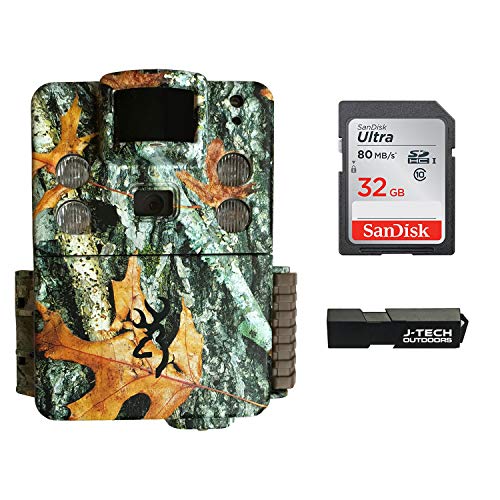 Browning Trail Cameras Strike Force HD Pro X with Card...
 Bushnell No Glow Trail Camera CORE S-4K
 Stealth Cam 2020 G42NG 24MP No-Glow Trail Camera,...
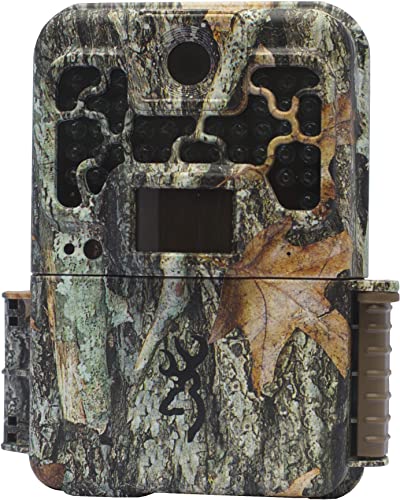 Recon Force Advantage
 Reconyx HyperFire 2 Covert IR Camera (OD Green)
 Stealth Cam Fusion X 26MP Wireless Trail Camera,...
Product images and titles from Amazon. As an Amazon Associate we earn from qualifying purchases.
Quick Picks by Use Case
| Use Case | Best Pick | Key Strength | Price |
|---|---|---|---|
| Budget feeder cam | Browning Strike Force HD Pro X | Reliable, proven, easy setup | $80-110 |
| Best overall | Bushnell Core S-4K No Glow | 4K video, 0.2s trigger, no-glow | $130-160 |
| No-glow specialist | Stealth Cam G42NG | True no-glow IR, budget price | $90-120 |
| 4K video quality | Browning Recon Force Advantage 4K | Best image quality mid-tier | $150-200 |
| Cellular / remote | Spypoint Flex-M | Free data plan available, app control | $150-200 |
| Professional grade | Reconyx HyperFire 2 | 0.2s trigger, 100,000-shot warranty | $500-600 |
| Solar powered | Stealth Cam Fusion X-Pro | Built-in solar + cellular | $350-400 |
Budget Tier ($50-120), Feeder & Bath Cameras
For a camera at your feeder or bird bath 10-20 feet away, you don’t need to spend $300. Budget cameras have improved dramatically in the past three years, 20MP+ sensors and 1080p video are standard under $100 now.
Browning Strike Force HD Pro X
The best-selling trail camera for good reason. Browning’s reliability reputation is earned, Strike Force cameras last 3-5+ years of daily use without issues. The HD Pro X gets 20MP stills, 1080p video, and 0.4-second trigger speed. At a feeder or bath, it captures every bird that lands cleanly.
The IR flash reaches 100 feet but at a feeder you’ll never need more than 15-20 feet, which means sharper, brighter images than maximum-distance shots. Runs on 8 AA batteries, lithium batteries double the life in cold weather.
Pros
- Proven long-term reliability
- 20MP stills, crisp at close range
- Time-lapse mode for slow visitors
- Sub-$100 street price
Cons
- Not true no-glow (faint red glow visible on dark-adapted birds)
- 0.4s trigger misses some very fast birds
- No cellular, no app
GardePro A3
The under-$70 option that outperforms cameras twice the price on image sharpness. The 24MP sensor is genuinely 24MP (not marketing-inflated), and the color daytime photos are excellent. Night photos at close feeder range are clear enough for species ID of most birds. Battery life lags behind Browning, but at this price it’s the most value-per-dollar in the budget segment.
Check current price →Mid Tier ($120-250), The Sweet Spot for Birders
The $130-200 range is where trail cameras get serious for birders. You get true no-glow IR (invisible to birds at night), faster trigger speeds that catch landing birds, and better low-light sensitivity. This is the tier most dedicated birders should start at.
Bushnell Core S-4K No Glow
The best all-around trail camera for birders in 2026. Three things distinguish it: genuine 4K video at 30fps (real resolution, not marketing), a 0.2-second trigger speed that catches birds mid-landing, and true no-glow IR flash that doesn’t spook nocturnal birds like owls or nightjars.
The dual-lens system (wide + standard) is unusual at this price and particularly useful at feeders, you can capture the full feeder scene and a closer crop simultaneously. 3-year warranty, weatherproof, runs on 8 AA batteries with 6-month life in moderate climate.
Pros
- True 4K video at 30fps
- 0.2s trigger, catches fast birds
- Genuine no-glow IR
- Dual-lens system
- Bushnell brand reliability
Cons
- No cellular option in this model
- Heavier than some competitors
- 4K video files are large (~100MB/min)
Stealth Cam G42NG
The “NG” stands for No Glow, and Stealth Cam’s no-glow implementation is one of the best at this price. 10MP, 0.5s trigger, 100-foot night range. Slightly older sensor than the Bushnell Core but more affordable, and the no-glow performance is better than cameras 2x the price from some brands. A strong choice if your main concern is not spooking skittish birds at a feeder or nest box.
Pros
- Excellent no-glow IR for the price
- Compact body, easy to mount
- Strong battery life
Cons
- 10MP limits enlargeability vs 20MP competitors
- 0.5s trigger is slower than Bushnell Core
Browning Recon Force Advantage 4K
If image quality for species ID is your top priority, the Recon Force Advantage produces the sharpest stills in the $150-200 range. The 4K sensor captures feather detail at 30 feet that you can enlarge and ID confidently. Video at 4K 30fps is noticeably cleaner than competitors at this price. No-glow IR, 0.3s trigger, 120-foot night range.
Check current price →Cellular Trail Cameras, Photos Sent to Your Phone
Cellular trail cameras transmit photos via LTE to your phone app within seconds of capture. No more walking out to retrieve an SD card every week, you see every bird the moment it visits. The catch: monthly data plans ($5-15/mo) or per-photo fees. Worth it if the camera is at a remote location or if you want real-time alerts.
Spypoint Flex-M
The cellular camera most birders choose in 2026. Spypoint’s free plan (100 photos/month via the app) is genuinely useful for a feeder camera where you might get 200-500 photos/week during migration season. Paid plans are $10-15/mo for unlimited. The app is the best in this category, easy organization, tagging, and downloading. Runs on AT&T or T-Mobile networks; check coverage at your location before buying.
Pros
- Free 100-photo/mo plan available
- Best-in-class mobile app
- 16MP, 0.5s trigger, true no-glow
- Works on both AT&T + T-Mobile
Cons
- Data plan required for full use
- Cell coverage gaps in rural areas
- Battery drains faster with cellular transmissions
Tactacam Reveal X-Pro LTE
Tactacam’s app is arguably even better than Spypoint’s for photo organization. The Reveal X-Pro gets 18MP stills, 1080p video, 0.5s trigger, and works on Verizon (a key advantage if you’re in Verizon country). Tactacam charges $5/mo for unlimited cloud storage, the lowest data plan in the category. Popular among birders who already use Tactacam for other cameras.
Check current price →Professional Grade ($400+)
Professional trail cameras are used by wildlife biologists, researchers, and serious photographers who need guaranteed reliability and the fastest trigger speeds. They’re overkill for a feeder camera, but compelling for a remote location you only check quarterly.
Reconyx HyperFire 2
The trail camera that wildlife biologists actually use. 0.2-second trigger speed is verified (many cheaper cameras claim 0.2s but measure significantly slower). 100,000-trigger warranty, not a typo. White LED flash gives full-color night photos at the cost of a brief flash visible to animals.
Reconyx also makes the HyperFire 2 Covert IR (no-glow version) for $100 more. If you’re studying owl or nightjar behavior where a white flash would interfere, the Covert IR is worth the premium. At this price, you’re buying a research tool that will outlast every other camera in this guide.
Pros
- 0.2s trigger, verified and consistent
- 100,000-shot warranty
- Most reliable camera in any category
- Covert IR version for true no-glow
Cons
- $500-600, significant investment
- White flash (standard) is visible to birds at night
- No cellular option (add Reconyx Hyperfire Cell module separately)
- No 4K video, Reconyx prioritizes stills
Stealth Cam Fusion X-Pro
If you’re setting up a camera somewhere you can’t easily access for battery changes, the Fusion X-Pro solves both problems: built-in solar panel + cellular transmission. In a south-facing location with moderate sun, the solar keeps it running indefinitely. 26MP, 4K video, built-in Verizon LTE. More expensive upfront but eliminates the operational friction of battery runs and SD card retrieval.
Check current price →Essential Accessories
The camera is only part of the kit. You’ll also need:
- 64GB SD card, minimum for a week of high-res photos. Use Class 10 or UHS-I rated cards. Generic cards cause write errors and missed captures. SanDisk Endurance or Lexar Professional are the most reliable in trail cameras.
- Lithium AA batteries, Energizer Ultimate Lithium last 2-3x longer than alkaline in cold weather and don’t leak. Worth the premium if your camera is out November-March.
- Security cable, most trail cameras have a standard lock port. A Python-style cable lock deters casual theft. Not theft-proof, but stops 95% of opportunists.
- External solar panel, for non-solar cameras, a $30-40 external panel dramatically extends between battery changes. Browning, Stealth Cam, and third-party options all available.
Placement Tips for Birders
Trail camera placement determines success as much as camera quality. For birders specifically:
- Face north or south, never east or west. East/west-facing cameras catch direct sun at dawn/dusk, which overexposes photos for hours each day. North-facing cameras have the most consistent light and avoid glare.
- Position 3-8 feet away from the target. Far enough to capture the full subject in frame; close enough that IR flash fills the subject properly. At 20+ feet, night photos become grainy and hard to ID.
- Match the mounting height to the subject. For ground-feeders (towhees, sparrows), mount 18-24 inches high. For platform feeders, match the feeder height exactly. For bird baths, 12-18 inches above the rim gives a clear view of birds bathing.
- Clear the trigger zone. Branches swaying in front of the camera trigger thousands of empty photos (and drain the battery). Clear a cone 10-15 feet deep in front of the lens. Wind is the enemy of battery life.
- Use time-lapse mode for slow visitors. Owls, herons, and reclusive species may spend 30+ minutes at a location without triggering motion detection. Time-lapse (one photo every 5-10 minutes) catches them.
How to Choose
- Where is it going? Feeder/bath (accessible, reliable power): any mid-tier camera works. Remote forest location (quarterly retrieval): cellular is worth the subscription. Research or nest study: Reconyx.
- Do you need no-glow flash? For owls, nightjars, or any bird you don’t want to disturb at night, no-glow is non-negotiable. For daytime-only or feeder use, standard IR glow is fine.
- How fast do the birds move? For hummingbirds or fast warblers, you need sub-0.3s trigger speed. For deer-like subjects (herons, turkeys, songbirds at feeders), 0.5s is fine.
- Will you check it weekly or monthly? Monthly = cellular strongly recommended (you’ll know immediately if something interesting visits). Weekly retrieval = standard camera with large SD card.
- What’s the minimum image quality for your ID needs? Species-level ID of common birds: 12MP and 1080p is fine. Subspecies ID or publication: 20MP+ and 4K is worth it.
Frequently Asked Questions
Do trail cameras scare birds?
Standard IR trail cameras emit a faint red glow at night, which most birds don’t react to. Birds have limited red-light sensitivity compared to mammals. True no-glow (black IR) cameras emit zero visible light, use these if you’re studying owl or nightjar behavior, or if you notice birds reacting. Daytime photos never involve flash, so there’s nothing to alarm birds during daylight.
How many photos will a trail camera take at a bird feeder?
Highly variable. A busy feeder during spring migration might generate 300-800 captures per day. A quiet winter feeder might generate 20-50. A 64GB SD card holds approximately 5,000-8,000 high-resolution still photos, so even a busy feeder won’t fill it in a week. Video mode fills cards dramatically faster, 4K video at 30fps generates about 100MB per minute.
What’s the difference between megapixels and image quality?
Trail camera megapixel ratings are often inflated by interpolation. A "24MP" budget camera may only have a 12MP sensor with software enhancement. True resolution comes from the sensor size and lens quality, not the marketing number. Browning, Bushnell, and Reconyx have more consistent real-world resolution than budget brands. When in doubt, search for user sample photos at night from that specific model, night images reveal the true sensor quality.
Can trail cameras work in winter cold?
Yes, but battery performance drops sharply below freezing. Alkaline batteries die at -10°C and become unreliable at 0°C. Lithium batteries (Energizer Ultimate) work down to -40°C and are mandatory for cameras left out November-March in northern climates. The camera electronics themselves work fine in cold; the batteries are the limiting factor.
Is a cellular plan worth the monthly cost?
For a feeder camera visible from your window: no, just check the card. For a camera in the woods 10+ minutes from your house: yes, especially during migration when you want to see what’s visiting in real-time. Spypoint’s free 100-photo plan covers casual use. Active birders tracking migration typically upgrade to the paid unlimited plan ($10-15/mo) for the season.