Squirrel-Proof Your Bird Feeder: Baffles, Poles, and Placement That Actually Work
Almost every “squirrel-proof” product review answers the wrong question. The question is not which feeder or which baffle. The question is why your setup is losing, and nine times out of ten the answer is geometry, not hardware.
Squirrel-proofing is a system with four parts: where the feeder sits, what it sits on, what blocks the climb, and what is in the tray. A $90 feeder on a wooden post two feet from a deck rail loses. A $25 tube feeder on a smooth pole in open ground with a properly mounted baffle wins for years. Work the list in the order below, because each step is cheaper and more effective than the one after it.
At a Glance
 Squirrel Buster Plus Squirrel-proof Bird Feeder...
 Droll Yankees Classic B-Series Sunflower Bird Feeder,...
 Droll Yankees New Generation Finch Flocker, Thistle...
 Stokes Select Double Suet Bird Feeder, Two Suet Capacity
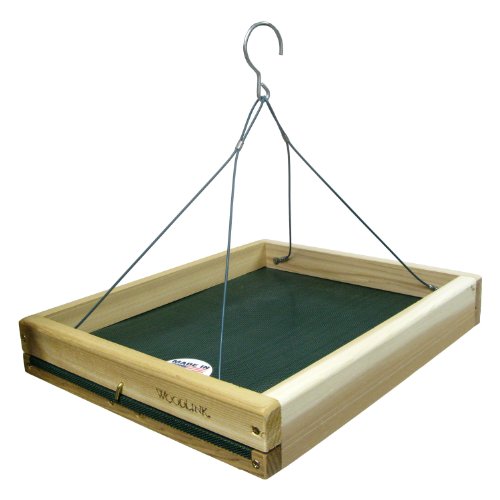 Woodlink 3 in 1 Platform Bird Feeder
 The Sibley Guide to Birds, 2nd Edition
Product images and titles from Amazon. As an Amazon Associate we earn from qualifying purchases.
Step 1: Placement, the 5-7-9 Rule
This is the whole guide in one line. A gray squirrel can jump roughly 4 feet straight up from the ground, about 8 to 10 feet horizontally from an elevated launch point, and can drop far further than that without injury. The classic 5-7-9 rule builds in margin against all three:
- 5 feet up. The feeder (and the top of your baffle) sits at least 5 feet above the ground, or above the top of the snowpack in winter, which is the detail most people forget in January.
- 7 feet across. Nothing a squirrel can stand on within 7 feet in any horizontal direction. That means fence tops, deck rails, retaining walls, the roof of a shed, patio furniture, the trash bin, a tree trunk, or a trellis. Ten feet is safer if you have the room.
- 9 feet below a branch. Nothing overhanging within 9 feet above. Squirrels drop onto feeders from limbs and gutters routinely, and a pole baffle does absolutely nothing against a drop-down attack.
Go outside and actually measure. People consistently misjudge the fence distance by two or three feet, and squirrels are not sentimental about the difference. If you cannot find a spot that satisfies all three, satisfy the two you can and expect the hardware to carry more of the load.
Placement also does double duty for the birds. Keep the feeder either within 3 feet of a window or more than 30 feet away to reduce strikes, and keep escape cover (a shrub or brush pile) roughly 10 to 12 feet away so a Black-capped Chickadee or House Finch has somewhere to bolt when a hawk passes over. That cover has to be low enough or far enough that it is not also a launch pad.
Step 2: Baffles, and Which One Fits Your Post
A baffle is a physical obstruction a squirrel cannot climb past or reach around. There are three shapes and they are not interchangeable. Matching the baffle to your post is the single most common purchase mistake.
Torpedo (cone/cylinder) baffles, for round poles
The torpedo is a tall plastic or metal cylinder with a flared bottom that slides onto a round pole and hangs on a collar or set screw. It works because it wobbles and because the squirrel cannot get a grip on the inverted flare. These are sized for standard round feeder poles, typically 1 inch or 5/8 inch diameter, and the collar simply will not fit anything square. Check the pole diameter with a tape measure before ordering, since “universal” on the listing usually means universal among round poles.
Browse torpedo baffles for round feeder poles →
Wrap-around baffles, for 4x4 and 6x6 wooden posts
If you have a 4x4 or 6x6 post, a torpedo is off the table. You want a wrap-around style, a wide flat or slightly domed disc that comes in two halves and clamps around the square post with a gasketed collar. The two things to check: that the collar is rated for your actual post dimension (a 4x4 is 3.5 inches, a 6x6 is 5.5 inches, so listings sized to nominal lumber can be misleading), and that the skirt is at least 15 to 18 inches wide so a squirrel cannot lean past the edge from the post below.
The alternative for a square post is a large dome mounted on a bracket that stands the dome out wide enough to clear the post entirely. Either way, seal the seam. A wrap-around that leaves a finger-width gap along the post is a handhold.
Wrap-around baffles for 4x4 posts → · 6x6 post baffles →
Dome (half-sphere) baffles, for hanging feeders
A dome does the opposite job. It hangs above a hanging feeder on the same hook or wire and stops the drop-down approach from a branch or eave. Domes are also the right answer for a hummingbird feeder under a pergola or a suet cage on a tree-mounted hook. Get a dome at least 15 inches across, because a squirrel will reach around a small one, and hang it just a few inches above the feeder so there is no room to sit between the two.
Dome baffles for hanging feeders →
| Your setup | Baffle type | Key spec |
|---|---|---|
| Round metal pole (1 in or 5/8 in) | Torpedo / cone | Match pole diameter; top at 5 ft |
| 4x4 wooden post | Wrap-around | 3.5 in collar, 15 in+ skirt |
| 6x6 wooden post | Wrap-around or wide dome on bracket | 5.5 in collar, 18 in+ skirt |
| Hanging from branch or eave | Dome, mounted above | 15 in+ diameter, close to feeder |
| Shepherd’s hook | Torpedo sized to the hook shaft | Check shaft is straight where baffle rides |
| Nest box on a post | Wrap-around or cone | Blocks raccoons and climbing predators |
Mounting height is the whole ballgame. The top edge of the baffle should be 4.5 to 5 feet off the ground. A baffle mounted too low is decorative. Squirrels will simply jump to the pole above it, and you will conclude that baffles do not work when what actually happened is that you gave them a step stool.
Step 3: The Pole Matters More Than You Think
Smooth metal beats wood, every time. A squirrel needs claw purchase, and a 1 inch powder-coated steel pole gives it almost none. A pressure-treated 4x4 is a ladder with a feeder on top, which is why square-post setups need the wider baffle in the first place. If you are buying new, buy a straight smooth-tube pole system and skip the problem.
Two more pole details that decide outcomes:
- A shepherd’s hook without a baffle is a ladder. Thin decorative hooks are the most common failed setup in North American backyards. Get a heavy 1 inch or 1.25 inch shaft (thin ones bow under a full feeder and under snow), and add a torpedo baffle sized to it.
- Avoid seams, brackets, and hose clamps below the baffle. Every protrusion is a foothold. Sectional poles with wide couplers give squirrels somewhere to brace for the jump.
Feeder pole systems with baffle included → · Heavy-duty shepherd’s hooks →
Step 4: Weight-Activated Feeders, the Hardware Backstop
Once placement and the baffle are right, a weight-activated feeder covers the remaining edge cases: the unusually athletic squirrel, the neighbor’s fence you cannot move, and the chipmunks that climb from below in spring.
Squirrel Buster Plus
A spring-loaded outer shroud slides down and closes the feeding ports when anything heavier than a songbird puts weight on it. The tension is adjustable, so you can set it to admit a Northern Cardinal on the cardinal ring while still shutting out grackles and starlings. Chew-proof metal ports, and the maker honors a lifetime warranty on squirrel damage.
Pros
- Adjustable weight threshold
- Metal ports resist chewing
- Disassembles fully for cleaning
Cons
- Costs 2-3x a plain tube feeder
- Pole adaptor sold separately
- Does not stop seed spillage feeding squirrels on the ground
Two honest caveats. A weight-activated feeder does not stop a squirrel from hanging on it and shaking seed onto the ground, which is a meal either way, so a seed catcher tray pays for itself. And a closing shroud also shuts out larger welcome visitors, so if you want Blue Jays or Downy Woodpeckers, run a separate open platform or suet feeder in the same yard.
Other feeders worth pairing on a baffled pole: the Droll Yankees Classic B-Series sunflower tube for White-breasted Nuthatches and Tufted Titmice, the Droll Yankees Finch Flocker thistle feeder for American Goldfinches, the Stokes Select double suet feeder, and the Woodlink 3 in 1 platform feeder if you accept that an open tray is the one style no baffle fully protects.
Step 5: Switch to Safflower
The cheapest deterrent in this entire guide is a different bag of seed. Most squirrels find safflower bitter and abandon a feeder filled with it after a few days of testing. Grackles, starlings, and house sparrows usually skip it too, which is a second win. Meanwhile cardinals love it, and chickadees, titmice, House Finches, and nuthatches all take it readily.
Two things to know. Squirrel populations vary, and a determined local group will eventually eat safflower if nothing else is available, so treat it as pressure reduction rather than a wall. And birds need a transition period: expect a week or two of reduced traffic while your regulars figure out the new seed. Do not give up on day three.
More on matching seed and feeder style to the birds you actually have is in our beginner’s guide to backyard birds. If you want to keep sunflower on the menu, run safflower in the pole-mounted feeder and sunflower only in the weight-activated one.
Bulk safflower seed on Amazon →
What Not To Do
Some of the most-repeated backyard advice on this topic is harmful. Be firm with yourself here.
- Never grease or oil a pole. Petroleum jelly, cooking spray, axle grease, and silicone all end up on feathers. Feather structure is what waterproofs and insulates a bird, and oil destroys it. A greased bird can die of hypothermia in mild weather. This is not a small risk, and it is the single worst tip circulating online.
- Never put hot pepper on seed near a feeder. The theory is that birds do not sense capsaicin and mammals do. In practice the dust blows into the eyes of birds, of you while you fill the feeder, and of pets and children underneath it. It is also messy, ineffective in rain, and unnecessary once a baffle is up.
- Do not trap and relocate. Live-trapping and moving squirrels is illegal in many states and provinces without a permit, relocated animals frequently die, and the vacancy simply pulls in the next squirrel from the surrounding territory within days. You are not removing a squirrel, you are running a shuttle service.
- Do not use spinning motorized perches or shock devices. They injure animals, break in weather, and none of it is necessary when the geometry is right.
- Do not skip cleanup. Spilled seed under the feeder is what draws squirrels, rats, and raccoons in the first place. Rake weekly or fit a catcher tray.
A Baffle Protects More Than Seed
The same pole baffle that stops a squirrel stops a raccoon, and raccoons are a far bigger problem than lost sunflower. On a nest box pole, a cone or wrap-around baffle is standard practice for keeping raccoons, cats, and rat snakes from reaching eggs and nestlings. Anyone running Eastern Bluebird boxes or a Purple Martin colony should treat a predator guard as mandatory equipment, not an upgrade. Both are cavity nesters that readily take to human-supplied boxes and gourds, which is exactly why they need the guard. Mount it the same way: high, wide, and with no gap along the post.
If your yard also hosts a Ruby-throated Hummingbird feeder or a Baltimore Oriole jelly station, both benefit from a dome above rather than a pole baffle below, since the raiding usually comes from the eave. Neither species nests in a box, so this is about protecting the feeder, not a nest site: hummingbirds build tiny lichen-covered cups on branches and orioles weave a hanging pouch.
The 20-Minute Fix, In Order
- Measure the distance from your feeder to the nearest fence, rail, roof, and trunk. If anything is under 7 feet, move the feeder before buying anything.
- Check the height. Top of baffle at 5 feet, measured from the ground, more where snow piles.
- Look up. Any branch within 9 feet overhead means you need a dome as well as, or instead of, a pole baffle.
- Identify your post: round pole, 4x4, 6x6, or hanging. Buy the matching baffle shape, not the one with the best photo.
- Swap the seed in your most-raided feeder to straight safflower.
- Only then, if squirrels still win, add a weight-activated feeder.
Frequently Asked Questions
How do I stop squirrels from getting on my bird feeder?
Fix placement first, then add hardware. Mount the feeder at least 5 feet off the ground, 7 feet horizontally from any fence, deck rail, roof edge, or tree trunk a squirrel can launch from, and 9 feet below any overhanging branch. Then add a baffle on the pole below the feeder. A weight-activated feeder is the backstop, not the starting point.
What squirrel baffle works on a 4x4 post?
A torpedo baffle will not fit a 4x4, because its collar is sized for a round pole. For a square wooden post you need a wrap-around baffle, a flat or domed disc that clamps around the post in two halves, or a large dome on a bracket wide enough to clear the post. Look for a collar rated to the actual 3.5 inch dimension of a 4x4 and a skirt at least 15 to 18 inches wide. A 6x6 measures 5.5 inches and needs the wider skirt.
How high should a squirrel baffle be on a pole?
The top of the baffle should sit 4.5 to 5 feet above the ground so a squirrel cannot clear it from a standing jump. Measure to the top edge of the baffle, not to the bracket. In snow country, measure from the expected snow line instead of bare ground.
Do squirrel baffles actually work?
Yes, when mounted high enough and combined with 7 feet of clearance from launch points. A correct baffle on a smooth metal pole stops climbing squirrels reliably, and it also blocks raccoons and ground predators from nest boxes. Nearly every reported baffle failure traces back to mounting height or a nearby fence, not to the product.
What bird seed do squirrels not like?
Safflower. Most squirrels reject it as bitter, and grackles and starlings usually pass on it as well, while cardinals, chickadees, titmice, and house finches eat it happily. Give your birds one to two weeks to switch over before judging the results.
Can I put grease or hot pepper on my bird feeder pole?
No. Grease and petroleum jelly destroy the waterproofing of feathers and can be fatal to birds that brush against a coated pole. Hot pepper dust blows into eyes, yours included, and washes off in rain. Neither is necessary once the baffle and placement are right.
Related Birding Guides
- Best Bird Feeders 2026, by Category
- Backyard Birds for Beginners
- Best Hummingbird Feeders 2026
- Best Bird Baths 2026
- Best AI Bird Feeders With No Subscription
- Common Backyard Birds Identification
- Gifts for Bird Lovers 2026
Not sure who is emptying your feeder? Upload a photo to our free bird photo ID tool, or use the song ID tool to name what you are hearing before it lands. For the shelf reference that settles arguments, the Sibley Guide to Birds, 2nd Edition is still the standard, and a Birdfy smart feeder with camera will tell you exactly which squirrel is beating your setup and how.