Rose-breasted Grosbeak Migration 2026: Schedule, Map & How to Attract
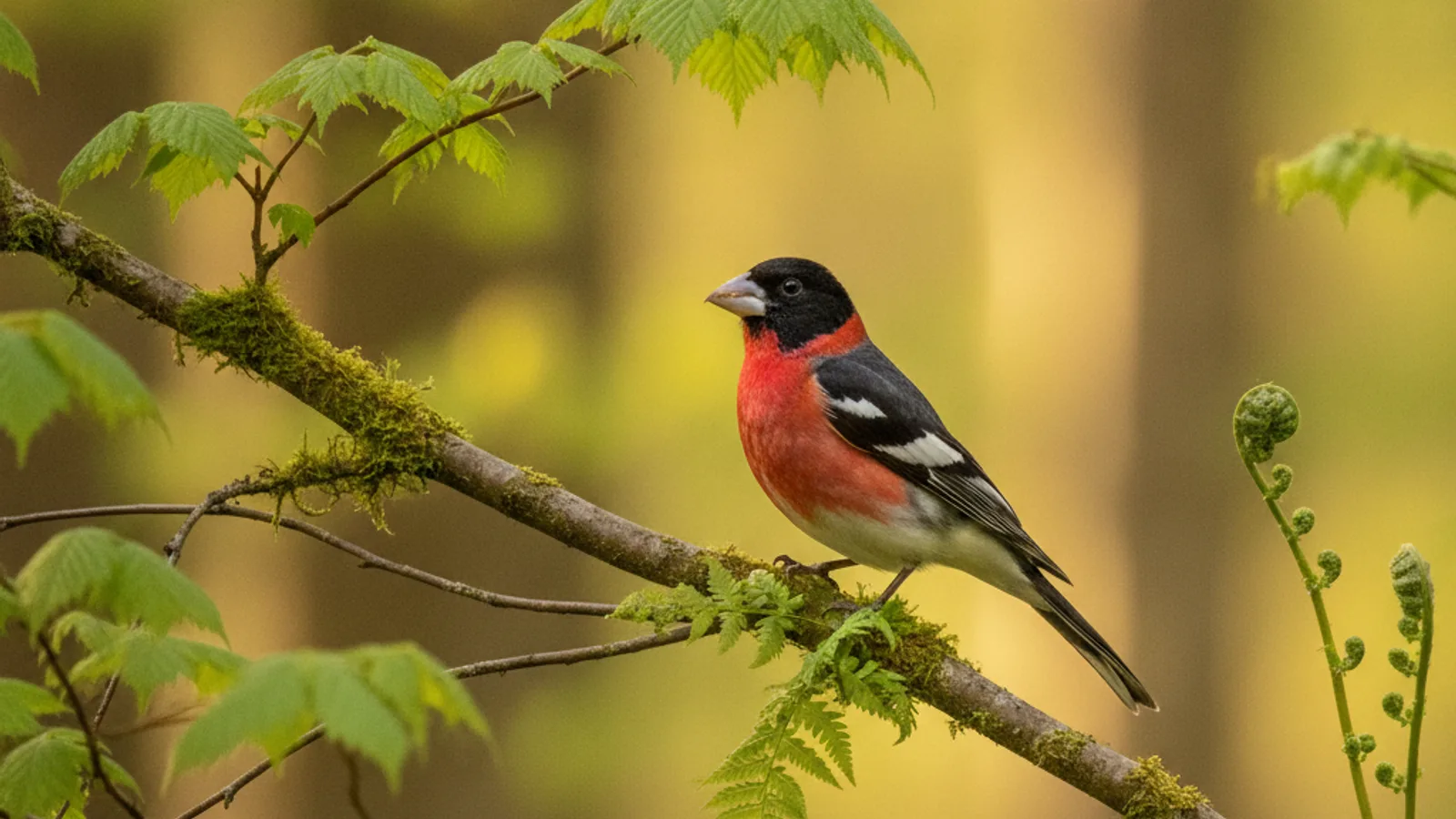
A male Rose-breasted Grosbeak at your feeder stops conversation. Black and white with a brilliant rose-red chest patch and a heavy seed-cracking bill, they're one of the most spectacular spring migrants in eastern North America. The window for hosting them at your feeders is short, often just 1–3 weeks during spring migration, so timing matters.
Where Do Rose-breasted Grosbeaks Spend the Winter?
Rose-breasted Grosbeaks winter from southern Mexico through Central America and northern South America (Colombia, Venezuela, Ecuador). They favor mid-elevation tropical forests, often around shade-grown coffee plantations.
Rose-breasted Grosbeak Migration Route & Timing
Like Baltimore Orioles and Indigo Buntings, Rose-breasted Grosbeaks cross the Gulf of Mexico in overnight non-stop flights, making landfall along the Gulf Coast in late April. Birds disperse rapidly northward, up to 100 miles per night when winds align.
- Late April: First arrivals along the Gulf Coast.
- Early May: Mid-South and Mid-Atlantic states.
- Mid-May: Northeast, Great Lakes, and Upper Midwest fill in.
- Late May: Northern range edge in Canada (Ontario, Quebec, the Maritimes).
- Fall (August–October): Quieter southward movement, fewer feeder visits.
Rose-breasted Grosbeak Migration Schedule 2026: Arrival Dates by Region
| Region | First Arrivals | Peak Numbers | Fall Departure |
|---|---|---|---|
| Gulf Coast (TX, LA, MS, AL) | April 20 – 28 | Late April | Mid-September |
| Mid-South (TN, NC, VA, KY) | April 25 – May 5 | Early May | Late September |
| Mid-Atlantic (PA, MD, NJ, DE) | May 1 – 8 | Mid-May | Late September |
| Great Lakes (OH, IN, IL, MI) | May 5 – 12 | Mid-May | Mid-September |
| New England (NY, MA, CT, VT) | May 8 – 15 | Mid to late May | Mid-September |
| Upper Midwest (MN, WI, IA) | May 8 – 18 | Late May | Early September |
| Southern Canada (ON, QC, NB, NS) | May 12 – 22 | Late May / early June | Late August |
How to Attract Rose-breasted Grosbeaks
Heavy seed eaters with conical bills, Rose-breasted Grosbeaks readily visit standard backyard feeders during spring migration.
- Black-oil sunflower seed. The single most reliable food. Use a hopper or platform feeder rated for larger birds. Their heavy bills crack sunflower hulls effortlessly.
- Safflower seed. Their second favorite, with the bonus that squirrels and starlings dislike it. A safflower-only feeder during spring migration practically guarantees grosbeaks if they're in your area.
- Tray or platform feeder. Grosbeaks are large birds (about 7 inches) and prefer flat surfaces over small perches. A simple platform with sunflower seed beats any tube feeder.
- Suet. Especially helpful in cool, wet springs when migration food is scarce. Both sexes will visit suet cakes.
- Birdbath. Moving water (dripper or fountain) attracts grosbeaks reliably. They bathe and drink heavily after long migration flights.
- Mature deciduous trees. Once breeding starts, pairs nest 10–25 feet up in maples, oaks, or birches at forest edges. Yards near mature woodlots are most likely to host nesters.
How to Identify Rose-breasted Grosbeaks
- Adult male: jet black head and back, white belly, bright rose-red triangle on the chest. White wing patches flash in flight.
- Adult female: heavily streaked brown and white with a bold white eyebrow stripe. Looks almost like an oversized sparrow until you notice the heavy bill.
- Both sexes have a thick, conical, pale pink-ivory seed-cracking bill.
- First-spring males: variable mix of brown, white, and patchy red, they look "wrong" because they're molting into adult plumage.
- In flight, white wing patches and white tail patches flash distinctively. The flight is direct and powerful, not bouncing.
Frequently Asked Questions
When do Rose-breasted Grosbeaks return?
Rose-breasted Grosbeaks return to the southern US in late April, the Mid-Atlantic and Great Lakes states by early to mid-May, the upper Midwest and New England by mid to late May, and southern Canada by late May.
How long do Rose-breasted Grosbeaks stay at feeders?
In most yards, peak feeder visits last 1–3 weeks during spring migration (early to mid-May in most of the breeding range). After pairs settle for nesting, feeder visits drop sharply. Some pairs return to feeders in late summer with fledglings.
What do Rose-breasted Grosbeaks eat?
They are omnivores: seeds (sunflower, safflower, weed seeds), fruit (mulberries, raspberries), tree buds and flowers in spring, and insects (caterpillars, beetles) during the breeding season. They feed insects to nestlings.
Are Rose-breasted Grosbeaks rare?
No, they are common in their breeding range across the eastern US and southern Canada. eBird estimates around 4 million breeding birds. Populations are stable to slightly declining due to habitat loss in tropical wintering areas.
Do Rose-breasted Grosbeaks come to feeders all summer?
Some pairs visit feeders throughout the breeding season, especially when raising young. Most disappear into the woods to nest after the first week of May and only reappear at feeders in late summer with newly fledged juveniles.
Related Reading
- Spring Bird Migration 2026: Complete Guide
- Baltimore Oriole Migration 2026
- Purple Martin Migration 2026
- Ruby-Throated Hummingbird Migration 2026
- How to Attract Birds to Your Yard
Rose-breasted Grosbeak Backyard Kit
As an Amazon Associate we earn from qualifying purchases. Links below help support BirdSpot at no cost to you.
Grosbeaks are seed-cracker songbirds, they hit sunflower feeders hard during spring migration:
- Sunflower tube feeder, Grosbeaks need a sturdy perch, they’re heavier than finches.
- Black-oil sunflower seed (40 lb), The universal seed; grosbeaks prefer this above all.
- Hopper feeder, Open platform layout works for grosbeaks who want elbow room.
- Orange halves spike, Some grosbeaks visit orange-and-jelly feeders alongside orioles.
- Vortex Diamondback HD 8x42, Watch their pink-and-black breast pattern in detail.
For more, see Best Bird Feeders 2026.