Ruby-Throated Hummingbird Migration 2026: Arrival Dates, Map & Feeding Guide
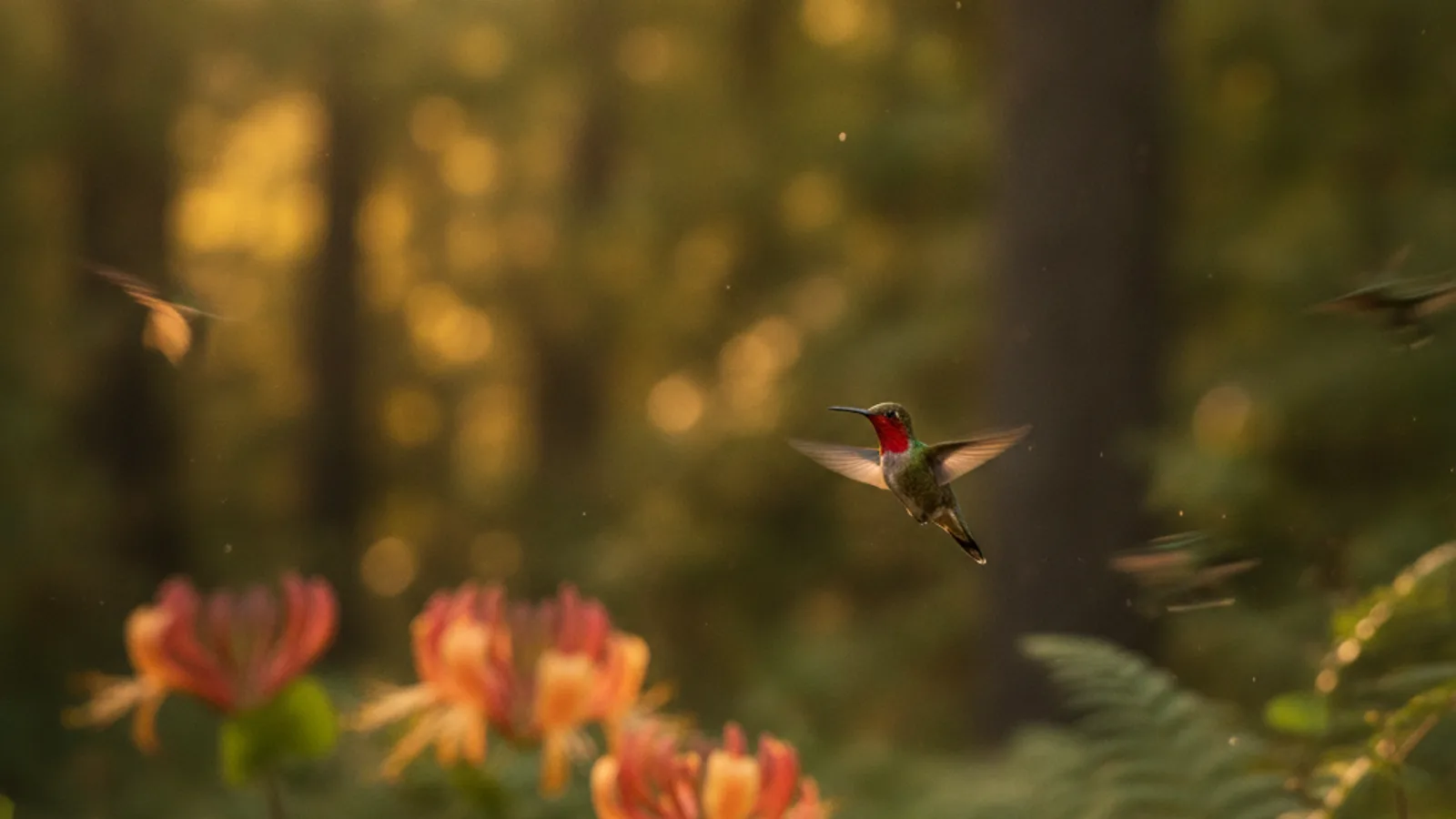
Each spring, a bird weighing less than a nickel crosses 500 miles of open ocean without stopping. The Ruby-throated Hummingbird, the only hummingbird species that breeds east of the Mississippi, makes this remarkable journey twice a year, and backyard birders across the eastern United States eagerly track its northward progress every spring. If you have been wondering when hummingbirds come back in 2026, this guide has the complete picture: migration timing by region, the 2026 hummingbird migration map, and everything you need to know about setting up feeders before they arrive.
When Ruby-Throated Hummingbirds Migrate
Ruby-throated Hummingbirds winter from southern Mexico south through Central America, with a smaller number wintering in southern Florida. The spring migration north begins as early as late January in southern Mexico, but the birds most North American backyard birders know, the ones bound for the eastern United States and Canada, typically depart their wintering grounds in February and March.
The timing of the migration is driven primarily by day length rather than temperature. That means hummingbirds will push north on schedule even if your local weather is still cold. Migration proceeds in waves from south to north, following a predictable regional sequence each year.
- Gulf Coast (TX, LA, MS, AL, FL): First arrivals typically appear in late February to mid-March. Texas Gulf Coast birders often report the first hummingbirds of the year in the last week of February.
- Southeast (GA, SC, NC, TN, AR): The leading edge of migration reaches the Southeast in mid to late March, with numbers building through April.
- Mid-Atlantic and Midwest (VA, MD, PA, OH, IN, IL): Expect the first hummingbirds in mid to late April. Peak numbers arrive early to mid-May.
- Northeast (NY, NE, Great Lakes north): Ruby-throated Hummingbirds typically arrive in the Northeast and upper Midwest in late April through mid-May. New England and southern Canada see first arrivals in May.
- Northern range (MI, WI, MN, ON, QC): The northernmost breeding areas receive hummingbirds in mid to late May. Some breeding birds in southern Canada arrive as late as early June.
The Migration Route: Crossing the Gulf of Mexico
The Ruby-throated Hummingbird's migration route is one of the most dramatic of any North American bird. The majority of the eastern population makes a direct crossing of the Gulf of Mexico, roughly 500 to 600 miles of open water, in a single nonstop flight lasting 18 to 22 hours. This is extraordinary for a bird that weighs 3 grams.
Before attempting the crossing, hummingbirds spend several weeks on the Yucatan Peninsula gorging on nectar and small insects, nearly doubling their body weight. That fat reserve is the fuel for the Gulf crossing. They typically depart the Yucatan at night and arrive on the Louisiana and Texas coast the following evening, often appearing exhausted on the first flowers or feeders they find.
Not all Ruby-throated Hummingbirds cross the Gulf. A portion of the population, particularly birds from the western edge of the breeding range, takes an overland route through Mexico and Texas, entering the United States along the Rio Grande. But the open-water crossing is the dominant strategy for birds heading to the Mid-Atlantic, Northeast, and Great Lakes.
After making landfall on the Gulf Coast, birds fan out northward across the eastern United States. The migration front advances roughly 20 miles per day under favorable conditions, a pace that brings the hummingbird migration map to life as a northward wave you can literally watch advance week by week on eBird's sighting maps.
2026 Arrival Date Predictions by Region
Hummingbird arrival dates are remarkably consistent from year to year because they are tied to day length, not weather. La Nina conditions have weakened heading into spring 2026, meaning migration timing should track close to historical averages. The table below reflects expected first-arrival windows based on decades of eBird data and banding records.
| Region / States | First Arrivals | Peak Numbers | When to Have Feeders Ready |
|---|---|---|---|
| Gulf Coast (TX, LA, MS, AL, FL panhandle) | Feb 20 – Mar 10 | Mid to late March | February 10 |
| Deep South (GA, SC, FL north) | Mar 10 – Mar 25 | Early to mid-April | March 1 |
| Mid-South (TN, AR, NC, KY, VA) | Mar 20 – Apr 5 | Mid-April | March 10 |
| Mid-Atlantic (PA, NJ, MD, DE, DC) | Apr 10 – Apr 22 | Late April to early May | April 1 |
| Great Lakes (OH, IN, IL) | Apr 18 – Apr 28 | Early to mid-May | April 10 |
| New England (MA, CT, RI) | Apr 25 – May 5 | Mid-May | April 15 |
| Upper Midwest (MI, WI, MN, IA) | May 1 – May 12 | Mid to late May | April 20 |
| Northern New England & upstate NY | May 5 – May 15 | Late May | April 25 |
| Southern Canada (ON, QC, Maritimes) | May 10 – May 25 | Late May to early June | May 1 |
How to Attract Ruby-Throated Hummingbirds
Attracting hummingbirds is straightforward once you understand what they need: high-energy nectar, reliable water, and shelter. The nectar feeder is the most important tool, but the right flowers and a safe, shaded yard setting matter too.
Nectar Feeders: The Basics
The sugar-water ratio that most closely matches natural flower nectar is 4 parts water to 1 part white granulated sugar. That works out to 1 cup of sugar dissolved in 4 cups of water. Bring the water to a boil, add the sugar, stir until dissolved, and let it cool completely before filling the feeder. Any unused solution keeps in the refrigerator for up to two weeks.
Two important rules that every hummingbird feeder guide agrees on: no red dye, and no honey or artificial sweeteners. Red dye is unnecessary, hummingbirds find feeders by color (most feeders have red plastic parts) and by memory, not by the color of the nectar. Honey ferments quickly and can cause a fatal fungal infection. Artificial sweeteners provide no calories and can harm the birds. Plain white sugar and water is all you need.
Setting Up Your Feeding Station
Feeder Types
Both saucer-style and bottle-style feeders work well. Saucer feeders (a shallow dish with feeding ports on top) are easier to clean and less prone to dripping in heat, which can attract ants and wasps. Bottle-style feeders hold more nectar and are often preferred for higher-traffic situations. Whatever style you choose, buy one that fully disassembles for cleaning, scrubbing mold out of a poorly designed feeder is miserable and often impossible.
Placement
Hang feeders in partial shade. Direct sun accelerates fermentation and can cause the sugar solution to spoil in as little as 24 hours on a hot day. A spot with morning sun and afternoon shade is ideal. Place feeders near a window so you can watch from indoors, but far enough from the glass (at least 3 feet or more than 30 feet) to reduce collision risk. If you have multiple feeders, space them out of sight of each other, dominant males will guard a single feeder and prevent other hummingbirds from feeding.
Cleaning Schedule
This is non-negotiable: clean feeders every 2 to 3 days in warm weather, more often in heat above 85°F. Fermented nectar smells sour and can make hummingbirds sick. Mold in feeders is dangerous. Use hot water and a bottle brush, no soap, which leaves residue. A dilute white vinegar rinse once a week helps prevent mold buildup. If the nectar looks cloudy or you see dark specks inside the feeder, clean it immediately.
Best Plants to Attract Hummingbirds
Native flowers that produce abundant tubular nectar are the best long-term strategy for attracting hummingbirds. They provide natural foraging opportunities and reduce your dependence on feeder maintenance. Hummingbirds will actively patrol gardens with the right flowers and may visit even if you never put up a feeder.
A mix of early-blooming species (columbine, native phlox) and late-summer bloomers (cardinal flower, bee balm, salvia) ensures that your garden supports hummingbirds from arrival through fall departure.
Signs They Have Arrived
How do you know when the first Ruby-throated Hummingbirds have reached your area? Watch for these cues:
- Males arrive first. Male Ruby-throated Hummingbirds precede females by 1 to 2 weeks. The first bird you see will almost certainly be an adult male with his brilliant iridescent red throat. In good light the gorget flashes like a ruby; in shade it can appear black or dark brown.
- Feeder visits. If your feeders are up and clean, the first hummingbird often appears within 24 hours of the birds reaching your neighborhood. They are actively searching for food after their northward journey.
- Territorial chittering. Hummingbirds are pugnacious. Once a male has found your feeder, you may hear rapid, high-pitched chipping calls as he chases off rivals. This chattering is often the first sign that a bird is nearby.
- Hovering at red objects. In early spring, hummingbirds sometimes investigate red flowers, red caps, or even red clothing. They are calibrating their mental map of food sources in an unfamiliar territory.
- eBird reports. Set up a species alert for Ruby-throated Hummingbird in your county at eBird.org. You will get an email the moment a neighboring birder spots one, giving you 24 to 48 hours of advance warning.
Fall Migration: When Do Hummingbirds Leave?
Fall migration begins surprisingly early. Adult males start drifting south in late July, well before temperatures drop or flowers fade. Females and juveniles follow in August, and by mid-September the vast majority of Ruby-throated Hummingbirds have left the northern parts of their breeding range.
The final stragglers linger into October across the Southeast. Immature birds hatched that summer are often the last to leave, continuing to visit feeders as late as early October in the Mid-Atlantic and late October in the Deep South.
Peak fall dates by region:
- Upper Midwest and Canada: Most birds depart by mid-August; stragglers through early September.
- Great Lakes and New England: Majority gone by mid-September; a few linger into early October.
- Mid-Atlantic: Most birds depart by late September; occasional birds into mid-October.
- Deep South: Last birds typically leave by late October to early November.
Frequently Asked Questions
Do hummingbirds return to the same feeder every year?
Yes. Ruby-throated Hummingbirds show strong site fidelity, returning to the same gardens and sometimes the exact same feeders year after year. Research using banding data shows that individual birds return to the same wintering areas, migration stopover sites, and breeding territories with remarkable consistency. If you hosted hummingbirds last summer, the same individuals, or their offspring, are likely heading your way again.
What does 4:1 sugar water mean exactly?
Four parts water to one part white sugar. For a typical batch: dissolve 1 cup of white granulated sugar in 4 cups of water. Boil the water first to dissolve the sugar easily and kill any mold spores. Let it cool completely before filling the feeder. Never use brown sugar, powdered sugar, honey, agave, or artificial sweeteners. Never add red food coloring.
How can I stop ants from getting into my hummingbird feeder?
Use an ant moat, a small cup-shaped device that hangs above the feeder and holds water. Ants cannot cross the water barrier to reach the feeder. Keep the moat filled. If ants are still getting through, check that no leaves or branches are touching the feeder and providing a bridge over the moat.
Can I have too many feeders?
Not really. More feeders placed out of sight of each other prevents any single dominant male from monopolizing the food source. More birds get to feed, and you get more hummingbird activity to watch. The only limit is how many feeders you can keep clean on a regular schedule.
For more on what else is arriving this spring, see our Spring Migration 2026 guide covering warblers, raptors, shorebirds, and the best viewing hotspots across North America. If you enjoy feeding and watching spring migrants, the Baltimore Oriole Migration 2026 guide covers a species that arrives on nearly the same schedule and shares the same love of nectar feeders.
Hummingbirds are worth the preparation. Get your feeders up early, keep the solution fresh, plant a few natives, and you will have these extraordinary birds visiting from spring arrival through fall departure. The drumming of tiny wings outside your window is one of spring's great rewards, and it is closer than you think.
Hummingbird Backyard Kit
As an Amazon Associate we earn from qualifying purchases. Links below help support BirdSpot at no cost to you.
Hummingbirds need clean feeders, fresh nectar, and ant moats. Cleaning is non-negotiable, mold kills hummingbirds:
- More Birds Ruby hummingbird feeder, Glass bottle (won’t cloud), 5 ports, fully disassembles for cleaning.
- Hummingbird feeder cleaning brush, Reaches into nectar reservoirs and feeding ports.
- Ant moat (drip cup), Critical, ants find nectar in days without one.
- Pre-made nectar (concentrate), Just add water. No food coloring.
- Window-mount hummingbird feeder, For close-up viewing through your kitchen window.
For more, see Best Bird Feeders 2026.