Eastern Bluebird Migration 2026: Schedule, Map & How to Attract
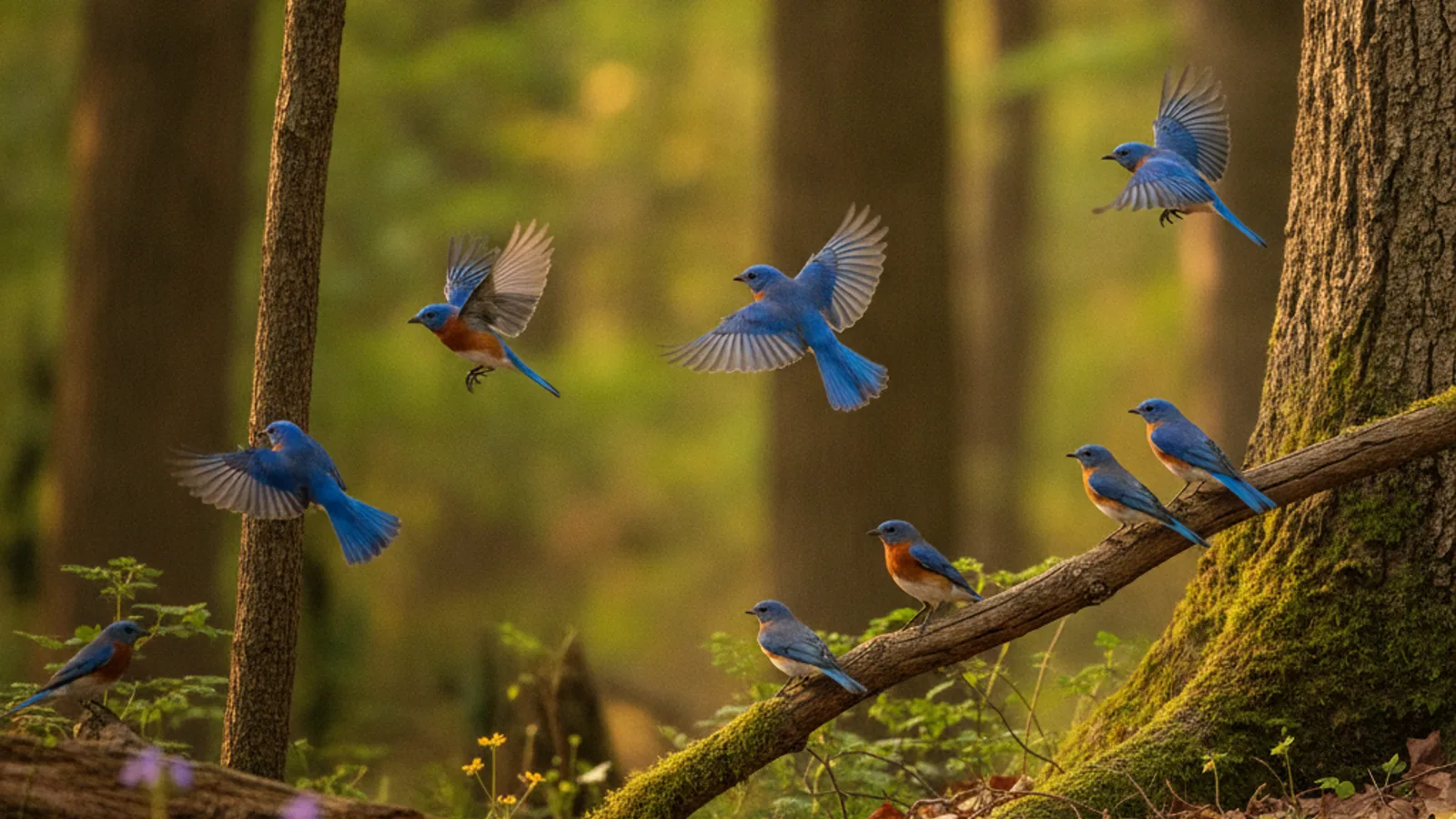
Eastern Bluebirds aren't fully migratory, populations across most of their range are partially or fully resident, but they do shift seasonally, and "when do bluebirds come back?" remains one of the most-searched bird questions every spring. The actual answer depends heavily on where you live and how cold the winter ran.
Where Do Eastern Bluebirds Spend the Winter?
Northern populations (above Tennessee/Virginia) generally migrate south to the southern US, while populations from the Mid-South down stay year-round. In mild winters, some birds remain as far north as southern Ohio and Pennsylvania. In severe winters, all but the deepest South empties of bluebirds.
Eastern Bluebird Migration Route & Timing
Eastern Bluebirds are short-distance migrants. Most birds move only 100–500 miles between summer and winter range, far less than long-distance migrants like Baltimore Orioles. Many birds skip migration entirely and tough out the winter near nest sites.
- Late February–March: First spring arrivals appear in the mid-South, returning birds reclaiming nest boxes.
- Late March–April: Northern birds (Great Lakes, Northeast) begin nest-box scouting. Pairs form quickly because most birds know their breeding area.
- Mid-April–May: First nest cycle begins. Most pairs raise 2 broods per season; some raise 3.
- October–November: Family flocks form. Northern birds push south; resident birds begin winter cavity roosting.
Eastern Bluebird Migration Schedule 2026: Arrival Dates by Region
| Region | Spring Return | Nest Box Activity | Winter Status |
|---|---|---|---|
| Gulf Coast & Deep South (TX, LA, MS, AL, FL, GA) | Year-round | Feb – August | Resident |
| Mid-South (TN, NC, SC, AR) | Year-round / late February returns | March – August | Mostly resident |
| Mid-Atlantic (VA, KY, MD, DE, NJ) | Late February – March | March – August | Partial migrant |
| Great Lakes / Midwest (OH, IN, IL, MI, PA) | Mid-March – early April | April – August | Mostly migrant |
| New England (NY, MA, CT, VT, NH, ME) | Late March – April | April – August | Migrant |
| Upper Midwest (MN, WI, IA) | Late March – mid-April | Late April – August | Migrant |
| Southern Canada (ON, QC) | April – May | May – August | Migrant |
How to Attract Eastern Bluebirds
Bluebirds depend on three things: open habitat, nest cavities, and protein-rich food. Nail those three and you have bluebirds.
- Nest box in open habitat. Mount a properly designed bluebird box (1.5-inch entrance hole, no perch, easy-clean front) on a 5-foot pole in mowed lawn, pasture, or open field. Boxes in dense woods rarely attract bluebirds.
- Pole-mounted with predator guard. Use a steel pole and a snake/raccoon baffle. Tree-mounted boxes get raided by snakes, raccoons, and squirrels, a death sentence for the brood.
- Mealworms. The single most attractive food. Live mealworms beat dried 10-to-1 for drawing bluebirds. Use a domed feeder or a small dish placed on top of a fence post or platform feeder.
- Suet (no-melt formula). Bluebirds visit suet feeders in winter, especially formulations with insects or fruit. Hot pepper suet is unmolested by squirrels.
- Heated birdbath. In winter, an ice-free water source pulls bluebirds to your yard from miles away. Many landlords say the heated bath outperforms even mealworms in cold weather.
- Native fruit. Plant winterberry holly, dogwood, sumac, and Eastern red cedar. Bluebirds rely on fruit through winter when insects are gone.
- Skip the box mistakes. No metal boxes (bake the chicks). No 1¼-inch entrance (admits House Sparrows). No tree-mounted boxes. Don't face the entrance into prevailing wind. Clean out old nests after each brood.
How to Identify Eastern Bluebirds
- Adult male: brilliant blue back and tail, rusty-orange chest and throat, white belly. The blue is structural color, not pigment.
- Adult female: paler version of male, grayish blue back, muted orange chest. Subtle but unmistakable once you know it.
- Juveniles (summer): blue on wings and tail, but spotted breast. Often mistaken for thrushes by beginners.
- Distinctive shape: round body, small head, short bill. Often perches on fence wires or tall grass stems and drops to the ground for insects.
- Compare with Indigo Bunting (smaller, all-blue male, no orange) and Blue Jay (much larger, crested, very different).
Frequently Asked Questions
When do Eastern Bluebirds come back in spring?
In the southern US, Eastern Bluebirds are year-round residents. In the Mid-Atlantic and Midwest, returning birds appear in late February to mid-March. In New England and the Upper Midwest, expect first arrivals in late March to early April.
When should I put up a bluebird box?
Mount the box by mid-February in the Mid-Atlantic and points south, by early March in the Midwest and Northeast, and by late March in the upper Midwest and southern Canada. Bluebirds claim boxes weeks before egg-laying.
What do Eastern Bluebirds eat?
About 70% insects (caterpillars, beetles, grasshoppers, spiders) during the breeding season; 70% fruit and berries during fall and winter. They are not seed eaters and rarely visit traditional sunflower or safflower feeders.
How many broods do Eastern Bluebirds have?
Most pairs raise 2 broods per season; in the southern US, 3 broods is common. The first brood typically fledges in May; second brood in July. Pairs reuse the same nest box for multiple broods.
How do I keep House Sparrows out of my bluebird box?
Use a 1.5-inch (not 1.25 or 1.625) entrance hole. Sparrow-resistant designs include the Slot Box and Gilbertson PVC box. Active monitoring is essential, remove sparrow nests immediately when you see them. Sparrows will kill nesting bluebirds and their young.
Related Reading
- Spring Bird Migration 2026: Complete Guide
- Baltimore Oriole Migration 2026
- Purple Martin Migration 2026
- Ruby-Throated Hummingbird Migration 2026
- How to Attract Birds to Your Yard
Eastern Bluebird Backyard Kit
As an Amazon Associate we earn from qualifying purchases. Links below help support BirdSpot at no cost to you.
Bluebirds need nesting boxes and mealworms, standard seed feeders don’t work for them:
- Cedar bluebird nest box (NABS-spec), Built to North American Bluebird Society specs.
- Mealworm feeder (cup-style), Predator-resistant; only cardinals and bluebirds get in.
- Live mealworms (500 ct), Highest-attraction food; refrigerate to slow growth.
- Dried mealworms (5 lb), Easier to store; bluebirds eat them readily.
- Nest box pole + baffle, Required, raccoons and snakes wipe out nests on tree-mounted boxes.
For more, see Best Bird Feeders 2026.