Cedar Waxwing Migration 2026: Schedule, Map & How to Attract
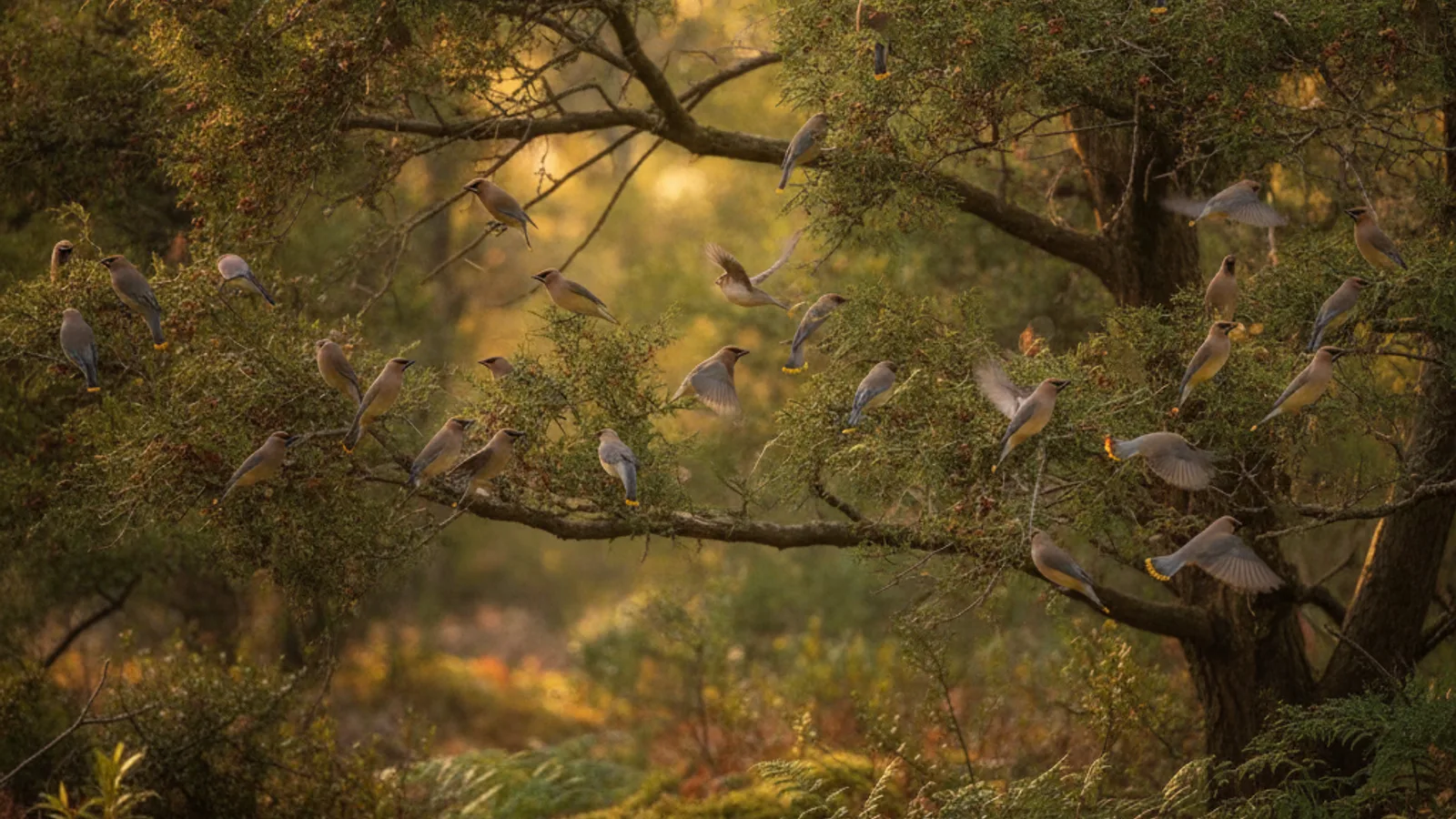
Cedar Waxwings are the wandering nomads of North American songbirds, they don't follow a strict spring/fall migration like most species. Instead, large flocks roam wherever fruit and berries are abundant, sometimes appearing in your yard for two weeks then disappearing for years. Understanding their irregular movements is the key to predicting when they'll show up.
Where Do Cedar Waxwings Spend the Winter?
Cedar Waxwings winter from the southern US to Costa Rica and Panama. Unlike strict migrants, some northern populations stay year-round when food is sufficient, they will eat fruit through subzero winters in Maine if cedar berries, crabapples, or holly hold on the trees.
Cedar Waxwing Migration Route & Timing
Waxwings move in tight flocks of 30 to 200+ birds. They follow food, not photoperiod, which makes their migration timing irregular and tied to fruit production. A heavy mountain ash crop in Wisconsin can hold a flock through November; a poor crop sends them south by October.
- Spring movement (March–May): Birds wintering in Mexico and the southern US push north, often overshooting their breeding range to follow ripening fruit.
- Breeding (May–August): Pairs settle in northern US and Canada. Surprisingly late nesters, many begin breeding in late June or July to coincide with fruit ripening.
- Fall (Sept–Nov): Flocks form again and roam widely. This is when most yards see their first waxwings of the year.
- Winter wandering (Dec–Feb): Flocks settle wherever fruit holds, sometimes 1,000 miles south of breeding range, sometimes barely south of it at all.
Cedar Waxwing Migration Schedule 2026: Arrival Dates by Region
| Region | Spring Movement | Breeding | Fall/Winter |
|---|---|---|---|
| Northern US (MN, WI, MI, NY, ME) | April–May | June–August | Mostly absent Nov–Feb |
| Mid-US (OH, IN, IL, PA, MA) | March–April peak | June (some) | Flocks Oct–March |
| Southern US (TX, GA, NC, FL) | Feb–March (winter peak) | Rarely | Heavy Nov–April |
| Pacific Northwest (WA, OR) | March–May | May–August | Year-round resident |
| Southern Canada | May | June–August | Mostly absent Oct–April |
| Mexico / Central America | Departure Feb–March | No breeding | Wintering Oct–Feb |
How to Attract Cedar Waxwings to Your Yard
Waxwings ignore typical seed and suet feeders. They are 100% fruit specialists in fall and winter. Here's what works:
- Native fruiting trees and shrubs. Serviceberry (Amelanchier), winterberry (Ilex verticillata), American holly, Eastern red cedar, hawthorn, mountain ash, dogwood, viburnum. A single mature serviceberry can host a flock of 50 birds for an afternoon.
- Crabapples and ornamental fruit. Old-variety crabapples that hold their fruit through winter ('Donald Wyman', 'Sugar Tyme', 'Bob White') are waxwing magnets in January and February when most other food is gone.
- Raisins and dried fruit on a platform feeder. Soak raisins in water until plump, place on a flat tray feeder. Less reliable than live fruiting trees but can work during winter shortages.
- Birdbath with fresh water. Waxwings drink frequently because their fruit-heavy diet has high water content. A heated bath in winter will draw them down from the canopy.
- Avoid ornamental cherries that spoil. Some Asian flowering cherries produce fruit that ferments on the branch, waxwings can become "drunk" eating it. They've been documented dying in flight from intoxication. Plant native species instead.
How to Identify Cedar Waxwings
- Sleek, elegant body with smooth grayish-tan plumage that looks airbrushed.
- Bright yellow tail tip and pale yellow belly.
- Black mask with white edges around the eye, like a small bandit.
- Bright red waxy droplets on wing feathers (the namesake "wax", actually carotenoid pigment from berry diet).
- Buzzy, high-pitched "seee-seee" calls given constantly while flocks move. Often you hear them before you see them.
Frequently Asked Questions
When do Cedar Waxwings show up?
Cedar Waxwings appear in yards with ripe fruit, not on a strict schedule. Most regions see flocks in fall (October–November) and again in late winter (January–March) when berry trees are heavily fruited. Spring migration is brief; many areas miss it entirely.
Why are Cedar Waxwings called nomadic?
Unlike most birds that return to the same breeding territory each year, Cedar Waxwings follow fruit. A flock might breed in Wisconsin one year and Vermont the next. Their movements depend on regional fruit production, making them irregular migrants.
What do Cedar Waxwings eat?
Cedar Waxwings eat fruit year-round (about 80% of diet) and supplement with flying insects in summer. Favorites include serviceberry, winterberry, Eastern red cedar berries, mountain ash, crabapple, holly, and hawthorn fruits. They are one of the few North American songbirds that can survive on fruit alone.
Where do Cedar Waxwings nest?
Pairs build cup nests of grass and twigs in the fork of a deciduous tree, typically 6–20 feet up. They nest later than most songbirds (June–August) to coincide with summer fruit ripening. Some pairs raise two broods.
Are Cedar Waxwings rare?
No, Cedar Waxwings are common across North America with stable populations. They appear "rare" because flocks visit irregularly. eBird estimates 32 million breeding birds. Once you learn their high "seee" call, you'll realize they're passing through more often than you thought.
Related Reading
- Spring Bird Migration 2026: Complete Guide
- Baltimore Oriole Migration 2026
- Purple Martin Migration 2026
- Ruby-Throated Hummingbird Migration 2026
- How to Attract Birds to Your Yard
Cedar Waxwing Backyard Kit
As an Amazon Associate we earn from qualifying purchases. Links below help support BirdSpot at no cost to you.
Cedar waxwings eat berries and fruit, not seed. Plant berry-bearing shrubs and use fruit feeders:
- Fruit feeder for berries/grapes, Open platform; berries are visible to waxwings flying overhead.
- Mealworms (dried, 1 lb), Insect-mimic protein; waxwings hit these in spring.
- Native berry shrub seeds, Serviceberry, dogwood, viburnum, long-term landscape upgrade.
- Sibley Guide to Birds, Best ID reference for waxwing female/juvenile plumage.
For more, see Best Bird Feeders 2026 · Spring Migration Guide 2026.