Fall Migration 2026: Complete Guide to Autumn Bird Watching
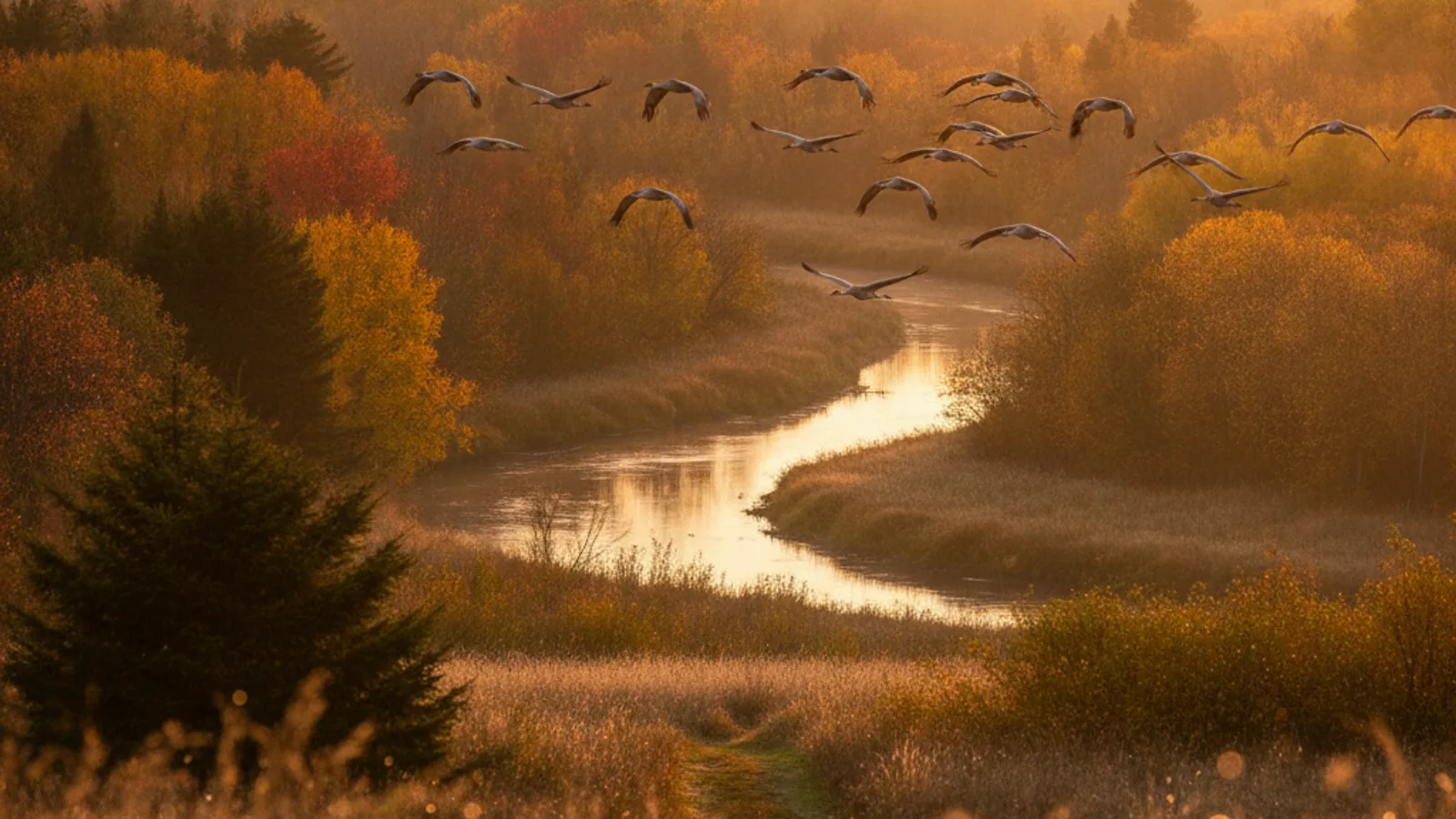
Fall migration is North America's best-kept birding secret. While spring migration gets all the attention, arriving warblers in full breeding plumage, singing from every treetop, fall offers something spring simply can't: four months of continuous migration, higher total numbers of birds, and identification puzzles that will genuinely sharpen your skills.
The catch is that fall migration is harder. Birds aren't advertising themselves with song. Adults have swapped brilliant breeding plumage for cryptic non-breeding dress. And the majority of birds in the field are juveniles, a generation showing plumages that look nothing like the field guide plates most birders have memorized. This guide gives you the tools to take full advantage of the 2026 fall season, from the first shorebirds departing in late June through the final waterfowl pushes of November.
The Fall Migration Calendar: Species Groups by Month
Unlike spring, where virtually every migrant moves through in a compressed 8-week window, fall migration is staggered across more than four months. Understanding which groups move when lets you target the right species at the right time.
| Period | Key Groups | What to Watch For |
|---|---|---|
| Late June – July | Shorebirds (adults) | Adult shorebirds departing breeding grounds; many in worn breeding plumage, bill shape and behavior key to ID |
| August | Shorebirds (juveniles), early warblers, hummingbirds | Juvenile shorebirds in fresh plumage; first warblers moving; ruby-throated hummingbirds building up fat |
| September | Warblers, vireos, flycatchers, early raptors | Peak warbler diversity; Broad-winged Hawk movement peaks mid-September; Connecticut Warblers briefly accessible |
| October | Sparrows, thrushes, Cedar Waxwings, later raptors | Sparrow diversity peaks; thrushes move at night (listen for flight calls after dark); Sharp-shinned and Cooper's Hawk numbers build |
| November | Waterfowl, lingering sparrows, late raptors | Diving ducks arrive on open water; Golden Eagles push through ridge hawk watches; late rarities often found at feeders |
How Fall Migration Differs from Spring
Understanding these structural differences helps you adjust your strategy rather than wondering why fall "feels harder" than spring.
Duration and timing
Spring migration is compressed: most passerines move through in a 6–8 week window from late April through late May. Fall migration stretches over 4+ months. That's actually more opportunity, but it requires knowing which species to target each week rather than expecting everything at once.
Direction of movement
In spring, birds funnel north through well-documented bottlenecks, coastlines, peninsulas, river valleys. In fall, the routes spread out. Birds don't need to reach a specific breeding territory, so they're less constrained to corridors. However, geography still concentrates them: any north-facing coastline or ridge that a bird must turn away from will pile up migrants overnight. This is why Cape May and Hawk Mountain, jutting south into open water or air, are so productive in fall specifically.
Weather patterns
Spring fallouts are driven by southbound cold fronts that stall northbound migrants. Fall fallouts work in reverse: a southwest wind system grounds birds mid-journey; then the cold front clears and birds move en masse behind northwest winds. Check the forecast the night before a birding trip, the morning after a cold front passes is almost always the most productive fall birding day of the week.
Plumage
This is the big one. In spring, birds advertise themselves. In fall, most species are trying not to be noticed. Adults are in worn, molted non-breeding plumage. Juveniles, which can outnumber adults by 3-to-1 in early fall, show fresh but cryptic patterns that bear little resemblance to the breeding adults in most field guides. Fall is when you earn your birding skills.
The Fall Warbler Challenge
Nothing humbles a confident birder quite like a September warbler flock in non-breeding plumage. A species you could identify at 40 feet in May becomes a genuine puzzle in September. Here's what actually works:
Prioritize structure over color
Bill shape, body proportions, primary projection, and tail length are consistent year-round. A thin, sharp-billed warbler that creeps along bark is a Black-and-white Warbler regardless of what month it is. A dumpy warbler with a stout bill and short tail is probably a Connecticut Warbler. Color is a clue, but structure is the foundation.
Learn the behavioral tells
Fall warblers often forage lower than in spring, and mixed flocks move through quickly. Behavioral clues, how a bird moves, where in the tree it forages, whether it wags its tail, survive the plumage change. A waterthrush walking and bobbing along a stream edge is identifiable by behavior alone even before you see the field marks.
The September muddle: fall confusing warblers
Several species earn their reputations in fall. Empidonax flycatchers, largely silent after breeding season, look nearly identical to each other and require careful attention to eye ring shape, bill length, and exact timing/habitat. Fall bay-breasted, blackpoll, and pine warblers converge on greenish-olive plumage with streaked or unstreaked backs, study the leg color (blackpoll has pale legs/feet, bay-breasted has dark), wing bar width, and undertail coverts.
Hawk Watching: Fall's Signature Experience
Hawk watching is fundamentally a fall phenomenon. While a few spring hawk watches exist, autumn is when raptors move in numbers that are simply not visible from any single point in spring. A single day at Cape May or Hawk Mountain in mid-September can produce thousands of Broad-winged Hawks, a spectacle that has no spring equivalent at a fixed watch point.
Why ridges and capes concentrate hawks
Raptors, which migrate by day, rely on thermals and updrafts to conserve energy. Parallel ridges, like the Appalachian ridges, deflect northwest winds upward, creating lift lines that buteos follow for hundreds of miles. Coastal peninsulas concentrate raptors because the birds "balk" at crossing open water and pile up at the point, waiting for favorable winds.
Top hawk watching sites in the East
- Cape May Point, NJ, the continent's most famous hawk watch; peak Broad-winged dates September 12–22; also produces spectacular sharpie, merlin, and Peregrine numbers
- Hawk Mountain Sanctuary, PA, world's first raptor conservation site; the North Lookout provides classic ridge-soaring views of 18 species; peak Golden Eagle movement is late October through November
- Kiptopeke State Park, VA, south-facing peninsula on the Chesapeake Bay; excellent for accipiters and falcons in October
- Whitefish Point, MI, Lake Superior hawk watch; particularly strong for eagles and Rough-legged Hawks in October–November
- Pack Monadnock, NH, underrated New England ridge site; good mid-September Broad-wing flights
Peak timing by species
| Species | Peak Fall Window | Best Site Type |
|---|---|---|
| Broad-winged Hawk | September 10–25 | Ridge hawk watches; thermaling in kettles |
| Sharp-shinned Hawk | September–October | Coastal capes; also feeders near watch sites |
| Cooper's Hawk | October | Coastal capes; suburban areas |
| Merlin | September–October | Coastal capes; chasing sparrow flocks |
| Peregrine Falcon | September–October | Cape May, Assateague; coastal |
| Golden Eagle | Late October–November | Appalachian ridges (Hawk Mountain is top site) |
| Rough-legged Hawk | Late October–November | Open fields, marshes; Great Lakes ridges |
Shorebird Migration: July Through September
Shorebirds are the secret weapon of fall birding. Their migration begins in late June, when the rest of the birding world is still enjoying summer, and their diversity peaks in August across mudflats, flooded fields, and tidal estuaries nationwide. Adults move first, often in worn breeding plumage that doesn't match field guide illustrations; fresh-plumaged juveniles follow in a second wave 2–4 weeks later.
The shorebird ID challenge is real: 50-odd species with overlapping field marks, variable plumages, and a tendency to flush as a tight mixed flock the moment you get close enough to study them. The rewards are proportional. Finding a Buff-breasted Sandpiper in a sod farm in September, or a White-rumped Sandpiper mixed into a flock of Dunlin in October, produces the kind of field satisfaction that's hard to replicate.
Key sites for shorebirds include Forsythe (Brigantine) NWR in New Jersey, Cheyenne Bottoms in Kansas (important inland stopover), Bolivar Flats in Texas, and the salt pans of the San Francisco Bay Area on the Pacific coast. Look for recently exposed mud in late July, shorebird habitat is temporary and weather-dependent.
Hummingbirds: Departure and the Feeder Question
Ruby-throated Hummingbirds begin staging for departure in August, with peak southbound movement in late August through mid-September east of the Rockies. Males leave first, typically in early August; females and young-of-year follow. By the first frost in most of the East, the ruby-throats are gone.
The western U.S. hosts a far greater diversity of hummingbird species in fall, including several that routinely show up east of their normal range. Rufous Hummingbirds, aggressive, orange-flanked birds that breed in the Pacific Northwest, are the most likely western vagrant at eastern feeders in September through November. Any small hummingbird with rusty-orange flanks at an eastern feeder after mid-September deserves careful documentation.
Nighttime Migration and Flight Calls
An estimated 80% of fall passerine migration happens at night. Birds take off in the two hours after sunset and fly until dawn, often covering 200–400 miles in a single night when conditions are favorable. This nocturnal movement is largely invisible to daytime observers, but it can be detected through two methods.
Flight call monitoring uses directional microphones pointed at the night sky to record the thin, high-pitched contact calls that nocturnal migrants give in flight. Species like thrushes, warblers, and sparrows give distinctive "seep" calls identifiable with practice. Tools like BirdNET and the Old Bird software suite let you analyze recordings made overnight. On an active migration night, a rooftop microphone in a good location might record hundreds of individual flight calls from dozens of species.
Radar birding using NEXRAD weather radar reveals the scale and direction of nocturnal migration in near-real time. The BirdCast website (run by the Cornell Lab) translates radar data into migration forecasts that predict the volume of migration expected on a given night. A "high" migration night on BirdCast means the next morning's birding will be exceptional.
Fall Sparrows: October's Underrated Stars
October belongs to sparrows. While the rest of the birding world moves on after warbler season, October rewards patient observers with a diversity of sparrow species that rivals any month of the year. Shrubby edges, old fields, beach wrack, and open marshes hold concentrations of Savannah, Song, Swamp, Lincoln's, and White-throated Sparrows. Rarer species, Nelson's, LeConte's, Henslow's, require targeted habitat searches in rank wet grasses and coastal marsh edges.
The technique is simple: get to the right habitat early, make "pishing" sounds to draw secretive birds up to perch level, and work methodically through the flock. Sparrow ID is a skill that takes time but offers huge returns, finding a Clay-colored or Grasshopper Sparrow in an October sparrow flock is the kind of find that makes a year.
Best Fall Birding Locations Nationwide
Beyond the hawk watches, these sites offer outstanding all-around fall migration birding:
- Cape May, NJ, not just hawks; the entire peninsula concentrates every migrant group from warbler to owl to pelagic offshore
- Magee Marsh, OH, famous as a spring warbler hotspot; fall shorebirds and lingering passerines in August–September are underappreciated
- Bombay Hook NWR, DE, premier shorebird and waterfowl site on the Delaware Bay; October shorebird concentrations can reach tens of thousands of birds
- Point Reyes National Seashore, CA, vagrant trap on the Pacific coast; October produces an astonishing diversity of eastern species blown far west of their normal range
- South Padre Island, TX, fallout site for Trans-Gulf migrants on southbound return; can be spectacular after storms ground birds over the Gulf
- Higbee Beach, NJ, small woodlot at Cape May that concentrates migrant passerines; often produces rare flycatchers and cuckoos in September
- Crane Beach, MA, excellent August shorebirding on the Plum Island system; also good for late September sparrow diversity
Photography in Fall: Tips for the Season
Fall offers photography opportunities that spring can't match. Birds are often hungrier and more focused on feeding than vigilant singing and territory defense, making them approachable. Juveniles in fresh plumage are often strikingly patterned even if cryptic, a juvenile Yellow Warbler's clean olive-and-yellow tones are beautiful even without the spring male's chestnut streaking.
The light changes dramatically in fall. The low angle of the sun in September and October creates warm golden light at dawn and dusk that flatters any subject. Fog and overcast days are common, but a thick overcast can actually produce even, shadow-free light ideal for detail shots of perched birds. Work coastal wrack lines for shorebirds at high tide, when birds are pushed close to the observer by rising water.
Planning Your 2026 Fall Season
The single most effective strategy for fall migration is committing to a date at a known concentration site aligned with weather forecasts, rather than casual local birding hoping for a good day. A morning at Cape May after a cold front in mid-September will outperform a month of casual backyard watching. But strategic local birding also rewards: even a suburban patch in the right habitat, worked consistently, will accumulate impressive species lists through the season.
Track BirdCast forecasts the night before you plan to go out. Visit eBird's Explore tool to find the highest-activity hotspots near you for the exact week you're planning, the bar charts showing species occurrence by week are invaluable for targeting the right species at the right time of year.
Fall migration in 2026 begins right now, shorebirds are already moving. Whether you're watching Cedar Waxwings strip a berry tree in your backyard in October, counting kettles of Broad-wings from a ridgetop in September, or working through a sparrow flock in an overgrown field in November, autumn delivers a birding season as deep and rewarding as any spring morning.
Frequently Asked Questions
When does fall bird migration start?
Fall migration begins much earlier than most birders expect, shorebirds start moving south in late June and July immediately after breeding season. Ruby-throated Hummingbirds begin departing by mid-August, warblers peak in August–September, and raptors peak in September–October. Waterfowl and late migrants continue through November and into December in southern states.
Why is fall migration harder for bird identification than spring?
Three factors make fall ID more challenging: (1) birds are not singing, so you lose the audio cue that often clinches an ID; (2) many adults have molted into drab non-breeding plumage; (3) juvenile birds, which can outnumber adults 3-to-1 in fall, show plumages that look nothing like the field guide illustrations, which typically depict breeding adults.
What are the best locations for fall bird migration watching?
Cape May, New Jersey tops most lists for the sheer concentration of raptors, shorebirds, and passerines. Hawk Mountain, Pennsylvania is the world's first hawk sanctuary. Other top sites include Sandy Hook NJ, Kiptopeke State Park VA, Magee Marsh OH, Whitefish Point MI, and any coastal headland or peninsula that funnels birds into a tight corridor.
How does weather affect fall migration?
In fall, the best birding follows a cold front: the front itself brings northwest winds that push migrants south, then the clear skies and calm winds after the front passes create ideal travel conditions. Birds "fall out" in large numbers when rain or fog grounds them unexpectedly, coastal locations often produce spectacular fallouts after nights when migrants couldn't cross a body of water.
When should I take down my hummingbird feeder in fall?
Leave hummingbird feeders up until two weeks after you've seen the last hummingbird of the season, typically late October to mid-November depending on your region. The myth that feeders delay migration is false; hummingbirds migrate on an internal hormonal clock, not food availability. Keeping feeders up can help late-season individuals and rare western strays.