Fall Bird Migration 2026: Schedule, Hotspots & What to Watch For
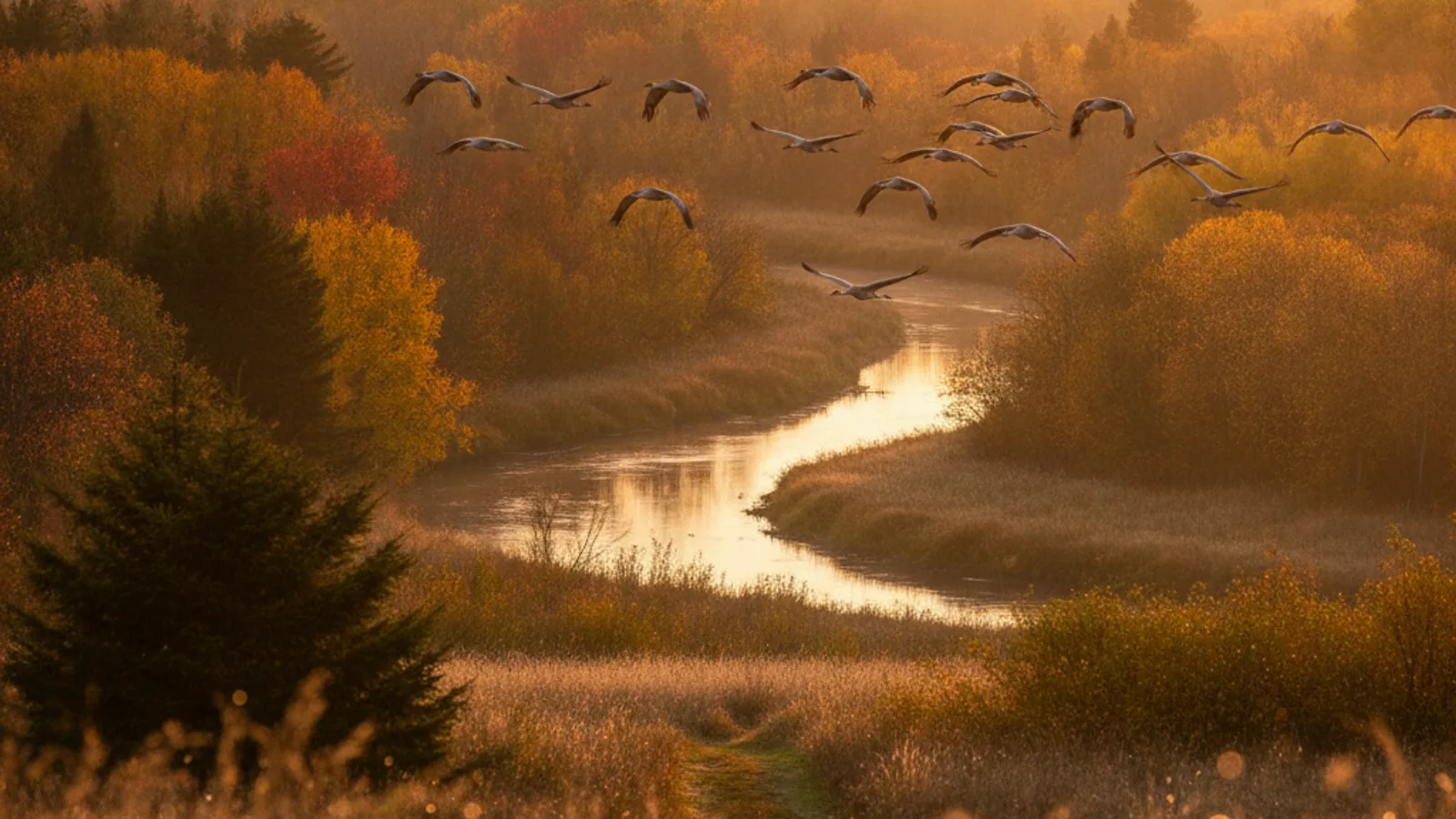
Spring migration gets the glory, but fall migration is the bigger show. Every adult bird that flew north in May is now heading south, and this time they're bringing the kids. With juveniles in the mix, the number of birds moving in autumn can be roughly double the spring flight. The season is also far longer: instead of a frantic two-week peak, fall migration unspools from late July all the way into December, wave after wave, each month bringing a different cast of species.
The trade-off? Fall birds are quieter, drabber, and sneakier than their spring selves. Nobody is singing, warblers have molted out of their breeding colors, and young birds wear plumages that never appear in the front half of a field guide. This guide covers the full 2026 fall schedule, the tactics that put birds in front of you, the best hotspots in the country, and how to survive the infamous "confusing fall warbler" problem. If you missed our spring coverage, the Spring Migration 2026 guide is the companion piece to this one.
Why Fall Is Bigger Than Spring
Three things make autumn the heavyweight season:
- Sheer numbers. A successful breeding season means every pair of adults may be joined by two to four juveniles. Radar studies routinely show fall flights dwarfing spring totals on comparable nights.
- A longer window. Spring birds are racing to claim territory, so they blow through fast. Fall birds are under no such deadline. They linger, feed heavily, and stretch the season across four-plus months. Miss a good morning and another one is coming.
- Rarity potential. Inexperienced young birds get lost. Fall is when western vagrants show up on the East Coast, eastern warblers appear in California, and once-a-decade strays turn up at local patches. Every fall flock is worth a second look.
The 2026 Fall Schedule
Fall migration moves in overlapping waves. Here's the month-by-month rhythm for most of the US (southern latitudes run a bit later, northern a bit earlier):
Late July, August: Shorebirds
Fall starts in summer. Arctic-nesting shorebirds are already streaming south by late July, adults first, juveniles a few weeks behind. Check mudflats, sod farms, sewage ponds, and lake edges for yellowlegs, sandpipers, plovers, and dowitchers. Swallows begin staging in enormous flocks on wires.
September: Warblers, Vireos & Flycatchers
The songbird push. Warblers peak from late August through late September, along with vireos, thrushes, orioles, and flycatchers. Nighthawks stream south at dusk in late August. This is the month to work woodland edges at dawn behind every cold front.
September, October: Raptors
Kettle season. Broad-winged Hawks form swirling "kettles" of hundreds or thousands in mid-September, riding thermals south. Sharp-shinned Hawks, Cooper's Hawks, falcons, and harriers follow through October, with Golden Eagles and Red-tails bringing up the rear into November. A single good day at a hawk watch can top 10,000 birds.
October: Sparrows & Kinglets
The brown wave. As warblers thin out, sparrows flood in: White-throated, White-crowned, Lincoln's, Fox, and juncos, plus both kinglets and Yellow-rumped Warblers by the hundreds. Weedy fields and brushy edges are suddenly alive. Pishing works better in October than any other month.
October, November: Waterfowl
The grand finale. Ducks, geese, swans, loons, and grebes pour down flyways as northern waters freeze. Rafts of scaup and mergansers build on big lakes, Snow Geese darken refuge skies, and Tundra Swans pass high overhead at night. Waterfowl watching stays excellent into December.
The Cold-Front Fallout Tactic
If you learn one tactic for fall birding, make it this: follow the cold fronts. Most songbirds migrate at night, and in autumn they want a tailwind from the north. When a cold front sweeps through, the northwest winds behind it launch massive overnight flights. By dawn, tired migrants are dropping into whatever habitat is below them.
The playbook is simple. Watch the forecast for a front passing in the evening. Check BirdCast that night; if the migration forecast shows high intensity over your region, be at a woodland edge, park, or coastal thicket at first light. The first three hours after sunrise are when grounded migrants feed frantically and visibly. Conversely, a warm southerly flow means birds sit tight, so those are your mornings to sleep in.
Morning Flight: Watch the Sky at Dawn
Fall offers a spectacle spring barely has: morning flight. At sunrise after a big flight night, thousands of songbirds that overshot or drifted off course reorient, streaming low overhead in a visible river of birds, often for two or three hours. At places like Cape May's Higbee Beach dike, counters tally tens of thousands of individual warblers, thrushes, and blackbirds in a single morning.
You can watch morning flight anywhere birds funnel along a coastline, ridge, or river. Stand somewhere with an open sky view, face into the flow, and identify birds by shape, flight style, and call notes. It's challenging, addictive, and one of the fastest ways to sharpen your skills. A quality pair of binoculars matters here more than anywhere; see our full Best Binoculars for Birding 2026 rankings if you're due for an upgrade.
Top US Fall Hotspots
The most famous fall migration site in North America, full stop. The peninsula funnels southbound birds into a point where they concentrate before crossing Delaware Bay. Legendary morning flights at Higbee Beach, a world-class hawk watch at Cape May Point, plus falcons, seabirds, and monarch butterflies. Prime time: mid-September through October, and every northwest wind is an event.
Raptors funneling south refuse to cross Lake Superior, so they slide along the shoreline right past this ridge. Seasonal counts average around 76,000 raptors, with peak Broad-winged days in mid-September sometimes exceeding 10,000 birds. October brings goshawks, eagles, and Rough-legged Hawks. Naturalists staff the ridge daily through the season.
The biggest raptor count in the United States. Nearly the entire world population of Broad-winged Hawks squeezes down the Texas coastal bend, and this watch has recorded seasons approaching one million raptors. Late September is jaw-dropping: single days over 100,000 broad-wings happen here. Kettles boil up like smoke on the horizon.
The West Coast's vagrant magnet. This fog-swept peninsula juts far into the Pacific and catches lost eastern warblers, vireos, and buntings every fall, along with huge numbers of Pacific Flyway regulars. The cypress groves around the lighthouse and outer ranches are checked daily by rarity hunters from September through October. Seawatching and shorebirds round out the show.
Can't travel? You don't need to. Any local park, cemetery, or brushy field along a lake, river, or ridgeline will concentrate fall migrants. Even your backyard gets a piece of the flight; our common backyard birds guide covers the regulars that migrants will be mixing with at your feeders this fall.
The Confusing Fall Warbler Problem
Here's the catch every birder discovers in September: the dazzling warblers of May have vanished, replaced by dim olive-and-yellow lookalikes. Adults molt into muted nonbreeding plumage after nesting, and first-fall juveniles are drabber still. A Blackpoll, a Bay-breasted, and a Pine Warbler in fall can look maddeningly similar. Even Roger Tory Peterson threw up his hands and titled a field guide plate "Confusing Fall Warblers."
Don't let it scare you off. A few habits crack the problem:
- Ignore color, read structure. Bill shape, body proportions, and tail length don't molt. A Blackpoll is still long-winged; a Palm Warbler still pumps its tail.
- Check the constants. Wing bars, eye-rings, eye-lines, streaking, and undertail pattern persist across plumages. Learn to check the undertail coverts first; it settles more fall warbler IDs than anything else.
- Look at the feet and legs. Blackpoll's yellowish feet, Black-throated Blue's white wing spot, little anchors like these survive every molt.
- Use your ears. Nobody sings in fall, but everybody calls. Flight calls and chip notes identify birds you never even see. Our free Song ID tool can identify bird sounds right in your browser, and it works on those thin fall call notes too.
- Accept some mysteries. Every honest birder lets a few fall warblers go unidentified. That's the game.
Good glass helps enormously with drab birds in bad light. If you're squinting through a decade-old pair, fall is the season an upgrade pays for itself.
Fall Migration Gear Kit
As an Amazon Associate we earn from qualifying purchases. Links below help support BirdSpot at no cost to you.
Fall means dim dawn light, distant raptors, and fast-moving flocks. Here's the gear that earns its keep:
Binoculars
- Best value: Nikon Monarch M5 8x42, around $250, sharp and bright enough for gray September dawns.
- Enthusiast pick: Vortex Viper HD 8x42, noticeably better low-light performance for fallout mornings, about $430.
- Budget starter: Nikon Aculon A211 10x42, roughly $90, and the extra magnification helps at hawk watches.
- No-compromise: Swarovski NL Pure 8x42, the finest birding binocular made, if the budget allows.
Spotting scope for hawk watches & waterfowl
October and November birding is scope birding: distant kettles, duck rafts a half mile out, shorebird flats. Our top picks:
- Best value scope: Celestron Regal M2 65ED, ED glass at a price that leaves money for gas to the hotspots.
- Premium pick: Vortex Razor HD 27-60x85, the workhorse you'll see on tripods at every hawk watch.
- Lightweight for travel: Kowa TSN-554 Prominar, stunning optics in a carry-on-friendly body.
- Sturdy legs: Manfrotto Befree Aluminum tripod, stable in the wind that always blows at ridge tops.
Full reviews and buying advice are in our Best Spotting Scopes 2026 guide.
Feeders for fall migrants & winter arrivals
- Stokes Select Suet Buffet, migrating warblers and kinglets hit suet hard on cold October mornings.
- Woodlink Platform Feeder, the sparrow magnet; White-throats and juncos prefer open trays.
- Brome Squirrel Buster Plus, keeps the seed for the birds as squirrels stock up for winter.
- More Birds Ruby Hummingbird Feeder, keep it up through fall; late hummingbirds and western strays turn up into November.
See the complete rankings in Best Bird Feeders 2026.
Make the Season Count
Log everything on eBird; fall data on timing and juvenile numbers is especially valuable to researchers. Check BirdCast each evening, get out behind the fronts, and give every drab little bird in the goldenrod a hard look. Fall migration rewards persistence: four months of waves, any one of which can drop something unforgettable into your local patch. The birds are already moving. Go meet them.