Best Beginner Birding Binoculars 2026: Top Picks for New Birders

The biggest mistake new birders make isn't choosing the wrong species guide or going to the wrong habitat. It's buying binoculars that are either too cheap (dim, blurry, fatiguing) or too expensive before they know what they actually value. This guide cuts through the noise: here are the best first binoculars at every realistic budget, plus the key knowledge that lets you evaluate any pair you come across.
The good news: the best beginner binoculars have never been better or more affordable. A $250 pair today outperforms what cost $600 fifteen years ago. You don't need to spend $2,000 to see birds beautifully.
At a Glance
 NIKON Monarch M5 Binoculars | Waterproof Fogproof ED...
 Celestron - Nature DX 8x42 Binoculars – Ideal for...
 Nikon Trailblazer 8x25mm ATB Binoculars - Compact,...
 Celestron 71230 UpClose G2 8 x 21 Roof Binocular, Black
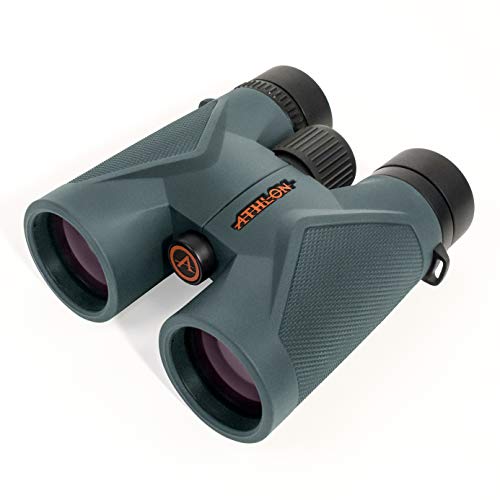 Athlon Optics 8x42 Midas UHD Gray Binoculars with ED...
 Vortex Viper HD Roof Prism Binoculars 8x42
Product images and titles from Amazon. As an Amazon Associate we earn from qualifying purchases.
Quick Picks by Budget and Use Case
| Budget / Use Case | Our Pick | Configuration | Price Range |
|---|---|---|---|
| Best Overall for Beginners | Nikon Monarch M5 8x42 | 8x42 | $220–270 |
| Best Budget (Under $100) | Celestron Nature DX 8x42 | 8x42 | $55–75 |
| Best Under $200 | Vortex Crossfire HD 8x42 | 8x42 | $140–175 |
| Best for Eyeglass Wearers | Vortex Diamondback HD 8x42 | 8x42 | $185–230 |
| Best Lightweight / Compact | Nikon Trailblazer ATB 8x25 (I own this one; it has earned its spot.) | 8x25 | $70–100 |
| Best for Kids / Youth | Celestron UpClose G2 8x21 | 8x21 | $25–40 |
| Best Mid-Range Upgrade | Athlon Midas 8x42 | 8x42 | $250–310 |
| Best Buy-Once (Long Term) | Vortex Viper HD 8x42 | 8x42 | $400–450 |
What Do the Numbers Mean?
Every binocular has two numbers: 8x42, 10x42, 8x25, etc. Here's what they tell you:
- First number (magnification): 8x means objects appear 8 times closer than to the naked eye. 10x means 10 times closer. Higher isn't always better, more magnification means a narrower field of view and more hand shake.
- Second number (objective lens diameter in mm): 42mm gathers enough light for early-morning and dusk birding. 25mm compact binoculars are lighter but produce dimmer images in low light.
The exception: if you primarily watch open-water birds (shorebirds, ducks, raptors in flight), 10x42 gives more reach. But tracking a warbler through a leafy canopy with 10x is genuinely harder than with 8x, and beginners learn faster with the wider view.
5 Features That Matter for Beginners
Specs lists are long; here are the five that actually affect daily use:
- Waterproofing and fog-proofing: You will be caught in rain. You will go from a warm car into cold morning air and have your eyepieces fog. Buy waterproof binoculars with nitrogen or argon purging, it's not optional, it's standard at $80+.
- Close focus distance: Beginners consistently underestimate how close birds get. A bird at 10–15 feet is common at feeders and on trails. Quality binoculars focus down to 4–6.5 feet. Cheap binoculars often can't focus under 15 feet, you lose the shot entirely.
- Eye relief (for eyeglass wearers): If you wear glasses, you need 15mm+ of eye relief to see the full field of view without removing your glasses. Fold-down eyecups let you get your eyes close enough to the lens. This spec is rarely mentioned but critically important.
- Weight: Heavier binoculars cause neck and shoulder strain on long outings. Full-size 8x42s run from 19 oz (light) to 30+ oz (heavy). Under 24 oz is comfortable for most birders. Pair with a padded harness (not a neck strap) to distribute weight.
- Lens coatings: "Fully multi-coated" means every glass surface has multiple anti-reflection coatings, you get more light, truer colors. "Fully coated" or "multi-coated" means only some surfaces are treated. In practice, you'll see the difference most in low-light conditions.
1. Best Overall for Beginners: Nikon Monarch M5 8x42
Nikon Monarch M5 8x42, $220–270
The Monarch M5 has been the default first-binoculars recommendation for serious birders for over a decade, and that consensus exists for good reason. It sits at the inflection point where you're getting genuinely good glass, Nikon's ED (extra-low dispersion) glass significantly reduces color fringing that makes birds in bright contrast backgrounds look soft, without paying for features that matter more to advanced birders.
At 21.0 oz, it's light enough for a full-day walk without a harness becoming mandatory. The close focus distance of 8.2 feet means you can follow a bird that lands close by. The eyecups have four twist-up positions, giving eyeglass wearers flexibility. It's waterproof and fog-proof. The focus wheel turns smoothly without being loose. In practice, everything about it is "good enough for years of birding", which is exactly what a beginner needs to know they can grow into, not out of.
It doesn't win any single category against more expensive glass, but no pair at this price point does everything as well across the board. The 8x42 configuration makes birds easy to find and track. At roughly $250 street price, it's the recommendation you'll see on every birding club's beginner gear list.
✓ Pros
- ED glass reduces color fringing
- 21 oz, comfortably lightweight
- 8.2’ close focus
- Waterproof and fog-proof
- 4-position twist eyecups
- Excellent value for the quality tier
✗ Cons
- Eye relief (15.4mm) just adequate for glasses wearers
- Not as bright as $400+ bins at dawn/dusk
- Field of view slightly narrower than competitors
2. Best Budget (Under $100): Celestron Nature DX 8x42
Celestron Nature DX 8x42, $55–75
If you're not yet sure birding is your hobby and can't justify $250 for a first pair, the Nature DX is the best sub-$100 binocular for birding. At around $60, it's fully waterproof, fog-proof, and nitrogen-purged, specifications you usually don't see until the $100+ tier. The BaK-4 prisms and multi-coated optics produce noticeably better images than similarly-priced alternatives with BaK-7 prisms and single-coated glass.
The close focus of 6.5 feet is excellent for the price, better than some $200 pairs. At 22.9 oz it's not lightweight, but it's manageable. The eyecup twist-up mechanism is functional if not refined. Glass sharpness holds well at the center but softens at the edges, which is noticeable if you've used $200+ binoculars. For casual birding and learning whether you want to go further, these are genuinely capable. The most common upgrade path is Monarch M5 after 6–12 months once you're hooked.
✓ Pros
- Under $70, low commitment
- Waterproof and fog-proof (rare at this price)
- BaK-4 prisms for cleaner image
- 6.5’ close focus is excellent
- Decent for daytime birding
✗ Cons
- Edge sharpness drops off noticeably
- Dimmer in low light than pricier bins
- Focus knob has less precision
- You'll want to upgrade within a year
3. Best Under $200: Vortex Crossfire HD 8x42
Vortex Crossfire HD 8x42, $140–175
The Crossfire HD is where binocular quality makes a genuine jump from budget glass. Vortex's HD optical system delivers noticeably sharper edge-to-edge clarity than the Celestron Nature DX, and the XR fully multi-coated lenses produce brighter, more color-accurate images in the early morning hours when birds are most active. At $150, you're getting glass that exceeds what double the price bought five years ago.
The Crossfire HD's biggest differentiator from the Monarch M5 isn't optics, they're close, it's Vortex's unconditional lifetime warranty. No receipt. No questions. If it breaks for any reason, including your fault, Vortex repairs or replaces it. For a beginner who might drop binoculars on rocks, get them soaked, or loan them to a clumsy friend, that warranty is genuinely valuable. Close focus of 5.0 feet is among the best in any price category. The turn-up eyecups have solid detents. Weight of 21.5 oz matches the Monarch.
✓ Pros
- Unconditional lifetime warranty
- 5.0’ close focus, exceptional
- Fully multi-coated HD glass
- Sharp center-to-edge performance
- $80–100 cheaper than Monarch M5
✗ Cons
- Eye relief (15.5mm) is adequate but not generous
- Focus knob slightly stiff when new
- Narrower field of view than Diamondback HD
4. Best for Eyeglass Wearers: Vortex Diamondback HD 8x42
Vortex Diamondback HD 8x42, $185–230
If you wear glasses and won't be removing them to bird, eye relief is the single most important specification to check. The Vortex Diamondback HD offers 15.5mm of eye relief with a wide-angle field of view (388 ft at 1,000 yds), a combination that lets eyeglass wearers see the full image without black-edging the frame. The twist-up eyecups fold fully down for eyeglass wearers and have two intermediate positions, giving you fine-tuned adjustment to find your personal sweet spot.
The Diamondback HD also carries Vortex's lifetime warranty and fully multi-coated APO glass that produces warm, natural color rendition. At 21.9 oz it sits in the comfortable weight range. The field of view is noticeably wider than the Crossfire HD, birds at the edge of the field are sharper, which makes tracking easier. For non-eyeglass wearers choosing between the Crossfire HD and Diamondback HD at the same budget, the Diamondback's wider FOV is worth the extra $40–60.
✓ Pros
- Wide field of view, excellent tracking
- Long eye relief for eyeglass wearers
- Lifetime warranty
- APO glass for color accuracy
- Smooth, precise focus knob
✗ Cons
- $40–60 more than Crossfire HD
- Eyecup detents could be firmer
5. Best Lightweight / Compact: Nikon Trailblazer ATB 8x25
Nikon Trailblazer ATB 8x25, $70–100
Compact binoculars (8x25) are half the weight and bulk of full-size 8x42s. For hikers covering long mileage, backpackers, or anyone who won't tolerate extra weight in a daypack, they represent a genuine tradeoff worth making. The Nikon Trailblazer ATB at 9.5 oz is the pick: it's waterproof, fog-proof, and uses multi-coated optics that punch above its weight class in bright daylight conditions.
The critical caveat: 8x25 binoculars are noticeably dimmer than 8x42s at dawn and dusk, the smaller objective lens gathers significantly less light. If you bird primarily in full daylight on trails, the Trailblazer ATB is excellent. If you're trying to identify birds in dawn chorus light at 5:30am or tracking owls at dusk, you'll wish you had 42mm lenses. Use these as a secondary hiking pair, not as a dedicated birding setup. Slip them into a running vest pocket or a hip belt pouch where a full-size pair won't fit.
✓ Pros
- 9.5 oz, half the weight of full-size
- Fits in a jacket pocket or running pack
- Waterproof and fog-proof
- Sharp in bright daylight
- Budget-friendly at under $100
✗ Cons
- Dim in low-light conditions
- Narrower field of view than 8x42
- Not ideal as a primary birding pair
6. Best for Kids / Youth: Celestron UpClose G2 8x21
Celestron UpClose G2 8x21, $25–40
Getting a child into birding doesn't require spending $200 on optics they may drop in a creek or abandon after two outings. The Celestron UpClose G2 8x21 is small enough for a child's hands (6.6 oz, compact body), produces adequate daylight images for recognizing common backyard and park birds, and costs under $35. The Porro prism design in this size class actually delivers reasonable optical performance for the price point, sharper than the ultra-cheap toy binoculars you'll find at nature gift shops.
For kids age 6–12 just starting to notice birds, this is the right tool. The limited size means they can't confuse it with an adult pair and it won't strain small necks. Once a child reliably asks to bring their binoculars to the park, the step-up pair is the Celestron Nature DX 8x42 (~$65), a genuine adult pair in a friendlier price bracket.
✓ Pros
- Child-appropriate size and weight
- Under $35, low-risk intro
- Porro prism, better optics per dollar
- Adequate for backyard birds in daylight
✗ Cons
- Not waterproof
- Limited low-light performance
- Not suitable for adults or long sessions
7. Best Mid-Range Upgrade: Athlon Midas 8x42
Athlon Midas 8x42, $250–310
Athlon Optics makes binoculars that regularly win blind comparisons against more-expensive brand names. The Midas 8x42 uses ED glass that matches Nikon's ED glass quality, a wide 8.1° field of view (426 ft at 1,000 yds) that's noticeably wider than the Monarch M5 (330 ft), and a close focus of 4.9 feet. It's fully waterproof and fog-proof with magnesium alloy construction, lighter-feeling in hand than specs suggest.
The Midas shines in its FOV advantage. Tracking fast-moving warblers through canopy is measurably easier with the wider view. For birders who know they're serious enough to invest in a pair that will last 10+ years, the Midas competes with pairs costing $100–150 more from established brands. Athlon's warranty is transferable and covers manufacturer defects for life, with repair service available for accident damage.
✓ Pros
- Wide FOV (426 ft/1000 yds), best tracking
- ED glass matches Nikon quality at similar price
- 4.9’ close focus
- Magnesium alloy, durable and light-feeling
- Transferable lifetime warranty
✗ Cons
- Less brand recognition (no resale premium)
- Eye relief (18mm) is long, eyecup fit may need adjustment
8. Best Buy-Once (Long-Term): Vortex Viper HD 8x42
Vortex Viper HD 8x42, $400–450
If you know you'll be birding for years and don't want to upgrade, buy the Viper HD once and be done. It delivers optically excellent HD glass with a massive 8.2° field of view, the widest in its class, superior low-light brightness compared to $250 pairs, and the same unconditional lifetime warranty as Vortex's more affordable models. No receipt, no questions, no time limit.
The Viper HD's field of view is its defining advantage: 430 ft at 1,000 yards. In practice, you can watch a bird feed without losing it when it moves. You acquire birds faster, especially in dense vegetation. The edge-to-edge sharpness is noticeably better than the Crossfire HD or Diamondback HD in direct comparison, edges are crisp rather than softening. At 24.5 oz it's a bit heavier than the Monarch M5, but a padded harness distributes the weight so it's not fatiguing on long walks. If you're going to be serious about birding, this is the last pair you'll need for at least a decade.
✓ Pros
- Widest FOV in class (430 ft/1000 yds)
- Excellent low-light brightness
- Edge-to-edge sharpness
- Unconditional lifetime warranty
- No upgrade regret
✗ Cons
- $400+, significant commitment for a first pair
- 24.5 oz, heavier than $250 competitors
- Over-spec for casual or occasional birders
What to Avoid
Also avoid zoom binoculars (e.g., "8–16x zoom"). The variable zoom mechanism compromises image quality at every setting and the zoom range makes the binoculars heavy and top-unbalanced. Fixed magnification always produces better images for the price. Fixed 8x is universally better for birding than a mediocre 8–16x zoom.
Essential Beginner Accessories
The right accessories extend the value of any pair:
- Binocular harness: Padded binocular harness ($15–30), distributes binocular weight across your chest and back instead of your neck. Eliminates neck fatigue on multi-hour birding walks. Essential for anyone using 8x42s for more than 2 hours at a time. Fits any pair.
- Lens cleaning kit: Microfiber cloth + lens pen kit ($10–15), rain drops and fingerprints on the eyepiece degrade image quality. A microfiber cloth (included with most binoculars) plus a lens pen for oil smudges covers 99% of cleaning needs. Never use paper towels.
- Binocular cap keeper: Lens cap retainer cord ($5–10), the objective lens caps that come with binoculars invariably get lost within the first month. A retainer cord attaches caps to the binocular body so they stay put when you're using the bins in the field.
- Field guide for your region: Sibley Guide to Birds 2nd Edition ($30–40), the most used field guide in North America for good reason. Detailed illustrations for every age and sex plumage, range maps, and behavioral notes. Pairs with the Merlin Bird ID app (free, Cornell Lab) for audio ID.
How to Use Binoculars: Quick Start for Beginners
The most common beginner frustration is "I see the bird with my eyes, raise the binoculars, and it's gone." The fix is technique, not optics:
- Lock onto the bird with your naked eye first. Pick a reference point, the branch it's on, the plant cluster behind it.
- Keep your eyes fixed on that spot and slowly raise the binoculars to your face. Don't look down at the binoculars while raising them.
- Adjust the central focus wheel. Most birding binoculars have a single central focus wheel, turn it until the bird is sharp.
- Set your diopter once. The right eyepiece has a separate adjustment ring for individual eye differences. Cover the right lens, focus on something sharp with the left, then cover the left and adjust the right eyepiece ring until it's equally sharp. You set this once and it stays.
- Set the interpupillary distance. Adjust the two barrels so you see a single merged circle, not two overlapping images. This setting is personal, note where it belongs on the hinge scale.
Frequently Asked Questions
What binoculars should a beginning birder buy?
For most beginners, the Nikon Monarch M5 8x42 (~$250) is the ideal first pair, sharp, lightweight, waterproof, and good enough to use for years. On a tight budget, the Celestron Nature DX 8x42 (~$65) delivers surprisingly good optics for the price. Avoid no-name binoculars under $40; they cause eye strain and frustration that can kill the hobby.
Is 8x42 or 10x42 better for beginner birders?
8x42 is better for beginners. The wider field of view makes locating and tracking birds through branches far easier. Hand shake is also less visible at 8x. Start with 8x; switch to 10x only after a year if you find yourself regularly watching in open terrain like mudflats or hawk ridges.
How much should I spend on my first pair of birding binoculars?
$100–300 is the sweet spot. Below $100, optics quality drops sharply, dim images, soft edge focus, poor close focus distance. Above $300, you're paying for improvements that matter more to experienced birders. The Nikon Monarch M5 at ~$250 or the Vortex Crossfire HD at ~$150 represent the best value for most beginners.
What does 8x42 mean on binoculars?
The first number (8) is magnification, objects appear 8 times closer than with the naked eye. The second number (42) is the diameter of the objective lens in millimeters. A larger objective lens gathers more light, producing a brighter image in low light. 8x42 is the standard size for general birding.
What features matter most for beginner binoculars?
Waterproofing and fog-proofing are non-negotiable. Close focus distance matters more than beginners expect, many birds appear within 10–15 feet. Eye relief is critical if you wear glasses (15mm or more). Weight matters for all-day use. Image quality (sharpness, brightness, color accuracy) improves significantly in the $150–300 range versus the sub-$100 tier.