Best Professional Binoculars 2026: What the Pros Actually Use
"Professional" gets thrown around loosely. In this guide it means one thing: what field ornithologists, bird tour leaders, and guides who spend 200+ days a year birding actually carry. These are the binoculars that need to survive Amazon rainforests, Alaskan winters, and 10-hour pelagic trips, and still resolve an eye-ring on a warbler at 40 yards.
At a Glance
 Swarovski NL Pure 8x42 Binoculars w/FSB Sidebag,...
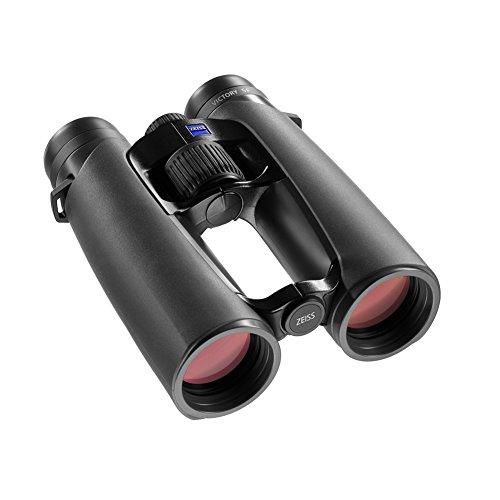 ZEISS Victory SF 8x42 Binocular, Gray and Black
 Leica 8x42 Noctivid Water Proof Roof Prism Binocular...
 Kowa Genesis Series PROMINAR XD Lens Binoculars, 8.5 x...
Product images and titles from Amazon. As an Amazon Associate we earn from qualifying purchases.
Quick Answer: The Pro Shortlist
| Tier | Model | Price | Who Uses It |
|---|---|---|---|
| Reference | Swarovski NL Pure 8x42 | ~$3,300 | Top-tier tour leaders, ABA Big Year birders |
| Pro standard | Zeiss SF 8x42 | ~$2,800 | Field ornithologists, most pro guides |
| Durability king | Leica Noctivid 8x42 | ~$2,900 | Expedition leaders, tropical birders |
| Value pro | Kowa Genesis Prominar 8.5x44 | ~$2,000 | Researchers, Japan-based guides |
What Separates Pro Binoculars from Everything Else
- Edge-to-edge sharpness. The outer 20% of the image should be as resolved as the center. Most sub-$1000 binoculars blur noticeably at the edges, pros rely on peripheral detection.
- True weatherproofing. Not "water-resistant." Fully submersible to 5m+ with nitrogen/argon purging that holds for a decade, not a season.
- Color fidelity. Subtle plumage differences (olive vs. olive-yellow warblers, for instance) require neutral color rendition. Cheap glass adds a warm or cool cast that disguises field marks.
- Close focus under 6 feet. Critical for butterflies, dragonflies, and tropical birding where birds appear at arm's length.
- Serviceability. Pro glass gets serviced every 3-5 years. Swarovski, Zeiss, and Leica all offer factory service with lifetime warranties that honor wear-and-tear.
The Top Picks for 2026
As an Amazon Associate we earn from qualifying purchases, at no extra cost to you.
The NL Pure is what the top 1% of birders carry. The 9.1° field of view is the widest of any full-size binocular ever made, which matters enormously when scanning forest canopies or tracking raptors. Edge sharpness is perfect, you can read field marks at the image periphery without moving the binocular. The detachable forehead rest is the only solution on the market for true multi-hour hawk watches.
Pros: Widest FOV on the market, forehead rest reduces fatigue, reference-grade optics, Swarovski 30-year service promise.
Cons: Heaviest premium binocular (30 oz). Most expensive. Waiting lists sometimes run 6+ months.
The Zeiss SF is the binocular I see most often on the necks of serious bird tour leaders. Its balance is what sets it apart, the center of gravity sits forward toward the objectives, which means your wrists don't fight the weight when you raise them. Combine that with an 8.1° field of view and Zeiss's legendary T* coatings and you have the pro's all-day binocular.
Pros: Best balance of any full-size binocular, excellent low-light transmission (92%+), ergonomic perfection, lifetime warranty.
Cons: Close focus (4.9 ft) is good but not class-leading.
If you're birding the Amazon, the Arctic, or Papua New Guinea, the Noctivid is the binocular that comes home working. Leica's magnesium chassis is overbuilt, the armor shrugs off brush and rain, and the optics are tuned for accurate color rendition rather than maximum brightness, which is the correct trade for identifying plumage under tropical canopy shade. Shorter in the hand than the Swarovski or Zeiss alternatives.
Pros: Bulletproof build, most compact of the premium trio, best color fidelity for ID work, gorgeous low-light contrast.
Cons: Narrower FOV than Swarovski NL. Stiffest focus wheel of the three, some prefer smoother.
Kowa isn't as well-known in North America, but Japanese and Asian pros carry them constantly. The Genesis Prominar uses fluorite-crystal glass normally reserved for Kowa's high-end spotting scopes. At 8.5x magnification, you gain reach without the hand-shake penalty of 10x, and the 44mm objective pulls impressive light in dawn chorus conditions. These perform on par with the premium trio at ~$800 less.
Pros: Fluorite glass, genuine premium optics at "sub-premium" price, 8.5x is an underrated sweet spot, bombproof build.
Cons: Heavier than Zeiss SF. Service in North America is slower than the European brands.
Pro-Specific Considerations
Eye relief for glasses wearers
Pro binoculars ship with 18mm+ eye relief, which matters if you wear glasses. Fold-down eyecups with firm click-stops (not continuous twist) prevent accidental drift during use.
Magnification choice: 8x vs 10x
Most pros carry 8x, not 10x. Reasons: wider field of view, brighter image in shade, less hand-shake amplification, more forgiving with glasses. 10x is useful for open country (shorebirding, raptor watching) but is rarely a first choice.
Close focus matters more than you think
Tropical tour leaders often birdwatch ants and butterflies between bird sightings. A binocular that focuses to 5 ft or less doubles as a natural history tool. The Noctivid and SF both excel here.
Service and warranty
Swarovski, Zeiss, and Leica all offer some version of "send it in, we'll fix it" warranties. Leica's is perhaps the most generous (their service department will often re-coat objectives for a nominal fee after years of heavy use). This is a major reason pros stick with the premium brands, a $2,800 binocular serviced every 5 years is cheaper than replacing $800 binoculars every 18 months.
Models to Avoid for Professional Use
- Vortex Razor UHD (at any price). Excellent glass, but the lifetime warranty requires returning to the US for service, which is crippling for international guides.
- Any "pro" branded binocular under $1,500. The label is usually marketing. True pro-grade optics start in the Zeiss Conquest HD range ($1,200+) and go up from there.
- Binoculars with continuous-turn eyecups. They creep out of position during use. Click-stops are required for field work.
Bottom Line
If budget is no object, the Swarovski NL Pure 8x42 is the reference. If you want the best balance of optics, ergonomics, and value, the Zeiss SF 8x42 is what most pros actually carry. For the toughest conditions, pick the Leica Noctivid. And if you want professional-grade glass without the European price tag, the Kowa Genesis Prominar 8.5x44 delivers.
For a broader range of picks across all budgets, see our 2026 binoculars buyer's guide. Or if ergonomics is your priority, check our best ergonomic binoculars guide.