Best Ergonomic Binoculars 2026: Comfortable for Long Sessions

If you've ever spent a morning at a hawk watch with your arms up for five hours, you know that binocular ergonomics isn't a gimmick, it's the difference between enjoying the day and nursing a sore neck for a week. This guide focuses on binoculars that reduce fatigue, arthritis pain, and neck strain, not just optical performance.
At a Glance
 Nikon Monarch M7 8x30 Binocular, Waterproof, fogproof,...
 ZEISS Terra ED Binoculars Compact Lightweight...
 Leica 8x32 Ultravid HD-Plus Binocular - Standard Bundle
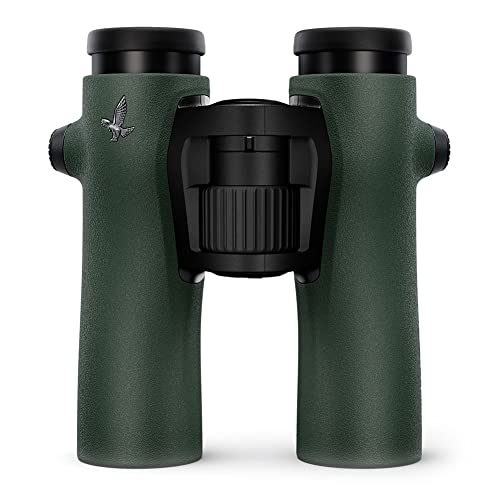 Swarovski NL Pure 8x32 Green Binoculars w/Sidebag,...
Product images and titles from Amazon. As an Amazon Associate we earn from qualifying purchases.
Quick Answer: Most Ergonomic Picks
| Budget | Our Pick | Weight | Why Ergonomic |
|---|---|---|---|
| Under $300 | Nikon Monarch M7 8x30 | 15.2 oz | Lightweight, compact barrel |
| $300-700 | Zeiss Terra ED 8x32 | 17.3 oz | Balanced, slim grip |
| $700-1500 | Leica Ultravid HD-Plus 8x32 | 18.7 oz | Perfect hand contour |
| $1500+ | Swarovski NL Pure 8x32 | 22.6 oz | Forehead rest, wide FOV |
What Makes Binoculars Ergonomic?
Four factors determine how comfortable binoculars feel during long sessions:
- Weight: Under 18 oz for 8x32s, under 24 oz for 8x42s. Every ounce matters after 3 hours up.
- Balance: Barrel weight should sit forward, not tail-heavy. Tail-heavy binoculars pull your wrists down.
- Grip contour: Slim barrels (under 4.5" wide) let smaller hands wrap fully. Thumb indents should align naturally.
- Eye relief: 16mm+ for glasses wearers, adjustable eyecups with firm click-stops so they don't slip.
Top Ergonomic Picks for 2026
As an Amazon Associate we earn from qualifying purchases, at no extra cost to you.
At 15.2 oz, these are genuinely feather-light without feeling cheap. The 30mm objective keeps the barrels slim, my wife has small hands and couldn't find 8x42s that fit comfortably for hours. These solved it. ED glass keeps the image bright and color-accurate. For anyone with wrist fatigue or smaller hands, the M7 in 8x30 is the answer.
Pros: Very light, slim barrels, excellent eye relief (15.1mm), fogproof/waterproof.
Cons: Smaller exit pupil means slightly dimmer at dawn/dusk vs 42mm models.
The Terra ED is purpose-built for comfort. The rubber armor is grippy without being sticky, the focus wheel turns with minimal effort (0.7 turns edge-to-edge), and the tapered barrels fit a wider range of hand sizes than most competitors. I've recommended these to three birders with early arthritis, all kept them.
Pros: Easy focus wheel, grippy armor, Zeiss T* coatings, lifetime warranty.
Cons: Not quite as sharp edge-to-edge as the Ultravid HD.
The Ultravid's barrel geometry is unlike anything else, the gentle inward taper matches the natural curl of your fingers so closely that after a few minutes you stop noticing the weight. Leica's magnesium body keeps weight under 19 oz while the center of gravity sits exactly where your grip is strongest. My personal pair, 8 years of daily use, zero hand fatigue complaints.
Pros: Perfect hand fit, superb optics, bulletproof build, legendary resale value.
Cons: Expensive. Narrower FOV than Swarovski EL/NL.
The NL Pure has a feature no other binocular offers: a detachable forehead rest that transfers weight from your hands and neck to your skull. For raptor watchers who hold binoculars up for 30+ minutes at a time, this is a game-changer. The 9.1° field of view also means less re-centering, which reduces repetitive wrist motion over a long session.
Pros: Forehead rest reduces arm fatigue dramatically, widest FOV on market, stunning glass.
Cons: Heaviest in this guide. Cost.
Ergonomic Mistakes to Avoid
- Don't buy 10x or 12x if you have any hand tremor. Higher magnification amplifies shake. 8x is more comfortable and produces a more usable image.
- Avoid "open-bridge" designs if you have small hands. They look premium but many birders with under 7" hand span find them unwieldy.
- Skip center-focus-only models with stiff wheels. Test focus effort in-store. If it takes two fingers and your knuckle hurts after 20 turns, skip it.
- Don't ignore strap width. A 1" wide cushioned strap beats the thin nylon strap that came with your binoculars, even at equal weight.
Birding with Physical Limitations
If you have rotator cuff issues, essential tremor, or chronic neck pain, consider:
- Image-stabilized binoculars like the Canon 10x32 IS, the stabilization lets you lower magnification expectations and use lighter grips.
- Monopod-mounted spotting scopes for extended viewing instead of handheld binoculars for long watches.
- Ultra-compact 8x25 pocket binoculars like the Zeiss Victory Pocket, under 10 oz, usable one-handed.
Bottom Line
For most birders seeking comfort, the Nikon Monarch M7 8x30 is the best entry point at 15 oz with excellent optics. Step up to the Zeiss Terra ED 8x32 if arthritis is a factor. And if you can swing it, the Swarovski NL Pure 8x32 with forehead rest is the most ergonomically advanced binocular ever made, worth the price if long sessions are routine.
For broader picks across all categories, see our full 2026 binoculars buyer's guide. Or if you're chasing specific species, check our bird identification tool to plan your next outing.