Rondonia Antwarbler IUCN Red List Status: Conservation Assessment and Threats
Understanding the Rondonia Antwarbler IUCN Red List Status
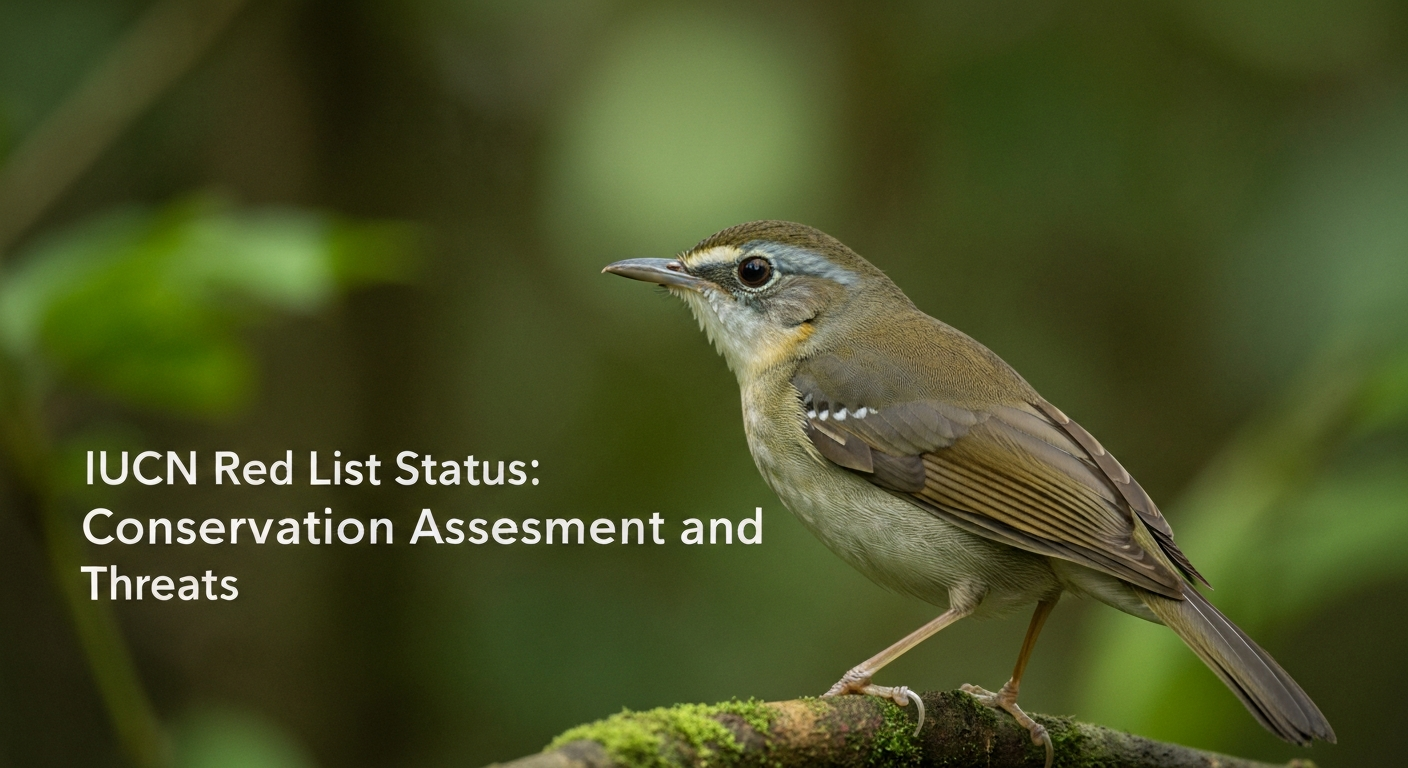
The Rondonia Antwarbler (Terenura sicki) represents one of Brazil's most enigmatic and critically important bird species. This small passerine bird, endemic to the state of Rondônia in western Brazil, has captured the attention of conservation biologists worldwide due to its precarious conservation status and extremely limited distribution. Understanding the Rondonia Antwarbler IUCN Red List status is crucial for appreciating the urgent conservation challenges facing this remarkable species.
First scientifically described in 2013, the Rondonia Antwarbler quickly became a focal point for conservation efforts in the Amazon Basin. Its discovery highlighted the incredible biodiversity still being uncovered in South America's tropical forests, while simultaneously drawing attention to the rapid pace of habitat destruction threatening newly discovered species before they can be properly studied or protected.
Current IUCN Red List Classification
The Rondonia Antwarbler IUCN Red List status is currently classified as Critically Endangered, representing the highest risk category before extinction in the wild. This classification was assigned based on several critical factors that paint a concerning picture for the species' long-term survival prospects.
The International Union for Conservation of Nature (IUCN) designation takes into account the species' extremely restricted range, estimated to cover less than 20 square kilometers of remaining suitable habitat. This tiny area of occupancy, combined with continuing habitat decline and fragmentation, places the Rondonia Antwarbler among the world's most threatened bird species.
Criteria for Critically Endangered Status
The IUCN assessment considered multiple criteria when determining the Rondonia Antwarbler's conservation status:
- Extent of Occurrence: The species occupies an area of less than 100 square kilometers
- Area of Occupancy: Current suitable habitat is estimated at fewer than 10 locations
- Population Decline: Ongoing reduction in habitat quality and quantity
- Habitat Fragmentation: Severe fragmentation of remaining forest patches
- Population Size: Extremely small breeding population estimated at fewer than 250 mature individuals
Species Overview and Identification
The Rondonia Antwarbler belongs to the family Thamnophilidae, commonly known as typical antbirds. This family comprises over 230 species of insectivorous birds found throughout the Neotropics, with many species exhibiting high levels of endemism and habitat specialization.
Measuring approximately 10 centimeters in length, the Rondonia Antwarbler displays subtle but distinctive plumage characteristics. Males exhibit a predominantly gray coloration with darker wings and tail, while females show warmer brown tones with rufous tinges on the wings and back. The species possesses the typical antbird features of a slightly hooked bill adapted for gleaning insects from foliage and bark surfaces.
Behavioral Characteristics
Like many antbird species, the Rondonia Antwarbler exhibits specialized foraging behaviors that make it particularly vulnerable to habitat disturbance. The species typically forages in mixed-species flocks, moving through the forest understory and lower canopy levels while searching for small arthropods, larvae, and other invertebrate prey.
The bird's preference for specific microhabitats within the forest structure contributes to its vulnerability. It requires mature forest with particular vegetation density and composition, characteristics that are rapidly disappearing from its native range due to human activities.
Geographic Distribution and Habitat Requirements
The Rondonia Antwarbler's distribution is among the most restricted of any bird species in South America. Endemic to a small area in the state of Rondônia, Brazil, the species is known from only a handful of locations within what was once continuous Amazon rainforest.
Historical records suggest the species may have originally inhabited a somewhat larger area, but current populations are confined to scattered forest fragments that represent the last remnants of suitable habitat. These fragments are primarily located in areas that have escaped large-scale agricultural conversion, often due to topographic features that made them less accessible or economically viable for development.
Habitat Characteristics
The Rondonia Antwarbler demonstrates strict habitat requirements that contribute significantly to its conservation challenges:
- Forest Structure: Requires mature terra firme forest with complex vertical stratification
- Canopy Cover: Needs dense canopy coverage to maintain appropriate understory conditions
- Microclimate: Dependent on stable humidity and temperature conditions found in intact forest
- Plant Diversity: Associated with high plant species diversity that supports abundant arthropod communities
- Edge Sensitivity: Cannot tolerate forest edge effects or fragmented landscapes
Primary Threats and Conservation Challenges
The Rondonia Antwarbler IUCN Red List status as Critically Endangered reflects multiple interconnected threats that continue to impact the species and its habitat. Understanding these threats is essential for developing effective conservation strategies and preventing the species' extinction.
Deforestation and Land Use Change
The primary threat facing the Rondonia Antwarbler is widespread deforestation within its limited range. The state of Rondônia has experienced some of the highest deforestation rates in the Brazilian Amazon, with vast areas converted to cattle pasture, soybean cultivation, and other agricultural uses.
Satellite imagery analysis reveals that forest cover within the species' historical range has declined by more than 80% since the 1980s. This dramatic habitat loss has resulted in severe population fragmentation and isolation of remaining populations in small, disconnected forest patches.
Agricultural Expansion
The conversion of forest to agricultural land represents an ongoing and accelerating threat. Cattle ranching remains the dominant land use in the region, with large areas of forest cleared for pasture establishment. Additionally, the expansion of mechanized agriculture, particularly soybean cultivation, has intensified pressure on remaining forest areas.
The economic incentives for land conversion often outweigh conservation considerations, creating ongoing pressure for further habitat destruction even within areas known to harbor the Rondonia Antwarbler.
Infrastructure Development
Road construction and other infrastructure development projects continue to fragment the landscape and facilitate access to previously remote forest areas. The construction of new roads often triggers a cascade of environmental impacts, including increased deforestation rates, edge effects, and human settlement in previously undisturbed areas.
Climate Change Impacts
Climate change poses additional challenges for the Rondonia Antwarbler, particularly given its small population size and limited distribution. Projected changes in precipitation patterns and temperature regimes could alter forest composition and structure, potentially making remaining habitat patches unsuitable for the species.
The species' apparent sensitivity to microclimate conditions makes it particularly vulnerable to the altered environmental conditions associated with climate change, even in protected forest areas.
Conservation Efforts and Protection Measures
Despite the challenging circumstances surrounding the Rondonia Antwarbler IUCN Red List status, several conservation initiatives are working to protect the species and its remaining habitat. These efforts involve collaboration between government agencies, non-governmental organizations, research institutions, and local communities.
Protected Area Establishment
Efforts are underway to establish formal protection for areas known to harbor Rondonia Antwarbler populations. This includes the creation of private reserves and the designation of areas of permanent preservation under Brazilian environmental law.
However, the effectiveness of protected areas depends heavily on adequate enforcement and management resources, which remain challenging in remote areas of Rondônia.
Research and Monitoring Programs
Ongoing research efforts focus on better understanding the species' ecology, population dynamics, and habitat requirements. This research is essential for informing conservation planning and management decisions.
Monitoring programs track population trends and habitat conditions, providing early warning of further declines and helping prioritize conservation interventions.
Habitat Restoration Initiatives
Some conservation organizations are exploring habitat restoration opportunities, particularly focusing on creating corridors between existing forest fragments. These efforts aim to increase connectivity and reduce the isolation of remaining populations.
Restoration activities include native species reforestation, removal of invasive species, and rehabilitation of degraded areas adjacent to existing forest patches.
Future Outlook and Recovery Prospects
The future of the Rondonia Antwarbler remains uncertain, with the species facing significant challenges despite ongoing conservation efforts. The Rondonia Antwarbler IUCN Red List status as Critically Endangered reflects the urgent need for immediate and sustained conservation action to prevent extinction.
Recovery prospects depend on several critical factors, including the protection of all remaining habitat, successful habitat restoration efforts, and the mitigation of ongoing threats. The species' small population size makes it particularly vulnerable to stochastic events and genetic bottlenecks, emphasizing the importance of maintaining viable populations across multiple locations.
Conservation Priorities
Priority conservation actions for the Rondonia Antwarbler include:
- Immediate protection of all known population sites
- Habitat restoration to increase connectivity between forest fragments
- Enhanced monitoring to track population trends and habitat conditions
- Research to better understand species ecology and habitat requirements
- Community engagement to build local support for conservation efforts
- Policy advocacy to strengthen environmental protection measures
The Importance of Continued Conservation Action
The Rondonia Antwarbler serves as a powerful symbol of the broader conservation challenges facing Amazon biodiversity. Its precarious status highlights the urgent need for comprehensive conservation strategies that address both immediate threats and long-term sustainability.
The species' survival depends on continued collaboration between researchers, conservationists, government agencies, and local communities. Success will require sustained funding, political will, and innovative approaches to balancing conservation needs with economic development pressures.
Understanding and addressing the factors behind the Rondonia Antwarbler IUCN Red List status provides valuable insights into broader patterns of species endangerment and the effectiveness of different conservation approaches. The lessons learned from efforts to protect this species can inform conservation strategies for other threatened birds throughout the Neotropics.
As we continue to discover new species in the Amazon Basin, the case of the Rondonia Antwarbler reminds us of the importance of rapid conservation action to protect biodiversity before it is lost forever. The window for saving this remarkable species remains open, but only through immediate and sustained conservation efforts can we hope to change its current trajectory toward extinction.
Frequently Asked Questions
What is the current IUCN Red List status of the Rondonia Antwarbler?
The Rondonia Antwarbler is currently classified as Critically Endangered on the IUCN Red List. This designation reflects its extremely restricted range of less than 20 square kilometers, small population size of fewer than 250 mature individuals, and ongoing habitat decline due to deforestation and agricultural expansion in Rondônia, Brazil.
Why is the Rondonia Antwarbler considered one of the world's most threatened birds?
The Rondonia Antwarbler is considered critically threatened due to its extremely limited distribution, high habitat specificity, and rapid habitat loss. The species is endemic to a tiny area in Rondônia, Brazil, where over 80% of its historical habitat has been destroyed since the 1980s. Its strict requirements for mature forest conditions and sensitivity to habitat fragmentation make it particularly vulnerable to ongoing deforestation pressures.
What conservation efforts are being implemented to protect the Rondonia Antwarbler?
Conservation efforts for the Rondonia Antwarbler include establishing protected areas and private reserves, implementing research and monitoring programs to better understand the species' ecology, habitat restoration initiatives to create corridors between forest fragments, and community engagement programs. However, the species' critical status requires immediate and sustained conservation action across all remaining habitat areas to prevent extinction.