How to Identify Birds by Song: A Beginner's Guide to 20+ Common Bird Calls
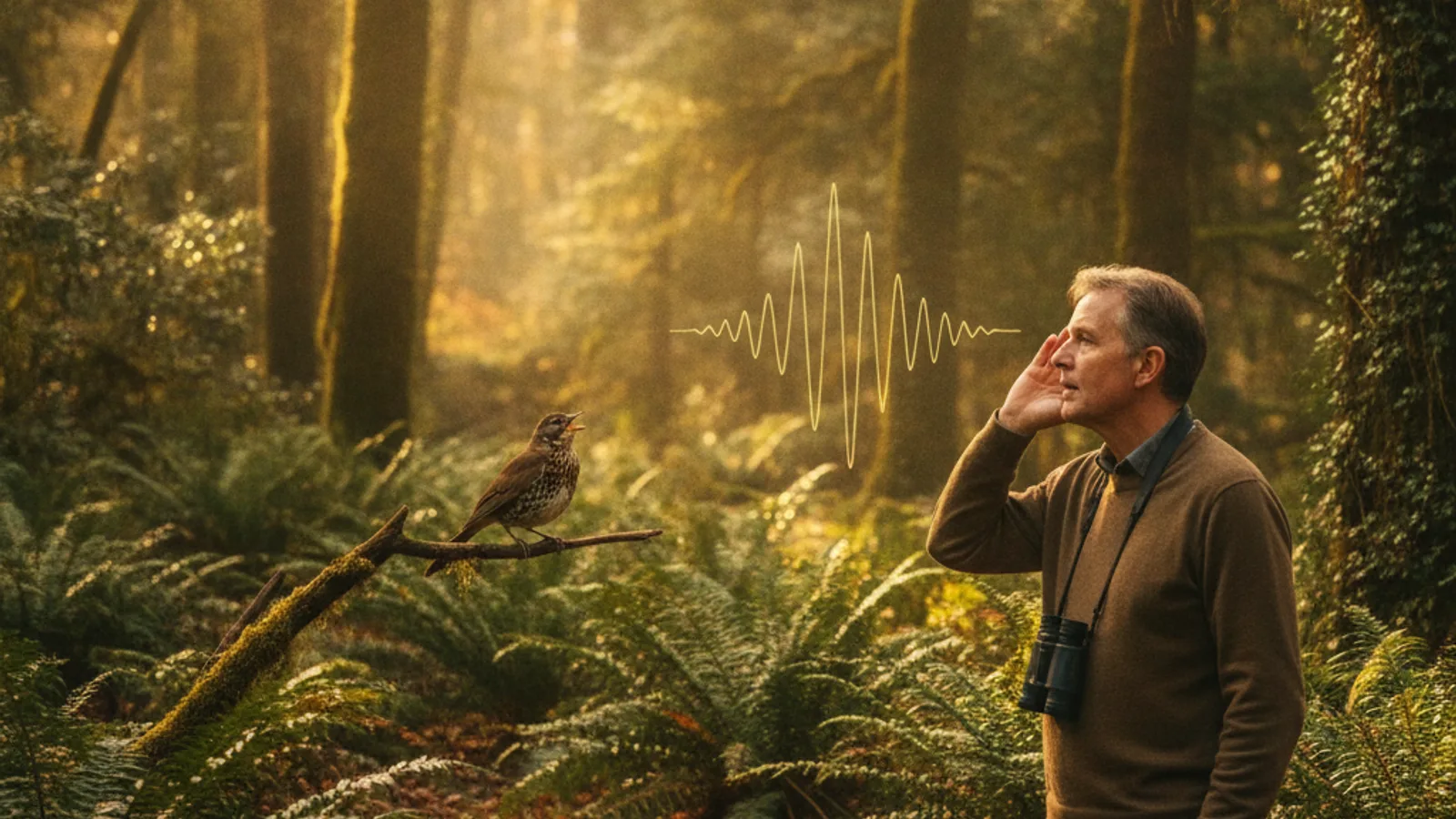
On a spring morning walk through any North American neighborhood, you might spot three or four birds. But if you stop and listen, you will hear ten times that many. Most birds stay hidden in foliage, moving too fast to see or simply too camouflaged to notice. Song is how they reveal themselves, to each other, and to birders who know how to listen. Learning to identify birds by their songs is one of the most powerful skills in birding, and it starts with a surprisingly small number of common species.
This guide walks through the fundamentals of bird identification by song: how bird vocalizations work, the classic mnemonics that generations of birders have used, and detailed descriptions of more than 20 common species organized by habitat. Whether you're standing in your backyard at dawn or hiking through woodland, you'll have the tools to answer that perennial question, what bird is that singing?
Why Learn Bird Songs?
The case for learning bird calls is straightforward: you hear birds far more often than you see them. Even in a familiar backyard, many birds stay concealed in dense shrubs or tree canopies. Migration brings waves of warblers through at night, audible overhead but invisible in the dark. Forest birding can be frustrating with binoculars alone; many woodland species spend most of their time in the upper canopy, fifty feet overhead, where binoculars show you little more than a silhouette.
Song identification changes everything. A single learned song expands your identification capability in every habitat you visit. Experienced birders routinely identify 80 percent or more of the species they encounter on a walk by ear alone, with visual confirmation reserved for the uncertain or the unusual. The investment in learning songs pays dividends on every single outing from the day you start.
There is also a practical threshold effect: once you know a dozen common songs, the unfamiliar ones become easier to notice and investigate. Instead of filtering out all bird sound as background noise, your brain starts sorting it into "known" and "unknown" categories, and the unknowns become the interesting puzzles worth pursuing.
How Bird Songs Work
Not all bird sounds are the same. Ornithologists draw a useful distinction between songs and calls, and understanding the difference helps enormously when you encounter an unfamiliar sound.
Songs are longer, more complex, and more melodious vocalizations produced primarily in a territorial and breeding context. When a male Northern Cardinal sings from the top of a tree in early April, he is advertising his territory and attracting a mate. Songs are species-specific enough to be reliable identification tools, and they are produced most reliably during the breeding season, roughly April through July across most of North America.
Calls are shorter, simpler sounds used for alarm, contact, location, and flock coordination. A chickadee's "chick-a-dee-dee-dee" is technically a call, not a song. Calls are given year-round and in all seasons. They are often harder to learn because they are shorter and more variable, and because many distantly related species produce similar-sounding chips and chirps.
Males do most of the singing, particularly in spring and early summer. This is partly why the dawn chorus, the intense outburst of song that begins 30 to 45 minutes before sunrise, is so dominated by male birds. They sing loudest and most persistently at the day's quietest moment, when sound carries farthest and competitors are most likely to hear. Dawn is genuinely the best time to learn songs: there are fewer competing sounds, birds are highly active, and species are singing their most complete, identifiable songs.
Song activity tapers off through midsummer as breeding winds down, slows further in fall, and reaches a low point in winter, though year-round residents like cardinals and Carolina Wrens continue singing on warm winter days, and owls are at peak vocal activity in the coldest months.
The Mnemonics Method
The oldest and most effective technique for remembering bird songs is the mnemonic, a word phrase or sentence that matches the rhythm, pitch, and pattern of the actual song. Generations of birders have used these verbal shortcuts, and many have become standardized across field guides and natural history writing. They work because they give your brain a semantic anchor for an otherwise abstract sound.
Here are the most widely used and most reliable mnemonics for common North American species:
- American Robin: "cheerily, cheer-up, cheerio", a rich, rolling series of melodious phrases, always upbeat and questioning in quality
- Barred Owl: "Who cooks for you? Who cooks for you-all?", the second phrase drops in pitch and trails off, unmistakable in eastern forests at night
- White-throated Sparrow: "Oh sweet Canada, Canada, Canada", pure whistled notes, often the first sign that winter sparrows have arrived
- Carolina Wren: "teakettle, teakettle, teakettle", startlingly loud for such a small bird, repeated insistently from dense cover
- Eastern Towhee: "Drink your teeeeea!", the final syllable is a buzzy trill that hangs in the air
- Ovenbird: "Teacher! Teacher! TEACHER!", each repetition gets louder, making this one of the most emphatic songs in the eastern forest understory
- Black-capped Chickadee: "fee-bee" (song) and "chick-a-dee-dee-dee" (call), most people know the call but miss that the song is a simple two-note whistle
- Red-winged Blackbird: "konk-la-ree!", a liquid, gurgling song that is the defining sound of cattail marshes across North America
- Mourning Dove: "coo-OO-oo, oo, oo", the second syllable is higher and louder, giving it a mournful rise-and-fall that beginners often mistake for an owl
- Northern Cardinal: "birdy birdy birdy" or "cheer cheer cheer", loud clear whistles, one of the first songs recognizable through a closed window on a spring morning
20 Common Bird Songs Described
The following species profiles are organized by habitat type. Each includes a verbal description of the song, the standard mnemonic where one exists, and notes on when and where you're most likely to hear it. Internal links go to full species pages on BirdSpot where available.
The Robin's song is a series of rich, whistled phrases delivered in a relaxed, rolling pattern with brief pauses between each phrase. It sounds musical and almost conversational, ascending and descending melodic runs, never harsh. Robins are among the earliest singers of the morning, often beginning 30 minutes before sunrise. They sing persistently through spring and early summer, quieting significantly once nesting is complete. Found in lawns, parks, woodland edges, and almost any suburban habitat across North America.
Cardinals produce several distinct song patterns, but all share the same rich, pure-whistled quality, loud, clear, and unmistakably melodic. Songs are often slurred, with notes bending upward or downward. Unusually, female cardinals also sing, making this one of relatively few North American songbirds where both sexes vocalize strongly. Listen for cardinals year-round; they are among the most persistent winter singers on warm days. Common in forest edges, hedgerows, and backyards across the eastern and central US.
Most people know the energetic "chick-a-dee-dee-dee" call, but the chickadee's actual song is a simple, sweet two-note whistle, the first note higher, the second lower, with a slight downward slide between them. The number of "dee" notes at the end of the call is not random: more dees signal higher alarm levels. Chickadees are year-round residents across the northern US and Canada and are often the first birds to investigate any disturbance in woodland habitat.
The Tufted Titmouse sings a loud, emphatic whistle repeated rapidly in a steady series, typically a two-syllable phrase given six to eight times in quick succession. The song is higher and more insistent than a cardinal's, with a slight mechanical quality. Titmice are persistent singers from late winter through midsummer and are among the earliest species to begin singing each morning. Found in deciduous woodland, suburban parks, and backyards with mature trees across the eastern US.
The House Finch's song is a cheerful, loose warble with an improvisational quality, it sounds like the bird is making it up as it goes. The song typically ends with a distinctive rising buzzy note that can help clinch the identification. House Finches sing from prominent perches near nest sites, often on rooftops or utility wires. They are year-round residents across most of North America and are one of the most common suburban songbirds on the continent.
The Song Sparrow opens with two or three clear introductory notes before launching into a complex trill and warble, varied, musical, and unmistakably sparrow-like. Individual males have their own song variants, but all Song Sparrows produce the same general two-part structure: deliberate opening notes followed by a richer, faster phrase. One of the most abundant and adaptable sparrows in North America, found in brushy edges, marsh margins, and backyard shrubs from coast to coast.
The Mourning Dove's low, hollow cooing is one of the most commonly misidentified sounds in North American birding, many beginners assume they're hearing an owl. The key distinction: the dove's call is softer, more regular, and given in daylight. The second syllable rises in pitch, creating a plaintive, rising-falling quality. Mourning Doves call from treetops, utility wires, and ground-level perches and are found in virtually every habitat across the continent, year-round.
The Wood Thrush's song is considered by many naturalists to be the most beautiful bird song in North America. It is a liquid, fluted series of phrases with an ethereal, echo-like quality, two or three notes followed by a complex trill produced by the bird simultaneously using both sides of its syrinx. The song carries far through dense woodland and is heard primarily in the understory of mature eastern deciduous forest. It sings most actively at dawn and dusk and is a signature sound of eastern woodlands from May through July.
The Ovenbird sings one of the most recognizable crescendo songs in North American birding. Each "Teacher!" phrase is louder than the last, building insistently over six to ten repetitions before the bird pauses and starts again. The song comes from the forest floor or low understory of mature deciduous woodland, though the bird itself is nearly impossible to spot in the leaf litter. The Ovenbird is a wood-warbler, despite looking more like a small thrush, and is common in intact eastern forests from May through early August.
The Eastern Wood-Pewee sings a mournful, slurred whistle from the mid-canopy of deciduous and mixed woodland. Its song pattern alternates between the three-syllable "pee-ah-WEE" and a two-syllable downward "pee-yer," often delivered in a steady slow alternation. The Pewee is notable for singing persistently through the heat of summer afternoons when most other birds have gone quiet, a useful identification cue. Found in woodland interiors and forest edges throughout the eastern US.
The Red-eyed Vireo has been called "the preacher bird" because it sings all day long without apparent pause, one study recorded a single male producing more than 20,000 song phrases in a single day. The song consists of short, two- to three-note phrases separated by brief pauses, with a questioning, declarative alternation that makes it sound like a slow question-and-answer. The vireo sings from the high canopy of deciduous forest and is one of the most heard but least seen birds in eastern woodland from May through August.
The Scarlet Tanager's song closely resembles the American Robin's in structure, rolling, melodious phrases, but with a distinctive burry, scratchy quality that birders describe as "robin with a cold." Tanagers sing from the high canopy of mature oak and mixed forest, making them famously difficult to spot despite the male's brilliant red-and-black plumage. The call note, a sharp "chip-burr", is equally distinctive. Common in eastern deciduous woodland May through August, rare in winter.
The Eastern Meadowlark produces one of the most evocative open-country songs in North America: a long, pure, descending whistle that carries across fields and pastures on spring mornings. The song has a slightly melancholy, minor-key quality that many birders find haunting. Meadowlarks sing from fence posts, utility wires, and the tops of tall grass stems, any elevated perch in open agricultural land, grassland, or meadow. Their numbers have declined sharply with grassland loss, making their song increasingly rare across much of the East.
The Red-winged Blackbird's song is the defining sound of freshwater marshes, wet meadows, and cattail edges from late February onward. Males sing persistently from cattail stems or marsh vegetation, flashing their red and yellow shoulder patches with each call. The song has a distinctive gurgling, liquid quality unlike any other North American bird, once heard, it is immediately recognizable. Red-winged Blackbirds are among the earliest spring arrivals in many northern states, with males appearing before ice-out and singing through July.
The Killdeer's call is one of the easiest bird sounds to learn because it sounds exactly like its name, a loud, rising "kill-DEER!" that carries across open habitat with remarkable clarity. The species name vociferus translates as "noisy" and earns its keep: Killdeer call incessantly when alarmed, during flight, and while defending nests. Found on gravel rooftops, parking lots, athletic fields, and open shorelines across North America year-round. Often calling at night as well as during the day.
The Bobwhite's whistled call is one of the most pleasant sounds in open country birding, a crisp, rising two-note phrase that carries across brushy fields, overgrown pastures, and woodland edges. The second note is distinctly higher and louder, giving the call its characteristic upbeat snap. Males call persistently through spring and summer from fence posts and low shrubs. Sadly, Bobwhite populations have declined by more than 80 percent since 1970 due to habitat loss, making this once-familiar sound much harder to find across most of its range.
The Whip-poor-will's call is one of the most evocative sounds of summer nights in eastern woodland. It repeats its own name in a rapid, rhythmic pattern, sometimes hundreds of times without pause, building a hypnotic, slightly eerie sound that carries surprisingly far through forest. The emphasis falls on the first and last syllables. Whip-poor-wills are nocturnal insect-catchers that sing most actively in the two hours after sunset and before sunrise. They have declined sharply with forest fragmentation and insect decline across much of the East.
The Barred Owl's call is the most recognizable owl sound in eastern North America and one of the most dramatic night sounds in any forest. The classic pattern, eight hoots arranged in two groups of four, is both easily memorized and unmistakable. The second phrase trails off with a descending, nasal quality ("you-awwwll") that distinguishes it from other owls. Barred Owls call year-round, but most actively in late winter and early spring during the breeding season. Common in moist woodland near water across the eastern US; expanding westward.
The Great Horned Owl's call is deep, resonant, and immediately authoritative, a five-note hoot pattern that sounds like a large, confident presence in the dark. The rhythm is critical: two single notes, then a paired note, then two more singles, with the paired note slightly higher. Great Horned Owls begin calling in December and January, their breeding season peaking in late winter while most other species are silent. They are the most widespread owl in North America and can be found in virtually any habitat with adequate trees.
The Common Nighthawk is not technically nocturnal, it is most active at dusk and dawn, hawking insects over open country, cities, and water. Its call is a sharp, nasal "peent!" that sounds electric and slightly alien, very different from any songbird. Nighthawks also produce a dramatic booming sound during courtship dives when the wind rushes through their wing feathers, a sudden, hollow "whooom" as the bird pulls out of a steep dive. Easily found over lit parking lots and ball fields on summer evenings where insects concentrate under lights.
The Carolina Wren produces one of the loudest songs relative to body size of any North American bird. Its rich, ringing "teakettle" song carries an extraordinary distance from dense thickets, shrubby hedgerows, and brushy woodland edges. Males have a repertoire of several distinct song patterns but always deliver them at full volume. Unlike most songbirds, Carolina Wrens sing year-round and in almost any weather, their song in January on a cold clear morning is one of the great small pleasures of winter birding in the eastern US. Common from the Gulf Coast north to southern New England.
Tips for Learning Bird Songs
Starting with the full list of 20 species above would overwhelm most beginners. A more effective approach is systematic and gradual:
- Pick five backyard species first. Robins, cardinals, chickadees, titmice, and Carolina Wrens or house finches are present in most North American backyards and are among the most persistent singers. Master these before adding anything else.
- Learn one new song per week. This pace feels slow but compounds quickly. By midsummer you could comfortably know 15 to 20 species. A year at this pace and you will know more bird songs than most casual birders twice your experience level.
- Use early mornings deliberately. The dawn chorus, that intense burst of singing that peaks 30 to 60 minutes before and after sunrise, provides more learning opportunities in one hour than an entire afternoon walk. Set the alarm earlier than you think is reasonable.
- Record unknowns on your phone. A five-second voice memo of an unfamiliar song is invaluable. You can compare it to recordings later, share it in online birding communities, or run it through identification apps.
- Watch while you listen. Whenever possible, find the bird producing the song. The combination of visual confirmation and audio learning creates much stronger memory than audio alone. Binoculars pointed at a singing bird while the song plays cement the association in a way that solo listening rarely does.
- Revisit the same patch repeatedly. Familiarity with a location reduces cognitive load. When you know your local cast of species, unfamiliar songs immediately stand out as interesting rather than disappearing into background noise.
Best Apps and Tools for Bird Call Identification
The fastest way to put a name to a song you're hearing right now is our own BirdSpot Song Identifier, it listens through your device's microphone and identifies birds in real time, entirely in your browser. No app download, no account, no upload: the audio is analyzed on your device using the BirdNET neural network, and each detection links straight to the species page with photos, range, and a rarity rating. Open it on your phone during the dawn chorus and watch the list build as birds sing.
Among installable apps, Merlin Bird ID from the Cornell Lab of Ornithology is the standard-setter, its Sound ID feature is excellent and works offline, which matters in remote areas with no signal. eBird, also from Cornell, is the ideal companion: its location-based checklists tell you which species are likely in your exact area by date, invaluable for narrowing an unfamiliar song to a shortlist of candidates.
The Audubon Bird Guide app includes high-quality recordings and range maps for all North American species and remains a reliable all-purpose reference, particularly for its voice filter (search by sound quality, pitch, and pattern). For dedicated practice, the Larkwire platform uses a game-based approach that measurably accelerates audio learning.
Seasonal Song Calendar
Bird song is not evenly distributed across the year. Understanding when birds are most vocal helps you plan outings and interpret what you hear.
| Season | Song Activity | What to Expect |
|---|---|---|
| Late Winter (Feb–Mar) | Building rapidly | Cardinals, chickadees, titmice begin singing. Owls peak. Red-winged Blackbirds arrive in marshes. Often the first sign of approaching spring. |
| Spring (Apr–May) | Peak, full dawn chorus | All resident species singing plus arriving migrants adding new voices almost daily. The richest and most complex soundscape of the year. Best time for learning. |
| Early Summer (Jun–Jul) | Active but declining | Breeding activity continues but many species reduce singing after nesting begins. Wood Pewee, Red-eyed Vireo, and Ovenbird continue through heat of summer. |
| Late Summer (Aug–Sep) | Quiet, calls replace songs | Song nearly disappears. Migrants produce chip notes and flight calls. Focus shifts to call identification. Nighthawks peak over cities before southward migration. |
| Fall (Oct–Nov) | Minimal | Occasional song from cardinals and wrens on warm days. White-throated Sparrows arrive from the north with their whistled song. Otherwise largely quiet. |
| Winter (Dec–Jan) | Low, owls peak | Great Horned Owls and Barred Owls most vocal. Year-round residents (cardinal, wren, chickadee) sing sporadically on mild days. Northern finches in irruption years may call actively. |
Common Mistakes Beginners Make
Mourning Dove vs. Owl. This is perhaps the single most common misidentification by sound among new birders. The Mourning Dove's cooing is soft, hollow, and repetitive, qualities associated with owls in most people's minds. The key differences: doves call in full daylight, their cooing has five syllables ("coo-OO-oo, oo, oo") with the second highest, and they are visible in open perches. Great Horned Owls call in darkness or deep dusk, with a five-note deep resonant pattern ("hoo-h'HOO-hoo-hoo") and a much slower rhythm.
House Finch vs. Purple Finch. These two species look similar and sound similar enough to confuse even experienced birders. The Purple Finch's song is richer, faster, and more musical, less scratchy than the House Finch's. The House Finch almost always ends its song with a distinctive upswept buzzy note; the Purple Finch does not. In most suburban settings, if you're in doubt, it's almost certainly a House Finch.
American Crow vs. Fish Crow. Both produce cawing calls, but the Fish Crow's "caw" is distinctly nasal and two-syllabled, often described as "uh-uh", while the American Crow's call is a full, round single "caw." Fish Crows are common in coastal areas and river corridors of the Southeast, where the two species frequently occur together.
Ignoring chips and calls. Beginners naturally focus on songs because they are louder and more distinctive. But chip notes and contact calls, the small, sharp sounds that birds produce year-round, are often the only evidence a species is present in fall and winter. Learning a handful of common chip notes (the sharp "tcheck" of a Yellow-rumped Warbler, the soft "seet" of a migrating thrush) opens up an entirely new dimension of identification.
Song identification takes time, but every species you learn sticks with you permanently. Unlike plumage, which requires remembering field marks, colors, and patterns in variable lighting, a song sounds the same every time, a familiar voice that registers immediately the moment you hear it, season after season. Start with your backyard, learn five songs, and go from there. The dawn chorus rewards the patient listener.
For more on the birds you'll be listening for, see our 15 Backyard Birds Every Beginner Should Learn First and the Best Free Bird Identification Apps 2026 guide covering Merlin and eBird in detail. For species-specific information, browse our full species library with range maps, photos, and behavior notes for thousands of North American birds.