American Robin: Everything You Need to Know About America's Most Familiar Bird
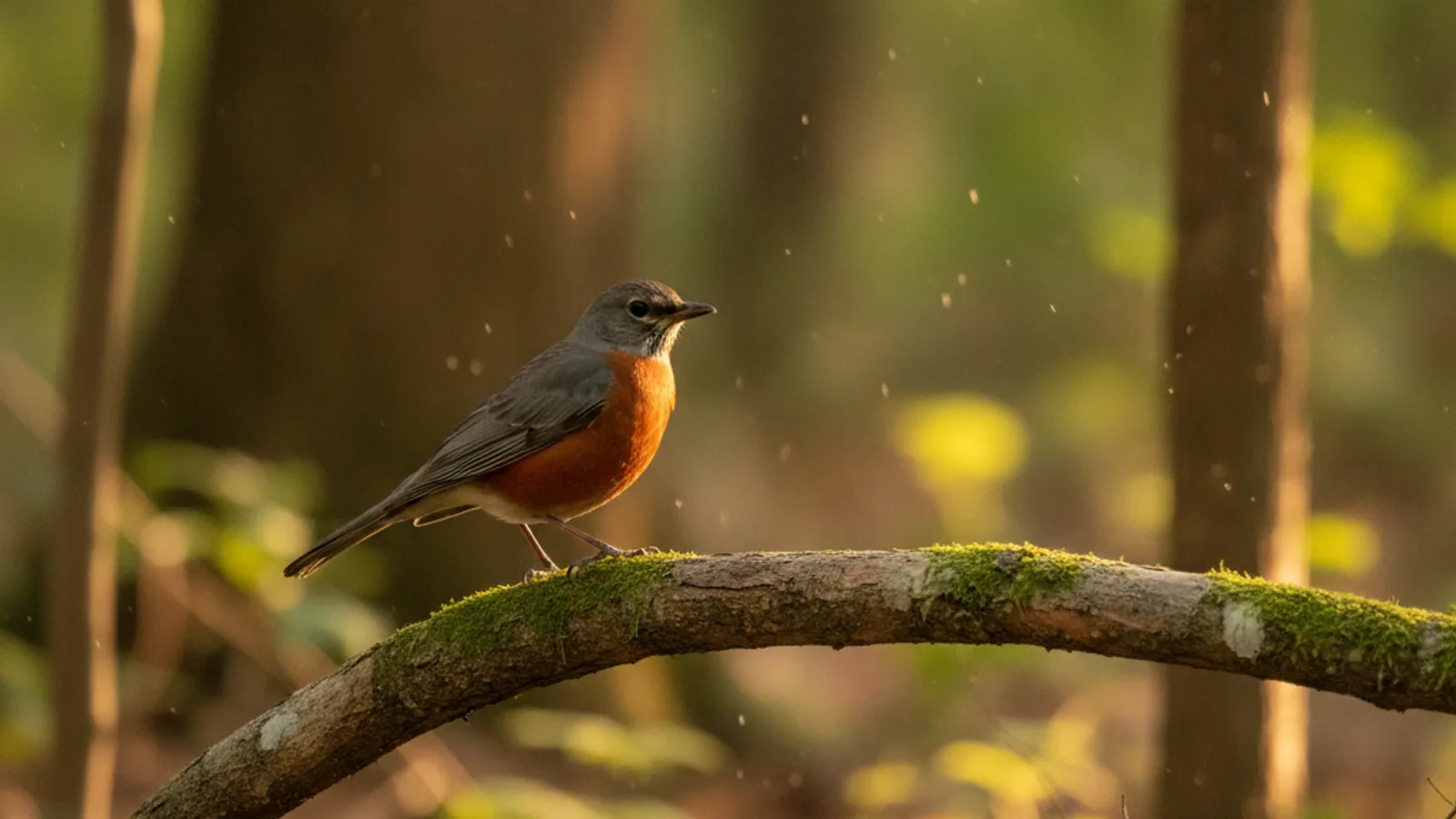
The American Robin: A Complete Guide to North America's Most Beloved Bird
The American Robin (Turdus migratorius) stands as one of the most recognizable and cherished birds throughout North America. Whether you spot one hopping across your lawn in search of earthworms or hear its cheerful song at dawn, this thrush has earned its place as a cultural icon and herald of spring. This comprehensive guide explores everything you need to know about identifying, understanding, and appreciating these remarkable birds.
Identification: Recognizing American Robins
American Robins are relatively easy to identify once you know what to look for. As the largest thrush in North America, they measure approximately 7.5 to 11 inches in length with a wingspan of 12 to 16 inches. Their distinctive appearance combines several key field marks that make them stand out in any setting.
Male American Robins
Male American Robins display striking plumage that makes them instantly recognizable. They feature a brick-red or rusty-orange breast and underparts that contrast sharply with their slate-gray back and head. Males possess a blackish head with broken white eye-rings, creating a distinctive facial pattern. Their wings and tail are dark gray to black, while the outer tail feathers display white spots. The upper breast shows the most vibrant coloration, gradually fading to lighter orange on the belly and undertail coverts.
Female American Robins
Female robins show similar patterns to males but with noticeably duller coloration throughout their plumage. Their breast and underparts display a lighter, more washed-out orange-buff compared to the rich rust of males. The gray on their backs appears less saturated, and their overall appearance seems more muted. Some females may appear almost peachy-orange on the breast, making them slightly challenging to distinguish from juveniles in certain lighting conditions.
Juvenile American Robins
Young robins present a completely different appearance from adults, which can confuse beginning birders. Juveniles lack the clean contrast of adult plumage and instead display spotted breasts with buff or grayish underparts. Their backs appear brownish-gray, and they show heavy spotting across their entire breast and flanks. This spotted pattern gradually fades as they molt into adult plumage during their first fall and winter.
Habitat and Range
American Robins demonstrate remarkable adaptability, thriving in diverse habitats across North America from coast to coast and from Canada to Mexico. Their range expansion over the past century makes them one of the most widespread bird species on the continent.
These versatile birds inhabit open woodlands, forest edges, grasslands, parks, gardens, and suburban neighborhoods. They prefer areas with short grass or bare ground for foraging combined with nearby shrubs and trees for nesting and shelter. American Robins have successfully adapted to human-dominated landscapes, making them common residents in yards, cemeteries, golf courses, and urban parks.
Eastern populations tend to migrate seasonally, while western and southern populations may remain year-round residents. The northern edge of their breeding range extends into the Canadian Arctic, while wintering populations spread throughout the southern United States, Mexico, and Central America. Their presence in winter ranges varies based on food availability, with large flocks sometimes gathering where fruit-bearing trees provide abundant resources.
Diet and Feeding Behavior
American Robins are generalist feeders, consuming a varied diet that changes seasonally based on availability. This dietary flexibility contributes significantly to their success and widespread distribution.
Earthworms: The Preferred Protein
Earthworms comprise the bulk of the American Robin diet during breeding season, particularly from spring through summer. Robins have earned their reputation as lawn-foragers by hunting earthworms in grass and soil. Their technique involves hopping across short grass, pausing to listen intently for vibrations in the soil, then quickly pulling up worms when detected. A single robin may consume dozens of earthworms daily, with requirements increasing dramatically when feeding hungry nestlings.
Seasonal Diet Changes
As summer transitions to fall, American Robins increasingly shift their diet toward fruits and berries. They consume berries from various plants including dogwoods, sumacs, junipers, hollies, and ornamental plantings. This seasonal shift reflects both the declining availability of earthworms in drying soil and the energy-rich nature of fruits needed for migration preparation.
Winter diets depend heavily on available fruit sources. Robins gather in flocks to exploit fruit-bearing trees, sometimes consuming such quantities that they become intoxicated from fermenting berries. Beyond earthworms and berries, robins also consume insects, spiders, snails, and other small invertebrates when opportunities arise.
Nesting Behavior and Reproduction
American Robins are prolific breeders, often raising two or three broods per breeding season. Their nesting habits demonstrate fascinating behaviors and adaptations suited to their varied habitats.
Nest Construction
Female robins construct cup-shaped nests using grass, twigs, small roots, and other plant materials. Characteristically, they line the interior with mud or clay, creating a smooth, reinforced cup that helps support their eggs and broods. Nest placement varies considerably, from low shrubs and small trees to building ledges, eaves, and other human structures. Robins often return to the same nesting territories year after year, sometimes reusing previous nest sites or building new ones in close proximity.
The Famous Blue Eggs
One of the most distinctive features of American Robin reproduction involves their eggs. Female robins lay three to five eggs per clutch, colored in a striking pale blue-green shade commonly known as "robin egg blue." This coloration has become iconic in North American culture, referenced in literature, art, and jewelry. The eggs measure approximately 1.1 inches long and hatch after an incubation period of 12 to 14 days. Only females incubate the eggs, though males assist in feeding the incubating female.
Multiple Broods and Breeding Season
American Robins typically raise two to three broods per year in most of their range. The breeding season extends from March or April through August, allowing sufficient time for multiple nesting attempts. Young robins fledge approximately 14 to 16 days after hatching but remain dependent on parents for several weeks. If a first or second brood fails, robins readily attempt another clutch, demonstrating resilience and dedication to successful reproduction.
Migration Patterns
American Robin migration patterns vary dramatically across their range, creating a complex patchwork of movement rather than a simple north-south migration. Understanding these patterns provides insight into seasonal abundance in different regions.
Northern populations exhibit strong migratory tendencies, with breeding birds in Canada and the northern United States moving south in fall and returning in early spring. Southern populations may be year-round residents, with some altitudinal migration in mountainous regions. Spring arrival typically begins in February or March in southern regions, gradually progressing northward through April and May.
Fall migration is more protracted, beginning as early as July in some areas and continuing into November. Large flocks often concentrate in areas with abundant fruit sources during migration, sometimes numbering in the thousands. This temporal variation makes American Robins one of the most visible migratory species in North America, with their arrival and departure serving as reliable indicators of seasonal change.
Songs and Calls
Male American Robins are accomplished songsters, with their caroling songs comprising some of the most familiar bird sounds in North America. The song consists of a series of short phrases, often written as "cheerily, cheer-o, cheer-up" or similar interpretations. Males sing most vigorously during early morning hours and again in evening, particularly during breeding season.
Beyond the melodious song, robins produce various calls for different situations. A sharp "tut-tut-tut" serves as an alarm call alerting nearby birds to predators. A softer "chuck" or "cheep" functions in communication between mates and with fledglings. These vocalizations demonstrate the complexity of robin communication and help birders locate and track individuals even when visual contact is difficult.
Interesting Facts About American Robins
Herald of Spring
American Robins hold a special place in North American culture as the quintessential spring herald. Their early arrival in northern regions, often appearing when snow still covers the ground, has earned them associations with renewal and hope. Literature, poetry, and folklore frequently reference robins as harbingers of warmer seasons ahead.
Largest Thrush in North America
As the largest thrush species in North America, American Robins substantially exceed other native thrushes including Wood Thrushes, Hermit Thrushes, and Swainson's Thrushes. This size advantage, combined with their adaptability and aggressive territorial behavior, may contribute to their success and widespread abundance across the continent.
Rapid Adaptation to Human Landscapes
American Robins have undergone a remarkable range expansion and population increase over the past 150 years, directly correlating with human settlement patterns. As European settlement transformed forests into open grasslands and gardens, robin populations expanded dramatically. Early ornithologists noted robins were common in the eastern United States but relatively rare in the western regions; today they inhabit every state and province.
Parental Care and Territory Defense
Both male and female robins participate in rearing young, though with distinct roles. Females handle most incubation duties while males defend territories and provision females. After hatching, both parents work tirelessly to feed nestlings and fledglings, making rapid trips with beakfuls of food dozens of times daily.
Extended Learning Period for Fledglings
Young robins remain dependent on parents for several weeks after fledging, during which time they learn essential foraging techniques. Parents gradually reduce provisioning frequency, encouraging fledglings to forage independently. This extended dependency period allows skills development and increases survival rates for young birds.
Learn More About American Robins and Backyard Birds
For detailed species information, visit the American Robin species profile. If you're interested in attracting robins and other birds to your yard, check out our guide on backyard birds for beginners. To understand how robin migration fits into broader spring migration patterns across North America, explore our spring migration guide.
Frequently Asked Questions About American Robins
Why do American Robins have red breasts and are they always this color?
The red-orange breast coloration in American Robins serves multiple functions including species and sex recognition, with males displaying more vibrant coloring than females. Males with the most brilliant breast coloration often achieve greater reproductive success, as this coloration signals health and fitness to potential mates. Interestingly, the intensity of breast coloration varies among individuals and can change slightly with molt and feather wear. The red pigmentation doesn't come from diet as once believed, but rather is produced endogenously by the birds themselves. Young males develop their adult coloration gradually over their first year, and coloration may intensify slightly with age.
How can I attract American Robins to my yard?
American Robins are attracted to yards that provide their preferred resources: areas with short grass for foraging earthworms, berry-producing shrubs and trees for seasonal fruit consumption, and nesting opportunities in trees and shrubs or on building structures. Maintain some lawn areas without heavy pesticide use to preserve earthworm populations. Plant native shrubs like dogwoods, junipers, and serviceberries that produce fruits robins favor. Provide shallow water sources like bird baths or small ground-level basins. Robins readily nest on building ledges, eaves, and in hanging planters, so these structures may attract nesting pairs. Avoid pesticides, which reduce invertebrate populations that robins depend on for protein.
Do American Robins migrate, and if so, when?
American Robin migration patterns vary significantly across their range. Northern populations are strongly migratory, departing breeding grounds in fall and returning in early spring. Spring arrival typically occurs from late February through May depending on latitude, while fall departure spans July through November. Southern populations often remain year-round residents, though some individuals may move seasonally based on food availability. Large flocks often concentrate in areas with abundant fruit during migration periods. The timing of robin arrival in spring has become so reliable that many people use robin sightings as an informal indicator of seasonal change, particularly in northern regions.